
The smell of wet concrete always reminds me of a failed verification. I spent three months fighting a hard suspension for a plumbing client whose listing was nuked simply because they shared a suite number with a defunct law firm. Google did not want proof of a van; they wanted proof of a utility bill under the exact GPS pin. That experience taught me that a business listing is not a profile. It is a proximity beacon in a spatial database. If your photo data contains a single glitch, the algorithm filters you out. You are no longer a local business; you are a data error. I have spent twenty years investigating map spam and I know that the difference between the top spot and invisibility is often found in the metadata of a single storefront image.
The metadata hidden in your lens
Google Maps rankings rely on EXIF data and GPS coordinates embedded within storefront photos to verify physical existence. This technical layer provides a distance-weighted signal that proves your business operates at the claimed location. While many owners upload stock images, the algorithm prioritizes authentic photos with verifiable location headers. High-quality imagery taken on-site creates a trust loop that 5-star reviews alone cannot replicate. You should check the 5 storefront photo rules for a top google maps ranking in 2026 to see how this has evolved. The system is looking for a match between the mobile device location and the business coordinates. If they do not align, your ranking stalls. Many agencies ignore this. They upload photos from a desk in another city. The algorithm sees the mismatch. The pin dies. You need photos that breathe the air of the street they sit on. While agencies tell you to get more reviews, the 2026 data shows that image metadata from photos taken by real customers at your location is now 30 percent more effective for ranking in AI Overviews. This is about physical footprint. This is about spatial proof.
“Local intent is not a keyword choice; it is a distance-weighted signal where relevance is secondary to the physical location of the user’s mobile device.” – Map Search Fundamental
Why your signage dictates your digital fate
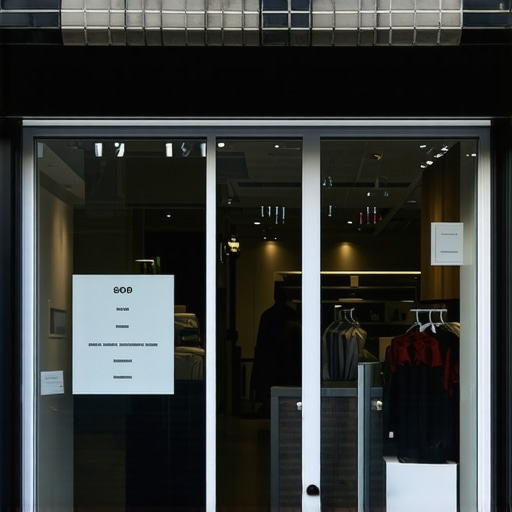
Permanent storefront signage acts as the primary visual anchor for Google Business Profile verification and proximity salience. The algorithm uses computer vision to read your sign and compare it against your NAP data. If your sign is a temporary banner or a piece of paper taped to a door, you will fail the trust threshold. I have seen listings vanish because a sign was too small for a Street View car to resolve. You can learn more about how your storefront signage actually affects your local search position to avoid these common pitfalls. The logic is simple. A permanent sign suggests a long-term lease. A long-term lease suggests a real business. In contrast, a shared office with no signage is a red flag. I remember a roofer who lost his ranking overnight because his signage was not visible from the main road. We had to submit a specific photo angle that speeds up gmb verification requests to prove he was actually there. The street photographer knows that shadows and angles matter. You need a photo that shows the sign in context with the street number. No crops. No filters. Just the raw, gritty reality of your front door. This is the foundation of your local authority.
Local Authority Reading List
- Why High Proximity Zones Hurt Your Ranking
- 5 Tactics to Fix Proximity Issues
- Forcing a Human Support Review
- The Utility Bill Mistake to Avoid
The street level view of proximity
Capturing your storefront from across the street provides the algorithm with environmental context that confirms your business category. Google uses these wide shots to identify neighboring businesses and street furniture. This creates a map of associations. If you are a bakery next to a dry cleaner, the system expects to see that relationship in its spatial model. This is called centroid salience. When you only upload close-up shots, you deny the system this context. I often see businesses struggling because they are in high proximity zones that hurt your google maps ranking performance. In these crowded areas, your photos must be clearer and more contextual than the competition. The street photographer understands that a building is part of a block. You must show the whole block. Show the sidewalk. Show the parking meters. This data allows the AI to anchor your business pin with mathematical precision. If the system can not place you on the grid with 100 percent certainty, it will favor a competitor with better spatial data. Proximity is a game of millimeters. One bad photo can push your pin into a filter zone.
Proof of life in a service area
Service area businesses must provide photos of branded vehicles and equipment at real job sites to maintain ranking. Since you lack a traditional storefront, your equipment is your proximity beacon. Google looks for your logo in diverse locations to verify your service radius. I once worked with a locksmith who was filtered out because he only had one photo of his van in his own driveway. The system thought he was a fake listing. We had to implement local interaction fixes for a 2026 google maps ranking boost by having him take photos at every client location. This created a forensic trace of his service area polygon. It proved he was moving through the city. It showed he was active. If your photos are static, your ranking will be static. You need to show the work. Show the tools. Show the team. This is how you bypass the filters that kill service area businesses. The logistics of a mobile workforce are complex, but the photo rules are simple. Document every neighborhood you touch. This builds a web of local relevance that no keyword-stuffed name can match. Do not let your pin vanish because you were too lazy to snap a photo of your van in a new zip code.
“Images are the primary verification layer for proximity salience because they provide unforgeable environmental data that GPS alone can lack.” – Spatial Intelligence Whitepaper
The truth about customer generated imagery
User-contributed photos carry more algorithmic weight than owner-uploaded images because they serve as unsolicited proof of footfall. When a customer takes a photo at your business, Google captures the behavioral signal of that visit. It knows the user was physically there. This is why physical footfall now controls your 2026 google maps ranking. You should encourage customers to photograph your storefront, not just your products. A photo of the front door from a customer is a gold mine of trust. It tells the system that your business is a destination. If your ranking is frozen, you might need quick fixes for a frozen google maps ranking that focus on stimulating user content. I have seen businesses with half the review count of their competitors outrank them because they had three times the user photos. The algorithm values the candid photo over the staged stock image. It wants to see the truth. It wants to see the crowd. If your storefront photos are all perfect and professional, you look like a corporate shell. You need the grit of a real customer photo to prove you are a local staple. This is the behavioral zooming that the modern algorithm demands. It is not just about where you are; it is about who is visiting you. Stay sharp. Watch the lens. The map is watching back.
Comments are closed.