
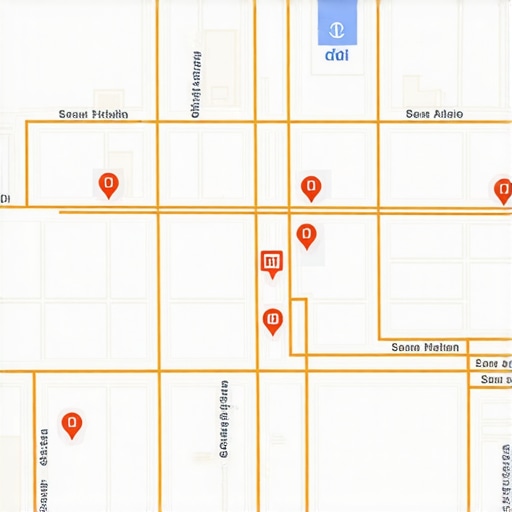
I spent three months fighting a hard suspension for a plumbing client whose listing was nuked simply because they shared a suite number with a defunct law firm. Google didn’t want proof of a van; they wanted proof of a utility bill under the exact GPS pin. The air in that basement office smelled like damp concrete and old radiator steam as we scanned every scrap of paper. We were trapped in a logic loop. The algorithm saw two entities at one coordinate and decided one had to go. This is the brutal reality of the proximity filter. It is not just about where you are. It is about who else is standing on your toes. In high density zones, your physical location becomes a liability rather than an asset. You are fighting for a sliver of digital real estate that is already over-crowded with noise and legacy data. If you want to survive, you need to understand the physics of the map pack.
The logic of the proximity filter
High proximity zones trigger a suppression filter that hides businesses located too close to competitors to prevent map clutter. Google prioritizes user experience by showing diverse options. If ten businesses in the same category occupy the same block, the algorithm selects the one with the strongest authority and filters the others into the hidden results. This is often why a business owner can stand in their own lobby and not see their own pin. They have been filtered out by a nearby competitor with more historical trust. To combat this, you must secure 2026 seo support that focuses on signal differentiation rather than just keyword stuffing. The machine is looking for a reason to keep you visible while hiding your neighbor. If you lack that unique identifier, you remain invisible.
How centroid theory destroys density
The centroid is the mathematical heart of a search query. When a user searches for a service, Google calculates a central point based on the city center or the user current location. If your office is located in a cluster near this centroid, you are in a high proximity danger zone. Every other business had the same idea. They all rented space in the same downtown tower or industrial park. This creates a signal overlap. When signals overlap, Google applies a deduplication logic. It assumes that multiple businesses in the same building or block are potentially the same entity or are trying to gaming the system. This leads to the dreaded filtered results where you only appear if a user zooms in to the street level. You can see this in action by checking 5 reasons your business pin is filtered out of 2026 map packs to see if your coordinates are the problem.
“Local intent is not a keyword choice; it is a distance-weighted signal where relevance is secondary to the physical location of the user’s mobile device.” – Map Search Fundamental
The danger of shared office spaces
Virtual offices and executive suites are the fastest way to get your listing flagged. Google knows these addresses. They have a database of every Regus and WeWork on the planet. When you register your business at a shared address, you are sharing your proximity signal with dozens of other companies. Some of those companies might be spam. Some might have been suspended. The algorithm associates your address with their bad behavior. This is a proximity trap. I have seen perfectly legitimate businesses lose their rankings because a lead generation company moved into the suite next door. The proximity filter saw the sudden influx of new pins at one address and nuked the entire building. If you are stuck in this situation, you need to understand why your map ranking fails when you use a shared office address before you spend another dollar on ads. The solution often involves moving your physical base or providing overwhelming evidence of a dedicated entrance.
Behavioral signals over keyword density
In 2026, the machine cares less about what you say on your profile and more about how people move in the real world. Footfall data is the new king. If your business is in a high proximity zone but no one ever actually visits your office, you will be filtered. Google uses mobile GPS data to see if people are actually stopping at your location. If you are a service area business with a hidden address, it looks at your van movements. This is called interaction velocity. A business with ten reviews but a hundred daily visits will outrank a business with a thousand reviews and zero foot traffic. You can boost this by using 5 interaction velocity fixes for a google maps ranking boost 2026 to prove your physical relevance. Without these real world signals, you are just a ghost in the database.
Local Authority Reading List
- 5 local map ranking fixes for high competition cities 2026
- how to fix the proximity filter thats hiding your business pin
- 4 local seo support moves to stop 2026 map proximity loss
- why high proximity zones hurt your google maps ranking in 2026
Why your physical address is a liability
A physical address becomes a liability when it is located in a competitive cluster that forces Google to choose between your pin and five others. This choice is often based on the age of the listing and the consistency of the NAP data across the web. If you are the newest business on the block, you are the most likely to be hidden. Proximity is a double edged sword. While you want to be near your customers, being too near your competitors creates a filter wall. This is particularly true for lawyers, dentists, and locksmiths. These categories are high spam areas. Google is extra aggressive with the filter here. If you find your pin has vanished, you might need to check 5 manual fixes for a vanishing google maps ranking 2026 to see if you can break out of the cluster. Sometimes the only way to win is to change the service area settings to distance yourself from the centroid.
Forensic evidence for manual reviews
When the filter turns into a suspension, you are in a fight for your life. The automated bots will reject your utility bills if they don’t match the USPS database exactly. I have seen listings denied because the bill said “Street” and the GMB said “St”. This is where you need to bypass the AI. You need a human to look at your signage. You need to show the physical reality of your shop. If the automated system is ignoring you, look into 4 specific evidence fixes to get a human gmb support review to force a manual check. A human can see that you are a real shop with real customers, even if the proximity filter thinks you are a duplicate. This forensic approach is the only way to survive the high density purge. You must document every inch of your storefront, from the lease to the license hanging on the wall.
“Proximity is the strongest ranking factor, but it is also the strongest filter. You cannot rank for what you are filtered out of.” – GMB Support Insights
The three mile radius that determines revenue
Your business lives or dies within a three mile circle. Beyond that, the proximity decay is so steep that your authority barely matters. Within that circle, the battle is for the top three spots in the Map Pack. If you are in a high proximity zone, you are likely fighting for those spots against fifty other businesses. This is where google maps ranking becomes a game of technical margins. You need to optimize your images with local metadata. You need your customers to mention your city in their reviews. You need to link your GMB to local community organizations. These small signals help you break the proximity tie. If you are stuck at number four, you are effectively at number fifty. No one clicks the “view more” button. You are either in the pack or you are out of business.
Why your proximity signal is failing
Your signal fails when Google cannot verify your unique physical presence. If your phone number is shared with another branch or your website lacks schema markup, the machine gets confused. In high density areas, confusion leads to suppression. You need to audit your local citations to ensure they are 100 percent accurate. Even a single mismatched digit in your zip code can cause a proximity drop. Check out why your proximity signal is failing and how to expand your map reach to identify these hidden leaks. It is often the things you can’t see, like hidden metadata or old directory listings, that are holding your pin back. You have to be louder than the noise surrounding you.
The ghost in the GPS coordinates
Sometimes, a listing is suppressed because of a ghost. This happens when a previous business at your address had a suspension. Google remembers. The coordinates are tainted. Even if you have a new lease and a new name, the algorithm associates that physical spot with spam. You are fighting a battle against a ghost you didn’t even know existed. This is why you need gmb help from someone who can dig into the history of your location. We had to prove to Google that the previous tenant, a shady lead gen shop, was gone. We had to show a video of the new lobby and the new staff. Only then did the proximity filter finally release our client. If you are doing everything right and still not ranking, check the history of your office suite. The ghost might be the one keeping you down.
Expanding your reach beyond the filter
You can break the filter by becoming a brand rather than just a category. If people search for your business by name, the proximity filter is bypassed. This is called brand velocity. Google sees that people want you specifically, regardless of where you are located. You can build this through local sponsorships, radio ads, or even just high quality social media content that mentions your location. Use why brand velocity is the new 2026 google maps ranking signal to understand this shift. When you have high brand velocity, you can rank across the whole city, not just in your three mile circle. You become the destination. The proximity filter only applies to those who are generic. Don’t be generic. Be the local authority that people search for by name.
Comments are closed.