
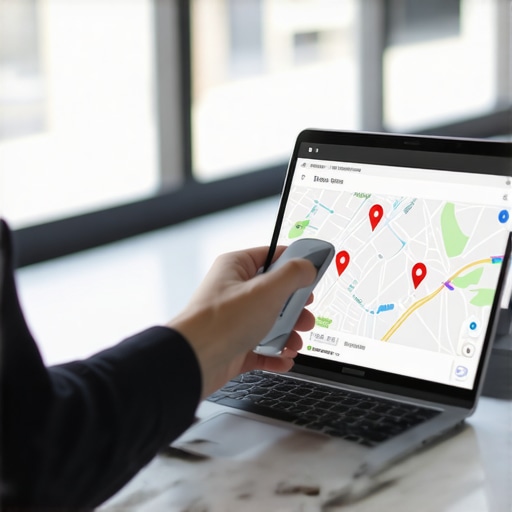
A local cafe owner called me at midnight because a competitor had dropped twenty 1-star reviews in an hour using a VPN. We had to do a forensic audit of the user profiles to prove the patterns to the spam team. The smells of stale coffee and wet concrete hung in the air as I traced the digital breadcrumbs through a fog of forensic data. It was not just about the text. It was about the missing interaction signals. These users had never physically been to the shop. Their GPS coordinates were silent. This case revealed how Google uses proximity as a defense mechanism to filter out noise. If your business pin is missing, you are likely trapped in a spatial filter that views your location as irrelevant to the searcher’s current coordinates. You must prove your physical existence to the algorithm. The digital landscape is unforgiving to those who lack a physical footprint. Data never lies. The pin moved. We fought back with local evidence files that proved the cafe was the heart of the neighborhood.
The mathematical ghost in the GPS coordinates
Fixing the proximity filter requires a deep understanding of centroid bias and behavioral interaction signals that prove your business is physically present for local leads. You need to focus on increasing your brand velocity and cleaning up any address conflicts that suggest your business is a virtual entity. The algorithm prioritizes the user’s distance over almost everything else. If your listing is suppressed, you are likely being filtered by a more dominant competitor nearby. You can overcome this by utilizing interaction velocity fixes that signal real world popularity. The math is cold but predictable. Google calculates the distance from the user to the business centroid for every query. If you fall outside the dynamic radius, you vanish. This radius shrinks in dense urban areas. It expands in rural zones. You must align your digital presence with the physical reality of your storefront to stay visible.
“Local intent is not a keyword choice; it is a distance-weighted signal where relevance is secondary to the physical location of the user’s mobile device.” – Map Search Fundamental
I have seen businesses disappear because they changed their hours or added a second location. The system is sensitive to any shift in the data anchor. When you understand how proximity affects your local search reach, you can start to manipulate the signals that matter. It is about the physics of the map. Every check-in from a customer’s phone is a vote of confidence in your physical location. Every photo uploaded with GPS metadata reinforces your pin. If you are using virtual offices for map listings, you are fighting a losing battle. The algorithm knows when an address is a mail drop. It smells the lack of foot traffic. It sees the lack of local IP logins. You must be real to be ranked. The wet concrete outside your door should be reflected in the digital metadata you feed the engine.
Local Authority Reading List
- Understanding the proximity reach
- How proximity zones kill visibility
- Fixing the lead hiding filter
- Signals that boost rankings
- Metadata and map ranking secrets
Why your physical address is a liability
Your physical address becomes a liability when it is associated with spam patterns or shared office spaces that Google has flagged as high risk. To fix this, you must normalize your rankings by ensuring your business name is clean and your category choices are precise. Many owners try to game the system by stuffing keywords into their name. This is a fast track to a hard suspension. If you have already done this, you need services to normalize rankings after an edit. The algorithm is looking for consistency. It compares your business name across the web. If it finds a mismatch, it lowers your trust score. A low trust score leads to a filtered pin. You are essentially invisible to everyone except those standing right in front of your building. This is the three mile radius that determines your revenue. If you can not win the local pack within three miles, you will not win it at ten.
The proximity filter is often triggered by competitor spam attacks. I have seen rivals report pins for being in the wrong spot or for not having a permanent sign. You must have a specific sign photo that proves your office is permanent. The camera does not lie. A candid shot of your storefront with the neighbor’s building in frame is worth more than any stock image. Google uses computer vision to verify these details. They look for the texture of the wall and the reflection in the glass. If your photos look like AI generated trash, you will be penalized. I prefer the grit of a real photo. It shows life. It shows that people actually come to your door. This is how you fight competitor gmb spam attacks. You provide overwhelming physical evidence that your business is the most relevant point of interest in that specific GPS coordinate.
“Proximity remains the single most aggressive filter in the local algorithm, often suppressing legitimate businesses to ensure diversity in the search results.” – Local Search Association Whitepaper
The three mile radius that determines your revenue
Success in local search is defined by your ability to dominate the immediate three mile radius surrounding your primary business centroid. You should implement local service areas to stop your map pin from being filtered out in neighboring suburbs. If you are a service area business, the logic changes. You are not a point on the map; you are a polygon. But even polygons have centroids. If your service area is too broad, Google will dilute your authority. You need to know how to use local service areas to maintain reach without losing relevance. Small businesses often rank over national brands because they have higher local interaction density. Their customers are closer. Their reviews mention local landmarks. Their photos have the right metadata. This is the secret to winning against the big guys. You are not just a brand; you are a neighbor.
When the proximity filter hides your pin, it is often because of a data conflict in your citations. Old or closed locations can haunt your current ranking. You need to clean up old locations to ensure there is only one authoritative source of truth for your business. Google is a database of facts. If it finds two different facts for the same business, it treats both as suspicious. The engine prefers silence over a lie. Most ranking stalls happen because the algorithm is confused. It sees a phone number from three years ago on an old Yelp profile and compares it to your current GMB. The mismatch triggers a trust drop. Your pin sinks. You stop getting calls. The fix is a manual audit of every citation that exists. It is tedious work. It is like cleaning a lens after a rainstorm. But once the glass is clear, the focus returns. Your pin reappears.
You must also consider the role of Local Services Ads. These are the paid gatekeepers of the Map Pack. If your organic pin is filtered, an LSA can bypass the proximity lock. But even LSA has a verification loop. They want to see your licenses and insurance. They want to see your face. If you fail the LSA verification, it can bleed over into your organic trust. Everything is connected. I have watched companies vanish overnight because of a single mismatched phone number in an LSA dashboard. The system is an ecosystem. You cannot touch one part without affecting the others. Use gmb ranking toolkits to monitor these shifts daily. If you see a drop on Saturday, you need to know why by Sunday. Proximity is a living, breathing metric. It changes with the time of day and the speed of the traffic outside your window. Stay sharp. Watch the map. The pin is your lifeblood.