
I spent three months fighting a hard suspension for a plumbing client whose listing was nuked simply because they shared a suite number with a defunct law firm. Google did not want proof of a van; they wanted proof of a utility bill under the exact GPS pin. This was not about keywords or backlinks. This was about the physics of a physical space. The agent on the other side of the screen did not care about the owner’s twenty years of service. They cared about the forensic trace of a utility meter and the reflection of a street sign in a storefront window. Dealing with the local search ecosystem requires a mindset shift from marketing to logistics. If you cannot prove the dirt you stand on is yours, the algorithm will delete you without a second thought. I have seen multi-million dollar service companies vanish because a secondary verification tier found a mismatched phone number. This is why you need a local seo toolkit for multi location businesses to manage the chaos before it starts.
The microscopic math of GPS coordinates
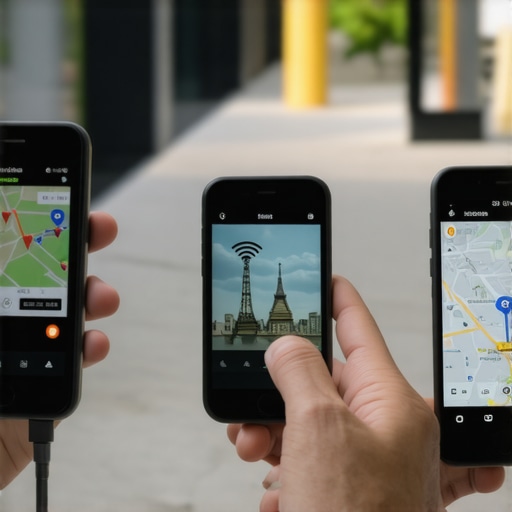
Proving a physical location requires high resolution storefront photos showing permanent signage, utility bills that match your exact suite number, and video walk-throughs of the surrounding neighborhood. These assets provide the forensic evidence needed to convince a human reviewer that your business is a legitimate physical beacon within the local search database rather than a digital ghost. Most business owners think a postcard is enough. It is not. The modern map pack relies on a distance-weighted signal where the physical location of the user’s mobile device interacts with the mathematical salience of your business pin. If you are struggling with a proximity filter that hides your business pin, you are likely failing the microscopic location test. Google looks at the WiFi SSID signals in your area. They look at the blue dot accuracy of customers who walk through your door. They analyze the EXIF metadata of the photos you upload. If your photo was taken in a suburb but your business is listed downtown, the discrepancy triggers a red flag. Every pixel in your profile must align with the spatial reality of your location. This is how you avoid a seo services to recover from google penalty situation by staying ahead of the automated spam detectors.
“Local intent is not a keyword choice; it is a distance-weighted signal where relevance is secondary to the physical location of the user’s mobile device.” – Map Search Fundamental
The storefront sign error that triggers a suspension
Your business signage must be permanent, non-portable, and clearly visible from the public right of way to satisfy a skeptical verification agent. Temporary banners or vinyl stickers on a shared glass door often lead to instant rejections because they look like the hallmarks of an address rental scheme. The agent is looking for permanence. They want to see a sign that requires tools to remove. I have seen listings get flagged because the storefront sign error was as simple as a font mismatch between the sign and the legal business name. You should take photos from across the street. Capture the neighbors. Show the street numbers on the building. If you are in a high-density area, show the directory in the lobby. This level of detail is what separates a ranked listing from a suspended one. Many businesses fail because they try to hide that they are in a shared space. Instead, use the specific evidence needed to prove your storefront is real by showing the internal path from the front door to your specific desk or suite. This transparency builds the trust score required to bypass the automated AI rejection loops that trap so many small businesses today.
Local Authority Reading List
- The Blueprint for GMB Optimization
- Signage and Ranking Position
- Verification Without a Lobby
- The Utility Bill Mistake
- Mastering Google Maps 2025
The utility bill variation that passes manual review
A successful verification requires a recent utility bill where the business name and address match your profile exactly, including abbreviations for Suite or Road. Agents look for consistency in the NAP (Name, Address, Phone) data across these official documents to ensure the business actually pays for the space it claims to occupy. I have seen agents reject a bill because it said Ste 101 while the profile said Suite 101. It sounds ridiculous, but in the world of spatial databases, strings must match perfectly. If you are using a shared office address, you might not have a utility bill in your name. In this case, you need a lease agreement and a business license. You must show the flow of money from your business to the landlord. If you cannot provide the only utility bill variation that works, your listing will stay in the pending review graveyard. The goal is to leave no room for doubt. The agent should be able to overlay your document with your profile and see a 100 percent match. This is the foundation of reputation management and review repair services because without a verified listing, you have no reputation to manage.
Behavioral signals that prove you are actually there
Google uses real world footfall data and mobile GPS pings from customers to verify that your business exists at its claimed location. If you claim to be a busy cafe but no mobile devices ever dwell at your GPS coordinates for more than five minutes, the algorithm begins to suspect you are a ghost kitchen or a fake listing. This is why physical footfall is now a major ranking signal. The system tracks the velocity of interactions. It looks at how many people ask for directions to your shop and then actually arrive there. It monitors the photos customers upload while at your location. These are the offline behavior signals that prove your location better than any document ever could. If your competitor ranks higher with fewer reviews, it is likely because their location has a higher density of real world check-ins. You can download gmb ranking tools for local seo to track these movements, but you cannot fake the physical presence of a human body in a room. The proximity of the user to the business is the ultimate ranking factor. If you want to expand your reach, you must understand how to expand your google maps reach beyond your city center by increasing your behavioral authority in surrounding zones.
“Relevance is secondary to the physical location of the user’s mobile device when local intent is triggered.” – Vicinity Update Analysis
The three mile radius that determines your revenue
Your visibility in the map pack is strictly limited by a three mile proximity radius that filters out businesses further away to provide users with the most convenient results. This filter is designed to prevent a single dominant brand from monopolizing a whole city, giving smaller local shops a chance to appear when the searcher is standing right outside their door. However, this proximity can be a double-edged sword. If you are in a high-density zone, you might find that high proximity zones hurt your map performance because the competition is too thick. To break out of this filter, you need to prove your location is more relevant than the one next door. This involves using local seo tools to optimize google business profile listing data to emphasize your unique service area. You can also use local service areas to stop map pin filtering by clearly defining where your workers go. The algorithm calculates the centroid of your service area and balances it against your physical pin location. If these two do not align, your visibility will stall. This is often the real reason your seo support package isnt moving the needle. You are fighting the physics of the map rather than the content of the page.