
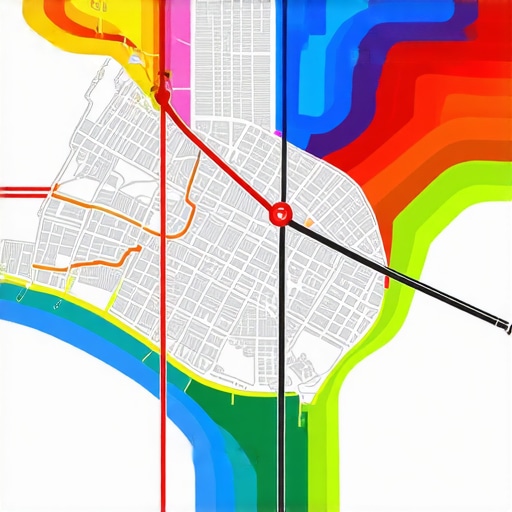
The peppermint scent of my morning tea usually calms me, but looking at a hard suspension notice for a plumber in Chicago felt like a punch to the gut. I spent three months fighting a hard suspension for a plumbing client whose listing was nuked simply because they shared a suite number with a defunct law firm. Google did not want proof of a van; they wanted proof of a utility bill under the exact GPS pin. This is the reality of the hyper-local layer. It is not about keywords or pretty pictures. It is a spatial database where your physical presence is interrogated by an algorithm that treats every business as a potential lie until proven otherwise. I see the storefront data glitches. I track the forensic trace of service area polygons. If your business is stuck at the city center, you are losing the perimeter war. To move that pin, you need more than luck; you need the engineering logic of proximity beacons.
The hidden gatekeeper of local search
Expanding your reach beyond the city center requires mastering proximity signals, centroid mathematical weights, and service area polygon definitions. Google uses user location data to draw a invisible boundary around your physical address. To break this, businesses must utilize local justifications, customer check-in signals, and high-velocity review patterns from distant suburbs. The algorithm is a distance-weighted engine. If you want to rank ten miles away, your Google Business Profile must prove relevance through hyper-local content and high-authority backlinks. Sometimes the system just stops. You might find your frozen google maps ranking needs a manual nudge. The pin stays where the data says it should stay. Move the data, and the pin follows. I have seen businesses vanish because of a shared wall. I have seen them thrive by proving their service vans are actually on the road. It is math. It is physics. It is the geography of the web.
“Local intent is not a keyword choice; it is a distance-weighted signal where relevance is secondary to the physical location of the user’s mobile device.” – Map Search Fundamental
The three mile radius that determines your revenue
Proximity is the most powerful ranking factor in the Map Pack ecosystem today. Most businesses find their visibility drops off sharply after three miles due to the proximity filter. Overcoming this requires local SEO support, distinct service area business settings, and geo-tagged media that proves your team operates in those outer rings. The filter is aggressive. It exists to prevent one massive brand from dominating an entire metro area. If you are too close to a competitor, one of you gets filtered out. This is often why being too close to competitors hurts your total visibility. The map needs diversity. To bypass this, you must build unique signals for each neighborhood. Do not just say you serve the area. Prove it. Use photos from the job site. Use customer reviews that mention the specific street name. The algorithm reads these as proof of life. It sees the GPS coordinates of the mobile device that uploaded the photo. That is a proximity beacon. It tells the engine that your business is active beyond the office walls.
Why your physical address is a liability
A fixed business address creates a gravitational pull that limits your reach to the surrounding blocks. Businesses often fail to expand because they rely on their storefront location while ignoring the behavioral signals of their mobile workforce. To fix this, optimize for the service area business model and ensure your NAP data is consistent across every niche directory. I despise address rentals. The spam team looks for them. If you are using a virtual office, you are already on a watchlist. You need a real lobby. You need storefront signage that matches your digital identity exactly. If the sign says one thing and the profile says another, the trust score collapses. I have seen top-ranking roofers vanish overnight because a single mismatched phone number in their LSA tier killed their organic trust. The engine is suspicious of any change. It wants stability. It wants to see the same utility bill, the same sign, and the same phone number year after year. Change is a risk signal.
The arithmetic of user movement signals
Real-world behavioral signals like footfall, driving directions, and click-to-call events are now more important than traditional backlinking for local maps. Google tracks the movement of Android devices to determine if a business is a popular destination. High footfall signals tell the algorithm that your business deserves a wider reach. The engine knows where people go. If nobody ever drives to your office, why should it show you to someone five miles away. This is where offline behavior signals change the game. You need people to interact with the map. They need to search for your brand. They need to click for directions. Even if they do not arrive, the intent is recorded. This is the zoom logic. On a micro level, every click is a vote. On a macro level, these votes create a heat map of authority. If your heat map is cold in the suburbs, your pin will not show there. You must generate activity in the target zone. Run local ads. Sponsor a local team. Get people in that zip code to search for you by name.
Forensic proof for the skeptical algorithm
Winning a reinstatement or a verification battle requires specific physical evidence that the AI support bots cannot easily dismiss. You must provide high-resolution photos of your permanent signage, business licenses, and utility bills that match your GPS pin. This physical proof is the only way to bypass the automated rejection loops. The bots are lazy. They look for reasons to say no. If your photo is blurry, you fail. If your utility bill is for a cell phone, you fail. You need a utility bill variation like water or electric. I once saw a cafe owner lose everything because a competitor used a VPN to drop twenty fake reviews. We had to do a forensic audit of those profiles to prove the pattern. It is the same with your location. You must prove the space is yours. No shared desks. No co-working spaces without a dedicated entrance. The algorithm wants to see a door. It wants to see a sign. It wants to see the physical reality of a local merchant.
“Distance is the ultimate filter; if the data does not prove a physical presence within the searcher’s proximity, the relevance score is discarded.” – Location Intelligence Whitepaper
Technical signals that bypass the support bot
Advanced local SEO requires the integration of JSON-LD LocalBusiness schema, real-time inventory data, and POS system synchronization. These technical signals provide a layer of trust that simple profile edits cannot achieve. When the support bot fails, these structured data points offer a secondary path to authority. Most agencies just change a description. That does nothing. You need to feed the machine raw data. Use real-time inventory signals to show you have what the customer wants. If the engine knows you have a specific part in stock, it will show your pin even if you are further away. The proximity filter bends for availability. This is why national chains often win. They have the data feeds. Small businesses must catch up. Link your website to your profile with deep, specific schema. Mention every service. Mention every neighborhood. Every line of code is a signal. Every signal is a chance to expand your reach.
The ghost in the GPS coordinates
A business listing is a proximity beacon in a spatial database where location salience is measured in milliseconds and centimeters. If your coordinates are slightly off or your building has multiple entrances, the algorithm may get confused and filter your pin. Correcting these coordinate errors is the first step in expanding your map presence. The pin moved. Sometimes it happens without you knowing. A small update can cause your business pin to vanish. This is usually a safety check. The system thinks you are trying to game the proximity. You must be careful with edits. One wrong move and you are stuck in a pending review loop. If that happens, do not keep editing. Wait. Let the data settle. If it stays stuck, you have to force a human review. The bots will not help you there. You need an eye on the problem. You need a human who can see the sign on the wall and the truck in the lot.