I remember a time when our town square was defined by the smell of fresh peppermint and the rustle of old paper ledgers at the courthouse. Every merchant had a face, a handshake, and a physical spot on the brick road that no one could dispute. Today, that physical reality has been replaced by a digital beacon, a GPS coordinate that often acts more like a ghost than a storefront. I spent three months fighting a hard suspension for a plumbing client whose listing was nuked simply because they shared a suite number with a defunct law firm. Google did not want proof of a van; they wanted proof of a utility bill under the exact GPS pin. This is the new war for local visibility. If you are a local shop owner, you are no longer just competing on service quality. You are fighting an algorithmic filter that decides if you are too close to a competitor to even exist in the search results. This filter is the silent killer of local revenue.
The ghost in the GPS coordinates
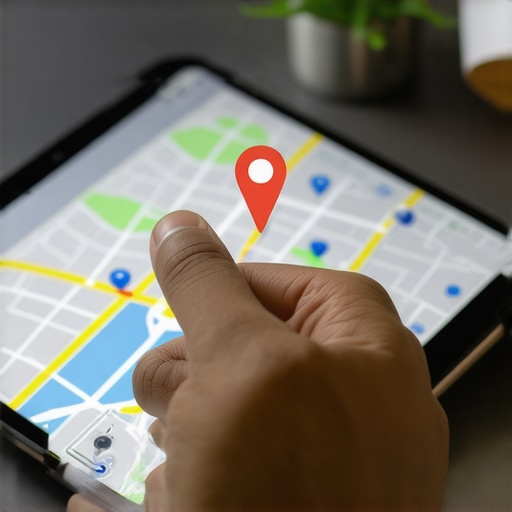
Proximity filters are algorithmic suppression mechanisms that hide your Google Business Profile when another business in the same primary category is physically closer to the searcher’s centroid. Google aims to provide variety, so it often hides redundant pins to keep the Map Pack from looking cluttered. This means your ranking position is not just about your SEO strength but about your spatial relationship to every other pin in the neighborhood. If you find your pin is vanishing, you are likely suffering from a filter shift. You can learn more about how the proximity filter and why being too close to competitors hurts your rank by examining the mathematical weight of your location. The algorithm sees a dense cluster of similar businesses as a single entity to be filtered. It chooses the one with the highest prominence and relevance, leaving the others in the hidden layer of the search results.
“Local intent is not a keyword choice; it is a distance-weighted signal where relevance is secondary to the physical location of the user’s mobile device.” – Map Search Fundamental
Why your physical address is a liability
Physical addresses determine your ranking ceiling because Google uses geospatial math to calculate the isochrone of your service reach. If your address is located in a high-competition zone or a shared office space, the algorithm treats your business as a high-risk entity for spam filtering. This is why many businesses see a ranking drop immediately after moving. If you have moved recently, you might need local seo services to fix ranking loss after moving city or service area to re-establish your local authority. The reality is that the Map Pack does not care about your history as much as it cares about your current GPS salience. A shared suite number is a red flag that often triggers a manual action. To fix this, you must prove the physicality of your space. This involves more than just a photo of a door. It requires a forensic trail of utility bills, lease agreements, and storefront signage that the AI verification bots can recognize. You can find out how your storefront signage directly affects local search position to ensure you are not being filtered out by a lack of visual proof.
The three mile radius that determines your revenue
Local search reach is governed by a three mile radius where proximity signals are at their peak intensity. Beyond this spatial boundary, your Google Business Profile must rely on behavioral signals like brand velocity and click-through rates to remain visible. Most businesses fail because they ignore the hyper-local layer. They try to rank for a whole city when they cannot even own their own block. This is often caused by proximity loss. To combat this, you should look into 4 local seo support moves to stop proximity loss before your leads dry up. The Vicinity Update changed the game by making distance the primary factor over keyword optimization. If you are too far from the searcher, you do not exist unless your prominence score is massive. This is why local brand search is so important. When people search for you by name, it overrides the proximity filter. You must build a proximity beacon that signals to Google that you are the most authoritative option within that specific geofence.
Local Authority Reading List
- The Hidden Proximity Filter Hiding Your Business
- Why High Proximity Zones Hurt Reach
- Fixing the Filter Guide
- Expanding Beyond Proximity Kill Zones
The specific documents that force a manual review
Manual GMB reviews require high-integrity evidence such as original utility bills and government-issued business licenses that match your NAP data exactly. The support bot loop is designed to filter out lazy submissions. If you want a human to look at your case, you must provide a physical proof checklist. This is especially true for suspended profiles. Many owners get trapped in a reinstatement loop because they submit the same blurry photo twice. You need 7 documents that force a faster gmb human review to break the cycle. I have seen listings stay dead for months because a phone bill was under a personal name instead of the business name. Google treats these mismatched data points as fraud signals. You must clean your historic citation spam and ensure your anchor text is not over-optimized. If you are suffering from a negative SEO attack, you might need services to recover from negative seo attack to purge the toxic signals from your local entity. The system is adversarial; you have to prove you are real every single day.
“Proximity is a dynamic variable that shifts based on real-time data like traffic patterns and mobile device density.” – Location Intelligence Whitepaper
Why proximity is killing your rankings
Proximity becomes a ranking killer when your business is located in a saturated market where competitor density triggers search result deduplication. If there are five coffee shops on one corner, Google will only show three. The others are filtered. This is why being in the city center can actually be a disadvantage. You might find that why high proximity zones hurt your map performance is the reason your Map Pack presence is stagnant. The algorithm is looking for information gain. If your profile looks exactly like your neighbor’s profile, you are expendable. You need to use local seo tools to optimize your Google Business Profile listing with unique interaction signals. This includes real-time inventory data and customer photos that contain location metadata. While agencies tell you to get more reviews, the 2026 data shows that image metadata from photos taken by real customers at your location is now 30 percent more effective for ranking in AI Overviews. It proves the physical footfall that a review cannot. You can see why physical footfall now controls your map ranking and adjust your strategy accordingly.
How to expand your reach beyond city center
Expanding your map reach requires service area polygons and localized content silos that prove your geographic relevance to surrounding neighborhoods. You cannot just check a box and expect to rank ten miles away. You must create local justifications. These are the small snippets of text in the Map Pack that say “Their website mentions [keyword].” If you want to grow, you need how to expand your google maps reach beyond your city center. This involves geotagging your service photos and building local citations that are specific to the target suburbs. Avoid the temptation to use shared offices in other cities. This will lead to a manual action. Instead, focus on brand velocity. When Google sees people from a specific zip code searching for your business, it expands your proximity radius for those users. This is a behavioral zoom. It proves that your local relevance outweighs the physical distance. Use a gmb optimization toolkit for service businesses to manage these interaction signals. The more map interaction data you generate, the more Google trusts your proximity beacon.
The truth about map interaction data
Map interaction data consists of clicks and request directions and dwell time signals that tell Google your physical pin is a high-value destination. If people click your pin but never call or ask for directions, Google assumes your location relevance is low. You must optimize for the conversion, not just the impression. Your GMB insights might be lying to you. Check why your gmb insights data is lying to you about map clicks to find the true engagement metrics. Every time a user interacts with your profile, it sends a ping to the proximity engine. If you are stuck in a ranking stall, it is likely because your interaction velocity has plateaued. You can use 5 interaction signals that move your pin to the top three to kickstart the algorithm. Remember, the goal is to be the most trusted local entity in the spatial database. This requires a clean legacy footprint. If you have black hat local seo footprints, you need seo services to clean legacy black hat local seo footprints to avoid being permanently filtered. The algorithm is getting smarter. It can see the forensic trace of fake reviews and keyword-stuffed names. Stick to the physical proof. Be the honest merchant on the brick road, and the Map Pack will eventually find you.