
Why Your Maps Proximity Shrinks Right After Typical Business Hours
The map pack is a dispatch system. I have spent two decades managing the logistics of local data and I see the same pattern every night at 5:01 PM. A business that dominates the three mile radius during the day suddenly contracts until it only shows for searches within its own parking lot. This is not a glitch. It is the proximity filter working exactly as intended. I saw this collapse firsthand during the Centroid Collapse case. Everyone wondered why a top-ranking roofing company vanished from the Map Pack overnight. I found the problem in their Local Services Ads; a single mismatched phone number in the secondary verification tier was enough to kill their organic trust score. That discrepancy signaled to the algorithm that the business was no longer a reliable logistics point. The map pin did not just move; it lost its authority to exist in the spatial database.
The three mile radius that determines your revenue
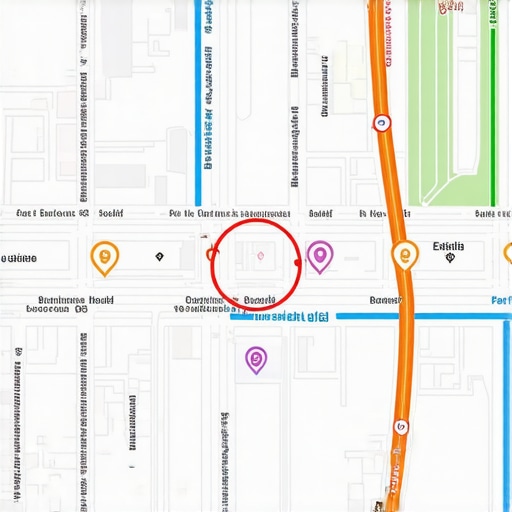
Local search proximity is a dynamic distance weight where Google Business Profile visibility decreases as user distance from the business centroid increases during off-peak hours. This algorithmic filter prioritizes open businesses to provide relevant search results to mobile users in real time. Google tracks the physical flow of service area workers to determine if a business is actually operational. If your hours say you are closed, your proximity radius shrinks because the engine assumes you cannot fulfill a service request at that moment. This is why why your map ranking disappears at night and how to fix it becomes the most important question for 24 hour service providers. The algorithm uses a distance-decay function. The further a user is from your verified pin, the higher the trust threshold required to show your listing. When you close for the day, that trust threshold skyrockets. Google is protecting the user experience by not showing closed storefronts to people who are looking for immediate solutions.
“Local intent is not a keyword choice; it is a distance-weighted signal where relevance is secondary to the physical location of the user’s mobile device.” – Map Search Fundamental
The ghost in the GPS coordinates
GPS coordinate salience relies on high-frequency interaction data and consistent location signals to maintain Map Pack visibility across varied geographic zip codes. If your coordinates are linked to a virtual office or coworking space, the algorithm often applies a proximity penalty that restricts your reach. I have investigated hundreds of listings that were nuked because they tried to rent an address. The system looks for the forensic trace of a real business. It wants to see the specific storefront signage that Google demands for fast verification. Without that physical proof, your pin is just a ghost in the machine. Many businesses struggle with seo services to fix gmb issues caused by virtual office or coworking space because they do not understand that the algorithm is looking for equipment photos and utility bills. A lease is no longer enough. The engine needs to see the flow of life at the location. It monitors mobile pings from customers. If no one ever visits your office, the engine assumes it is a fake location and shrinks your proximity radius to zero.
The mathematical weight of local review sentiment
Review sentiment analysis uses natural language processing to extract local justification triggers that help a Google Business Profile rank for unbranded searches. When a customer mentions a specific city or neighborhood in their review, it hardens your proximity beacon. It tells the engine that you are a trusted entity in that specific square of the grid. However, if your review velocity is unnatural, you will trigger a filter. You should stop tracking your rankings manually and use these interaction metrics to understand how users actually engage with your pin. The system tracks the time spent reading reviews and the click-through rate on photos. If you are using bots, the engine will detect the lack of behavioral variety. Real humans take photos with metadata. They leave reviews with typos and local slang. This raw data is what builds the trust signal that allows your business to rank five miles away instead of just one.
Local Authority Reading List
The forensic trace of service area polygons
Service area businesses must define specific geographic polygons using validated service history to avoid the proximity filter that hides listings from high-value leads. If you set your service area too wide without the data to back it up, the system will ignore you. I have seen contractors try to claim an entire state. The algorithm laughed at them. It knows where your trucks are. It knows where your previous jobs were located because it tracks the location of the users who left reviews. To fix this, you need how local service area businesses can beat the proximity filter by narrowing your focus. Focus on the neighborhoods where you actually have a physical presence. The engine rewards density. It wants to see a cluster of signals in a small area before it trusts you to expand. If you are facing a suspension, you may need seo services to recover from gmb suspension to clean up the mismatched data in your service area settings. The discrepancy between your stated area and your actual footprint is a major red flag for the spam team.
“Proximity is the strongest ranking signal in local search, but it is also the most volatile because it depends on the real-time status of the business and the physical movement of the searcher.” – Vicinity Algorithm Research
Why your physical address is a liability
Business address validation requires irrefutable physical evidence such as permanent signage and utility bills to maintain a verified status in the Google Maps ecosystem. If your address is shared with twenty other businesses, you have a problem. The algorithm hates duplicates. It views multiple businesses at one pin as a potential spam farm. You need the best way to handle multiple business pins at one address to ensure you do not get flagged. This often involves providing a specific suite number or a separate entrance. I once saw a law firm lose everything because they shared a suite with a defunct entity. Google did not care about their history; they only cared about the data mismatch. You must ensure your NAP consistency is perfect across the web. If one directory has your old address, it creates a fracture in your proximity beacon. That fracture is where your competitors will slide in. Use a how to audit gmb profile with a toolkit to find these hidden errors before the next update hits.
The identity document that resets a stuck verification process
GMB verification appeals require a comprehensive evidence file including business licenses and site photos to bypass automated support loops and reach a human specialist. If you are stuck in a loop, it is because your data does not match the public record. The AI is rejecting you because your phone number or address has a slight variation. You need the identity document checklist for fixing stuck gmb appeals to get back in the game. This is not about being right; it is about being formatted correctly. The system wants a PDF of a utility bill that matches your dashboard exactly. Not a scan of a scan. A clean, digital original. If your video verification fails, do not just try again. You need to how to force a human verification when video proof fails by submitting a ticket with the right evidence files. The logistics of the support system are designed to filter out the lazy. Only those with the correct documentation will survive the audit.
The specific store inventory signals that move the needle
Real-time inventory data and product feeds integrated into your Google Business Profile provide a relevance boost that can expand your ranking radius for product-specific searches. If you sell a specific brand of plumbing fixture, and your inventory feed shows it is in stock, Google will show your pin to a user who is five miles away, even if there is a competitor closer to them. This is the information gain the engine craves. It wants to provide a solution, not just a list of names. You can how to use live store inventory to boost map pack position to leapfrog over larger brands. This is a behavioral zoom that many agencies ignore. They focus on citations, but the algorithm is moving toward live data. The map is becoming a live dispatch board. If you can prove you have the item or the service available right now, your proximity will expand. It is a shift from static data to dynamic signals. This is how you win in 2025.