
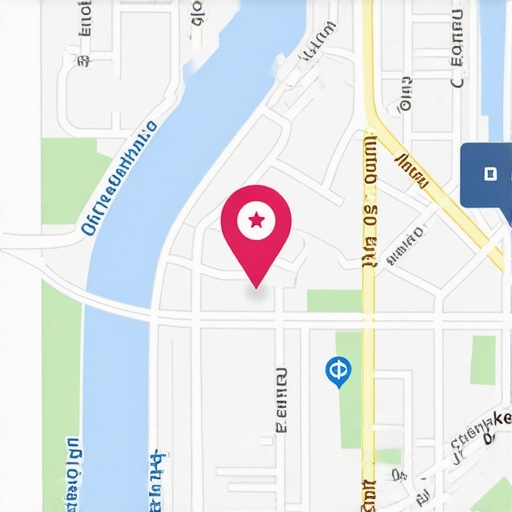
The logistics of a service area business depend on the dispatch logic. If the van is not at the location, the listing should not be there either. I view Google Maps as a massive dispatch system where every pin represents a real vehicle and a real desk. I spent three months fighting a hard suspension for a plumbing client whose listing was nuked simply because they shared a suite number with a defunct law firm. Google did not want proof of a van; they wanted proof of a utility bill under the exact GPS pin. They wanted to see the warehouse. They wanted to see the dispatch desk. The algorithm is a logistics manager that hates empty space and inefficient data. When you add a second location, you are essentially telling the system that you have doubled your physical infrastructure. If the system finds a glitch in that claim, it does not just reject the new pin; it often burns the entire bridge, taking your original ranking with it.
The reinstatement war and the suite number trap
A suite number overlap triggers a hard suspension because Google interprets shared office spaces as potential map spam. To resolve this, you must provide a utility bill and photo evidence showing a permanent, non-virtual physical presence that separates your business operations from other entities at the same address. This is the microscopic reality of the local algorithm. When you add a second location, the spatial database checks for centroid overlap. If your new office is too close to the old one, or if it shares a suite number without a distinct physical wall, the trust score collapses. You need to understand [the difference between a hard suspension and a soft suspension](https://helpmerankgmbs.com/the-difference-between-a-hard-suspension-and-a-soft-suspension) before you attempt to appeal. Many owners make the mistake of thinking a lease agreement is enough. It is not. The system wants to see the flow of people. It wants to see the signage that greets a customer. Without this, you are just a ghost in the GPS coordinates. I have seen [the one signage error that gets your verification instantly denied](https://helpmerankgmbs.com/the-one-signage-error-that-gets-your-verification-instantly-denied) ruin a multi city expansion in less than twenty four hours.
Why your physical address is a liability
An address is a liability when it lacks unique identifiers like exclusive signage or a private entrance. Google’s AI evaluates storefront photos for depth and permanence; any indication of a temporary setup or shared lobby can lead to an immediate rejection of your business verification attempt. We are dealing with mathematical weight. Every business listing is a proximity beacon. If you use a home address, you are inviting a filter. You should know [why using your home address for a local listing is dangerous](https://helpmerankgmbs.com/why-using-your-home-address-for-a-local-listing-is-dangerous) for your long term stability. The logistics manager in me hates the wasted time of a failed verification. I look for the forensic trace of a service area polygon. If you are a plumber, your service area must not overlap in a way that suggests you are trying to game the proximity filter. Google uses the [how the proximity filter hides your business from real customers](https://helpmerankgmbs.com/how-the-proximity-filter-hides-your-business-from-real-customers) logic to keep the Map Pack clean. When you add that second location, you are effectively recalibrating your entire presence. If the new pin fails, the old pin is often pulled into the manual review loop. It is a domino effect that most agencies do not prepare for.
“Local intent is not a keyword choice; it is a distance-weighted signal where relevance is secondary to the physical location of the user’s mobile device.” – Map Search Fundamental
Local Authority Reading List
- The evidence you need to win a GMB quality issues appeal
- How to prove a shared office is a real physical location
- Why your map ranking falls every time you change your phone number
Why your map ranking falls when you scale too fast
Scaling too fast triggers algorithmic alerts because rapid changes to core NAP data suggest a profile hijack or spam operation. Google tracks the velocity of your expansion; adding multiple locations without established local authority signals like region-specific reviews or location-specific backlinks results in a Trust Score reduction and visibility loss. I always tell my clients that a business listing is not a profile; it is a spatial database entry. If you change your phone number during the expansion, you are in trouble. Learn [why your map ranking falls every time you change your phone number](https://helpmerankgmbs.com/why-your-map-ranking-falls-every-time-you-change-your-phone-number) to avoid this. The algorithm looks for consistency. If location A has a different phone format than location B, the data becomes fragmented. This is where [seo services to fix incorrect business information online](https://helpmerankgmbs.com/seo-services-to-fix-incorrect-business-information-online) become vital. You need to audit the flow of your digital citations. Historic citation spam from old campaigns will haunt your new location. You need [local seo services for cleaning historic citation spam campaigns](https://helpmerankgmbs.com/local-seo-services-for-cleaning-historic-citation-spam-campaigns) to clear the path. A single mismatched phone number in the secondary verification tier is enough to kill your organic trust score. I have seen it happen to roofing companies that were top of the pack for years.
The three mile radius that determines your revenue
Proximity is the most powerful ranking factor in the modern Map Pack, often overriding relevance and prominence. Most businesses are invisible beyond a three mile radius because Google prioritizes the closest verified entity to the user’s current GPS coordinates to ensure the highest possible user satisfaction and utility. This is about the physics of the search. If you are trying to rank in a city where you do not have an office, you are fighting a losing battle. Explore [the strategy for ranking in nearby cities where you lack an office](https://helpmerankgmbs.com/the-strategy-for-ranking-in-nearby-cities-where-you-lack-an-office) before you waste your budget. The grid is unforgiving. If you add a second location to bridge a gap, but that location is just a virtual desk, you will get caught. You must understand [why your map listing is invisible beyond a three mile radius](https://helpmerankgmbs.com/why-your-map-listing-is-invisible-beyond-a-three-mile-radius) before you sign a new lease. The centroid theory suggests that Google wants to distribute traffic evenly among local merchants. It does not want one plumber to own the whole city if there are others closer to the user. This is why [how local service area businesses can beat the proximity filter](https://helpmerankgmbs.com/how-local-service-area-businesses-can-beat-the-proximity-filter) is the most requested topic in my consultations.
“The verification of a secondary location requires non-fungible physical evidence that contradicts the digital pattern of location-squatting common in high-competition service sectors.” – Proximity Logic Digest
The utility bill detail that ends your verification loop
The utility bill must show the exact business name and the specific suite number matching your Google Business Profile to pass the AI verification audit. Discrepancies as minor as an abbreviated street type or a missing floor number can trap your listing in a perpetual ‘Pending’ state or trigger an immediate suspension. Most people fail because they are lazy with the paperwork. You need to know [the utility bill detail that finally ends your verification loop](https://helpmerankgmbs.com/the-utility-bill-detail-that-finally-ends-your-verification-loop) to move forward. If the AI bot sees a discrepancy, it closes the ticket. You then have to learn [how to stop the ai loop and get a real human gmb specialist](https://helpmerankgmbs.com/how-to-stop-the-ai-loop-and-get-a-real-human-gmb-specialist). This is where the logistics of the appeal come in. You need [google business profile recovery services](https://helpmerankgmbs.com/google-business-profile-recovery-services) that understand the forensic requirements. Do not just send another photo of your lobby. Send a video that shows the street sign, the entry door, and your staff working at their desks. You should follow [the storefront photo guide for businesses without a lobby](https://helpmerankgmbs.com/the-storefront-photo-guide-for-businesses-without-a-lobby) if you are a service-based business. The goal is to prove that your office is not a virtual space. If you fail this, you will need [google business profile recovery service after fake address suspension](https://helpmerankgmbs.com/google-business-profile-recovery-service-after-fake-address-suspension) and those cases are much harder to win.
The hidden interaction signal that ranks local shops
Interaction signals like ‘Request a Quote’ clicks, direction requests, and photo views from real customer devices are now more influential than traditional backlink counts. Google monitors the dwell time of users at your physical location via mobile GPS data to verify that your business is a high-traffic, legitimate local entity. We are moving toward a world where [the hidden interaction signal that boosts your map ranking](https://helpmerankgmbs.com/the-hidden-interaction-signal-that-boosts-your-map-ranking) is the only thing that matters. The algorithm is watching. It knows if a customer actually drove to your store. This is [the hidden interaction signal that ranks local shops over big brands](https://helpmerankgmbs.com/the-hidden-interaction-signal-that-ranks-local-shops-over-big-brands). If you have two locations, but only one gets real traffic, the second one will eventually wither. You can use [how to use local interaction data to fix your map ranking](https://helpmerankgmbs.com/how-to-use-local-interaction-data-to-fix-your-map-ranking) to boost your visibility. But be careful. Fake signals are easy to spot. I despise agencies that use bots. You should know [why most ctr tools are just a fast track to a gmb shadowban](https://helpmerankgmbs.com/why-most-ctr-tools-are-just-a-fast-track-to-a-gmb-shadowban). The logistics of success are built on real people moving through real space. This is why [why your review velocity matters more than your total star count](https://helpmerankgmbs.com/why-your-review-velocity-matters-more-than-your-total-star-count) is a fundamental truth of the 2025 algorithm.
Services to monitor and prevent future gmb suspensions
Proactive monitoring services use API-level access to detect unauthorized edits, competitor flagging, and changes in local algorithm thresholds before they lead to a suspension. By auditing NAP consistency and review patterns daily, these services maintain the integrity of your Map Pack presence and ensure your proximity beacon remains active. If you have multiple locations, you need [services to monitor and prevent future gmb suspensions](https://helpmerankgmbs.com/contact-us). One bad review removal can trigger a filter. You might need [seo services to fix gmb rankings after mass review removal](https://helpmerankgmbs.com/seo-services-to-fix-gmb-rankings-after-mass-review-removal). If you have changed owners recently, you need [seo services to restore map pack visibility after listing ownership change](https://helpmerankgmbs.com/seo-services-to-restore-map-pack-visibility-after-listing-ownership-change). My final thoughts are simple. Treat your GMB listing like a physical asset. If you do not maintain the data, the logistics of the search engine will discard you. Use [seo audit and penalty recovery services](https://helpmerankgmbs.com/how-to-audit-your-seo-marketing-agency-for-real-local-map-results) to ensure your agency is not taking shortcuts. The cost of a suspension is not just the recovery fee; it is the lost revenue while your competitors take your leads. Stay local. Stay verified. Keep your pins where they belong.