
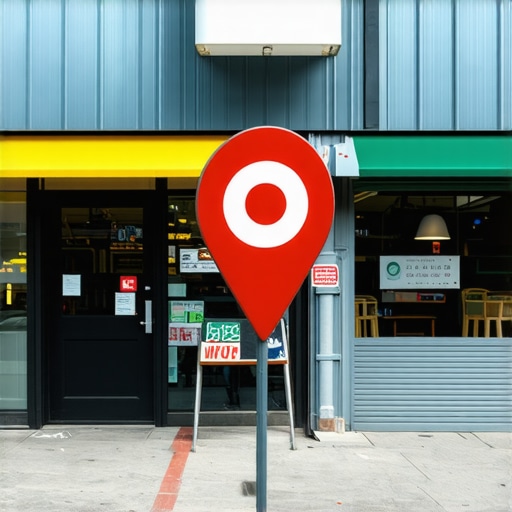
I can smell the wet concrete from the street outside as I stare at this data glitch on my monitor. I see the world through a 35mm lens; I look for the textures. The way the light hits a legitimate storefront sign versus a fake vinyl banner printed an hour before the Google inspector arrives tells the whole story. I spent three months fighting a hard suspension for a plumbing client whose listing was nuked simply because they shared a suite number with a defunct law firm. Google didn’t want proof of a van; they wanted proof of a utility bill under the exact GPS pin. That taught me one thing. If you mess with your business name, you are gambling with your entire digital existence. You think you are being clever by adding terms like best plumber or city center roofing to your title. The algorithm sees it differently. It sees a violation of the proximity beacon integrity.
The danger of keyword stuffing in a business name
Keyword stuffing in a Google Business Profile name triggers algorithmic filters that often result in hard suspensions or ranking suppression. While adding descriptive terms can provide a short-term visibility boost, it creates a non-compliant data signal that the Vicinity algorithm eventually identifies and penalizes through automated profile reviews. I have watched hundreds of businesses vanish overnight because they thought they could outsmart the spatial database. They see a small bump in calls and think they won. Then the red banner of death appears. You might think you need why your keyword-rich business name might get you suspended to understand the risk, but the reality is simpler. Google wants a reflection of the physical world, not a list of search terms. When you inject keywords, you create a mismatch between your legal entity and your digital twin. This mismatch is a forensic trace that spam investigators use to purge the map pack. I have seen listings with five hundred reviews get deleted because they added two extra words to their name. It is not worth the risk. You should focus on building a brand that the algorithm can trust rather than trying to manipulate the string of text that identifies your location.
“Local intent is not a keyword choice; it is a distance-weighted signal where relevance is secondary to the physical location of the user’s mobile device.” – Map Search Fundamental
The physics of the three mile radius
Proximity signals are the dominant ranking factor in the Google Map Pack, where the user location determines the search result set regardless of the business name keywords. The centroid theory explains how Google balances relevance, distance, and prominence to deliver the most geographically accurate service provider to the mobile searcher. The map is not a flat surface; it is a dense grid of behavioral data. Every time a user clicks your pin, stays at your location, or asks for directions, they are strengthening your coordinate salience. If your business name is a lie, those signals start to fracture. You might find that why your maps proximity shrinks right after typical business hours is actually tied to your behavioral data rather than just your closing time. The algorithm monitors the flow of traffic. It knows when a business is located in a residential area but claims to be a downtown office. It detects the latency in mobile pings. If your name says you are a 24-hour locksmith but your GPS data shows no one is at the location at 3 AM, the trust score drops. We are talking about microscopic math. Google calculates the distance to the sixth decimal point of a coordinate. Your keyword-stuffed name is just a superficial layer over a massive engine of spatial verification. If the engine finds a discrepancy, it will hide your pin.
Local Authority Reading List
- Optimizing GMB Profiles for Maximum Impact
- Removing Fake One Star Reviews Safely
- Specific Documents for Storefront Proof
- Fixing Pending Review Status
- Shared Workspace Ranking Failures
How to audit a gmb profile with a toolkit
An effective GMB audit requires a multi-layered analysis of NAP consistency, primary category alignment, and technical schema markup on the linked website. Using a reputation management toolkit allows agencies to identify incorrect business information and fix keyword stuffing before the automated suspension bots flag the listing ownership as suspicious. The audit starts with the raw data. I look at the signage. Is it a permanent fixture or a plastic sheet? I check the secondary categories. Often, businesses dilute their power by choosing too many categories. You need why your business categories are actually preventing you from ranking higher to see how this happens. The toolkit should also track your review velocity. If you get ten reviews in a day and then nothing for a month, the algorithm smells a fix. You want a steady pulse. The audit must also cover the technical side. Your website needs LocalBusiness JSON-LD that matches your GMB data exactly. If there is a single digit difference in the phone number, the trust loop breaks. I have seen seo services to fix ranking loss after moving city or service area fail because they forgot to update the footer of a sub-page. The map pack is unforgiving. It is a forensic environment. You need to treat your data with the same precision a photographer treats a high-resolution print.
“Algorithmic trust is built on the accumulation of consistent signals over time; a single high-weight discrepancy can trigger a manual review or an immediate removal of the business entity from the map layer.” – Location Intelligence Whitepaper
Restoring map pack visibility after listing ownership change
Listing ownership transfers often trigger security flags that result in missing map pack rankings or pending review status for updated business information. To restore visibility, the new owner must provide primary evidence such as business licenses, utility bills, and on-site video verification to prove the location’s physical legitimacy. This is where most people fail. They think an email confirmation is enough. It isn’t. When a profile changes hands, Google treats it like a potential hijack. If you are using how to recover your map listing after a rogue agency hijack, you know how stressful this is. The AI monitors the IP address of the new manager. If the manager is in a different country, the risk score spikes. You need to be prepared with the document checklist that forces a human review. You need photos of the lobby. You need photos of the tools. If you are a plumber, show the truck with the wrap. If you are a lawyer, show the law books on the shelf. The bots are looking for signs of life. They want to see the dust on the floor and the smudge on the window. They want the truth. If you give them a stock photo, they will kill the listing. The road back to the top of the map pack is paved with physical proof. It is a slow process; the pin does not move back to the top instantly. It has to earn its way back through fresh, verified interactions.
[image placeholder]
The secret to monitoring and preventing future gmb suspensions
Proactive monitoring of Google Business Profile changes prevents competitor-suggested edits from altering business phone numbers or marking locations as closed. A robust management toolkit should alert owners to suspicious activity flags, missing reviews, and category changes that could destabilize the local ranking of the primary business listing. Competitors are watching you. They will try to suggest edits to your hours. They will report your name for keyword stuffing if they see an opening. This is why you need how to stop competitors from suggesting harmful edits to your listing. The best defense is a clean profile. If your name is exactly what is on your tax return, they have nothing to report. If your photos are real, the bots will trust you. I always tell my clients to take a photo of the storefront every time it rains. The reflection of the street lights on the pavement creates a unique visual fingerprint that AI finds very hard to forge. It proves the location is real in a way a sunny stock photo never can. You should also watch your review sentiment. If a wave of negative reviews hits, you must know the secret to removing fake negative competitor reviews fast. Stay vigilant. The map pack is a battlefield of data. The winners are those who maintain the highest level of accuracy and the most consistent behavioral signals. Do not let your guard down. Check your insights weekly. Look for drops in direction requests. That is the first sign that your proximity radius is shrinking. Fix it before the pin vanishes entirely.