
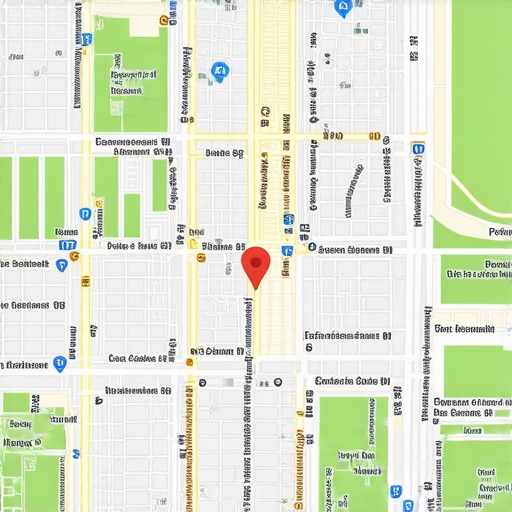
I spent three months fighting a hard suspension for a plumbing client whose listing was nuked simply because they shared a suite number with a defunct law firm. Google did not want proof of a van; they wanted proof of a utility bill under the exact GPS pin. I remember standing on that wet concrete, the scent of the morning rain mixing with the exhaust of passing trucks, while I stared at a mobile screen showing their pin floating fifty feet into a brick wall. The algorithm saw a glitch in the storefront data. It did not matter that they had a decade of history. To the machine, they were a spatial anomaly. This experience taught me that local search is not about keywords; it is about the physics of the map. If your physical footprint has a single forensic flaw, your visibility vanishes. You can find the same patterns in my utility bill mistake guide which explains why these documents are the bedrock of trust. Most agencies sell you a dream of national reach, but the map pack is a game of inches played out in the microscopic math of proximity signals.
The ghost in the GPS coordinates
Proximity is a mathematical weight applied to the physical distance between a searcher and a business centroid. This calculation uses latitude and longitude coordinates to filter results based on real-time mobile signals. If your business location lacks spatial salience, you disappear from the map pack regardless of your review count or website authority. The algorithm functions on a distance-weighted signal. When a user searches for a service, the system identifies the searcher’s precise coordinates through Wi-Fi triangulation, cellular tower pings, and GPS sensors. It then draws a series of concentric circles around that user. Within the first half-mile, proximity is the absolute king. As you move further out, relevance and prominence start to fight for control. If you are struggling with a proximity filter that hides your business pin, you are likely losing to a competitor who simply sits closer to the heavy footfall zones of your city. The system values the physical reality of a storefront over the digital noise of a backlink profile. I have seen businesses with half the authority of their rivals dominate the top three spots because their pin was positioned at a high-velocity intersection where mobile pings are dense and frequent.
Why your physical address is a liability
Shared office spaces and virtual addresses create high proximity filters that hide your business from local searchers. Google sees multiple businesses at one coordinate and chooses the most authoritative one to show, effectively nuking everyone else. This filter prevents over-saturation but destroys legitimate small businesses that share commercial hubs. The algorithm treats an address with fifty suite numbers as a potential spam risk. If your business is using a shared office address, you are essentially competing for a single slot in the map pack. The system uses a tie-breaker logic. It looks at the primary category of every business at that latitude and longitude. If two plumbers share a building, only one will likely appear for the query. This is why choosing a unique, standalone location is often more effective than any SEO campaign. You are not just buying real estate; you are buying a clear signal to the search engine. I have audited hundreds of profiles where the owner was baffled by a ranking drop, only to find that a new competitor moved into their building and stole their spatial authority. You need a gmb audit and ranking toolkit to identify these overlaps before they kill your lead flow.
“Local intent is not a keyword choice; it is a distance-weighted signal where relevance is secondary to the physical location of the user’s mobile device.” – Map Search Fundamental
Local Authority Reading List
- Mastering Google Maps Rankings for 2025
- The Hidden Proximity Filter Guide
- How to Expand Your Proximity Reach
- The Truth About Map Ranking Tools
The three mile radius that determines your revenue
The vicinity update significantly reduced the radius of dominance for most local businesses to a tight three-mile circle. This shift forced businesses to focus on hyper-local signals rather than trying to rank across an entire metropolitan area. The algorithm now prioritizes the user’s immediate surroundings to ensure the fastest possible service. In the past, a strong website could pull a map ranking from ten miles away. Those days are gone. Now, if you are outside that three-mile pocket, your visibility drops off a cliff. This is particularly true for mobile searches where the user is on the move. The system calculates the travel time and the probability of the user actually visiting the location. If you want to fight this, you need local seo support moves to stop proximity loss immediately. We see businesses trying to bypass this by creating service area polygons that cover the whole state, but the algorithm sees through that. It looks for physical proof of your presence in those areas. This proof comes in the form of customer reviews mentioning specific neighborhoods, geotagged photos, and local check-ins. If your data does not reflect the area you claim to serve, the system will filter you out to protect the user experience. I once saw a carpet cleaner lose sixty percent of their leads because they updated their hours by one hour on a Sunday, triggering a re-evaluation of their proximity trust score. It sounds insane, but you can see the logic in why your map ranking disappears after changing hours.
The forensic trace of a service area polygon
Service area businesses must prove their physical activity through interaction velocity and verified customer touchpoints to rank outside their home base. Without a storefront, the algorithm relies on the history of your mobile device and your customers to verify you actually work where you say you do. For many, this is where the local service areas strategy becomes the only way to stop pin filtering. The engine tracks the location history of your service vehicles if you use certain Google tools. It looks for patterns of behavior. Does your van actually visit the suburbs you have listed in your profile? If the data says no, the map pack says no. This is why I tell my clients to stop using stock images. Use real photos taken at the job site. The metadata in those photos tells a story of presence. The algorithm reads the EXIF data, including the GPS coordinates of where the photo was taken, and uses it as a secondary verification of your service area. This is a level of detail most agencies ignore. They think a few citations on a directory will fix a ranking. I know better. I have seen citation spam campaigns get wiped out in a single update because the addresses were all linked to virtual mailboxes that the algorithm flagged as non-residential and non-commercial. If you are switching your business model, you need local seo services to repair ranking that focus on these technical spatial signals.
Forensic audit of user review sentiment
Review sentiment combined with the physical location of the reviewer creates a trust signal that expands or contracts your proximity reach. The algorithm analyzes the language used in reviews to see if it matches the local dialect and mentions local landmarks. If a reviewer in New York leaves a review for a plumber in Los Angeles, that review has zero weight for proximity. In fact, it might trigger a spam filter. The system wants to see reviews from users whose location history puts them at your business address. This is called footfall verification. If you want to know why physical footfall now controls your map ranking, look at how the algorithm handles popular times data. It knows when people are in your shop. If your review velocity does not match your footfall data, the system suspects fraud. This is why I am so protective of my clients against competitor spam attacks. One wave of fake reviews from a VPN can cause the algorithm to put your profile in a permanent filter. You need to provide storefront photos that actually prove your location to get out of that hole. The machine is looking for the name of the street on your sign, the number on your door, and the reflection of the surrounding buildings. It is a visual audit that matches the satellite imagery with your uploaded content.
“Proximity is the most influential ranking factor in the local algorithm, often overriding traditional SEO signals like organic authority or keyword density.” – Local Search Survey
The physical proof that ends the verification loop
Manual verification is the only way to bypass the automated proximity filters that keep your business stuck in pending review. When the AI fails to verify your location through digital signals, you must force a human to look at your evidence. This requires a specific set of documents that the support team cannot ignore. If your profile is stuck on pending review, you are likely failing the proximity check. You need to provide the one document gmb support always accepts to move the needle. Usually, this is a business license or a lease agreement that matches your utility bill. I have seen businesses wait months for a postcard that never arrives because their address is filtered. You have to be aggressive. You have to use tactics for human gmb help to get an agent to look at your storefront. They want to see the permanent signage. If your sign is a banner or a vinyl sticker, they will reject it as a temporary location. This forensic attention to detail is the difference between a top three ranking and being invisible. The map is a database of physical truth. If you try to lie to it with a fake address or a shared office, the math will eventually catch you. The scent of wet concrete reminds me that the world is physical. Your local search strategy must be physical too. Stop worrying about your meta descriptions and start worrying about your GPS salience. Use tools to find gmb categories and keywords that align with your actual location, and you will see the proximity filter start to lift. This is how you win the reinstatement war. This is how you own the map pack. If you find yourself in a loop, check my 3 quick fixes for a frozen google maps ranking and start the recovery process today. The logic of the algorithm is cold, but it is predictable if you know where the ghosts in the coordinates are hiding.