
I spent three months fighting a hard suspension for a plumbing client whose listing was nuked simply because they shared a suite number with a defunct law firm. Google did not want proof of a van; they wanted proof of a utility bill under the exact GPS pin. The logistics were a nightmare. Every day that listing was down, the fleet sat idle. I could smell the stale coffee in the dispatch room as we scrolled through failed appeals. It was not about the quality of the plumbing. It was about the mathematical certainty of the address. This is the reality of the hyper-local layer where a single digit error in a utility bill can cost a business fifty thousand dollars in monthly revenue. I approach every verification as a logistics problem. If the data does not flow correctly from the utility provider to the Google Business Profile (GBP) database, the beacon remains dark.
The forensic anatomy of a successful utility bill
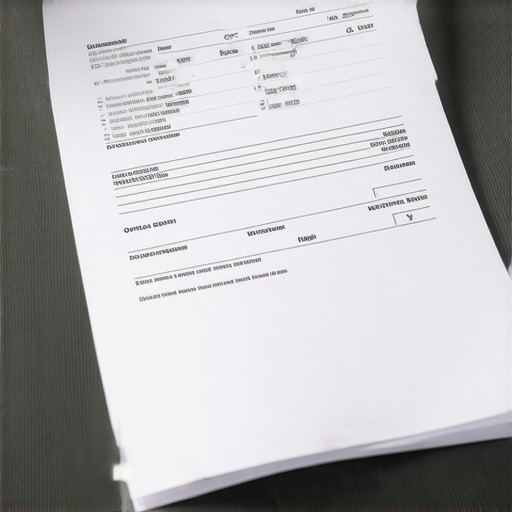
A successful GMB utility bill must be a high-resolution scan of a physical paper document that displays the legal business name and the exact registered address. Google AI bots look for specific markers including the billing period, the service address, and a barcode that matches the utility provider records. When you submit a digital PDF downloaded from a portal, the metadata often looks identical to millions of others, which triggers a fraud flag. I have found that printing the bill, placing it on a wooden desk, and taking a photo with a smartphone is the only way to prove the document exists in physical space. This process provides information gain through image metadata like GPS coordinates and camera sensors that a digital export lacks.
For those struggling, why your utility bill proof keeps getting rejected by AI bots often comes down to the lack of a visible physical texture in the image. You need to show the folds in the paper. You need to show the envelope. The algorithm is not just reading the text; it is verifying the physical presence of the document at the location. This is why the document checklist that forces a human review of your GMB case is so critical. If the automated system cannot verify the bill, you must provide secondary evidence that a human can interpret. This includes business licenses and insurance policies that mirror the bill exactly. Any discrepancy in the address format, such as using Street instead of St, can lead to an automated rejection.
“Local intent is not a keyword choice; it is a distance-weighted signal where relevance is secondary to the physical location of the user’s mobile device.” – Map Search Fundamental
Why your digital PDF is getting rejected by automated bots
Digital PDF documents lack the physical authenticity signals that Google’s computer vision system requires to verify a storefront location. When an automated bot scans your submission, it looks for signs of tampering or photo manipulation. A clean digital PDF is too easy to forge with basic editing software. I have seen countless cases where how to get your suspended listing back without endless emails involves simply switching from a digital upload to a physical photo. The bot needs to see shadows, paper grain, and depth. This is a behavioral zoom into the algorithm’s mistrust of modern digital documents. If you are using best gmb ranking tools for local seo, you must ensure your baseline data is bulletproof before you start scaling.
Local Authority Reading List
- The specific documents needed to prove your storefront is a real physical location
- The evidence you need to win a gmb quality issues appeal
- How to force a human review for your denied gmb appeal
The intersection of GPS coordinates and billable addresses
The physical location of the business is a proximity beacon that must align with the GPS coordinates embedded in your verification photos. Google uses the EXIF data from your smartphone to confirm that the photo of the utility bill was taken at the actual business location. If you are at home trying to verify an office address, the metadata will show a mismatch. This is a common reason why why using your home address for a local listing is dangerous. The system identifies the spatial lie and flags the account. I recommend using gmb ranking toolkit buy strategies only after the physical proximity of your data is verified. The algorithm prioritizes distance over almost every other factor in the Map Pack. If your utility bill proves you are in the city center but your phone metadata shows you are in the suburbs, you will fail.
Tactics to handle business verification when video proof fails
When the standard video verification fails, you must pivot to a manual review request using a specific set of physical evidence. Video verification often fails because of poor lighting or lack of clear signage. I have found that how to force a human verification when video proof fails requires you to submit a combined file of your utility bill and a photo of your tools or inventory. For a contractor, this might be a photo of your van with the license plate visible, parked in front of the address on the bill. If you are an installer, the equipment photos every epoxy floor installer needs for instant gmb verification can be the deciding factor. The goal is to create a mountain of evidence that makes the bot’s refusal look illogical to a human reviewer.
“Verification is a spatial trust score. If the physical proof does not match the digital claim, the proximity beacon is discarded from the Map Pack.” – Location Intelligence Whitepaper
How to prove a shared office is a real physical location
Proving a shared office location requires a utility bill that specifically mentions your suite number and a photo of permanent signage. Google hates virtual offices. If you are in a coworking space, you need a sub-lease and a utility bill that shows your specific footprint within the building. Many businesses find that why your google maps ranking fails when using a shared workspace is due to the lack of unique address markers. You must differentiate your business from the other fifty companies at the same address. Using how to prove a shared office is a real physical location tactics, such as showing your logo on the building directory, is the only way to survive a manual audit. If your bill just says the building address without the suite, the bot will likely merge you with another listing or suspend you for being a duplicate.
Managing brand confusion from merged business listings
Brand confusion occurs when Google’s algorithm merges two distinct businesses into one listing due to overlapping NAP data. This often happens after an acquisition or a move. I have used seo services to fix brand confusion from merged gmb listings to untangle these digital knots. You must provide utility bills for both the old and new entities to prove they are separate. If you do not fix this, your reviews might vanish or your phone calls might go to a competitor. This is a logistics disaster for any service business. Ensuring your how to merge duplicate listings without losing your review history process is handled correctly prevents the loss of years of social proof. A single utility bill in the correct format is the primary weapon in this fight.
Why your map ranking disappears at night and how to fix it
Your visibility in the Map Pack can fluctuate based on your business hours and the proximity of active users. Google often shrinks the visibility radius of a business when it is marked as closed. This is why why your map ranking disappears at night and how to fix it is a common concern for emergency service providers like locksmiths or plumbers. The algorithm assumes a closed business is less relevant to a user in that moment. However, if your utility bill proves you have a physical office, you can often maintain a stronger baseline ranking than a service area business with no address. I also see cases where why your maps proximity shrinks right after typical business hours happens because the search intent shifts from commercial to informational. Maintaining a high-authority profile with local seo software to improve map pack rankings helps stabilize these shifts.
The strategy for ranking in nearby cities without an office
Ranking in neighboring cities requires a strong service area definition and high-quality local justifications. You do not always need a physical office in every city to show up in the Map Pack, but you do need a utility bill for your primary location to anchor your trust. Once the core listing is verified, you can use the strategy for ranking in nearby cities where you lack an office to expand your reach. This involves creating city-specific landing pages and gathering reviews from customers in those areas. If you are struggling with why local culpeper plumbers lose the near me ranking to out of town competitors, it is often because the competitor has better geographic signals in their content. Proximity is a weighted signal; you can overcome a distance deficit with extreme relevance and local brand search volume.
Preventing future suspensions with better monitoring
Proactive monitoring of your Google Business Profile is the only way to prevent sudden revenue drops from automated suspensions. Competitors will often try to flag your listing for the smallest violations. Using services to monitor and prevent future gmb suspensions allows you to see changes to your listing before they go live. If a competitor suggests an edit to your phone number, you need to catch it immediately. If your ranking drops, it could be a sign of seo services to fix toxic backlink profile needs or a manual action. Always keep a copy of your most recent utility bill in the correct format ready for a re-verification request. The algorithm is restless; it is constantly re-evaluating the physical reality of every pin on the map. If you stay ready with the right documentation, the logistics of local search will work in your favor rather than against you. Maintaining your gmb profile reinstatement services contacts is a safety net every local business needs in 2025. This is not just marketing; it is the infrastructure of your digital storefront. Keep the data clean, keep the bills current, and keep the proximity beacon bright.