
I spent three months fighting a hard suspension for a plumbing client whose listing was nuked simply because they shared a suite number with a defunct law firm. Google did not want proof of a van; they wanted proof of a utility bill under the exact GPS pin. This was not a misunderstanding. It was a failure of the spatial database to reconcile two different business entities at the same centroid. For the Logistics Manager, this is the equivalent of a dispatch error that grounds an entire fleet. You cannot run a business if the map says you do not exist. My job is to bridge that gap between your physical brick and mortar reality and the cold logic of the Google Business Profile (GBP) algorithm.
The ghost in the GPS coordinates
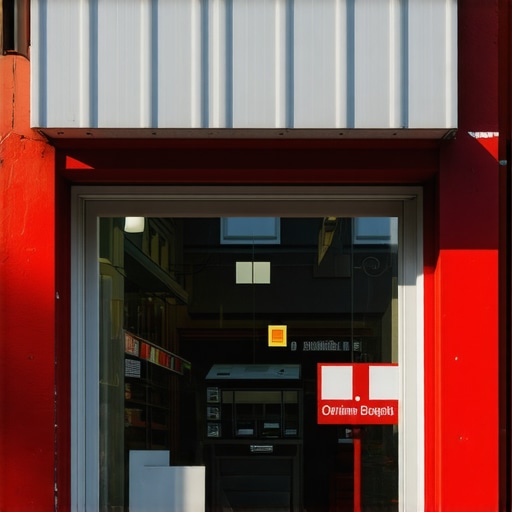
Proving a storefront is real requires aligning the physical signage, the legal utility documents, and the digital metadata of your location photos. Google uses a distance-weighted signal where relevance is secondary to the physical location of the user mobile device. If your coordinates overlap with a high-risk category like personal injury law or locksmithing, the system triggers a verification loop that can last for months. You must understand that a bot does not see a building. It sees a cluster of signals including Wi-Fi SSID mapping, Bluetooth beacon pings, and the historical persistence of your NAP (Name, Address, Phone) data across the web. When these signals diverge, the bot assumes you are a lead-generation ghost. To fix this, you need to provide data that a bot cannot ignore. This starts with the physical evidence of your presence. Often, the specific storefront signage google demands is the only way to break out of a pending review. If your sign is not permanent, the bot flags you as a temporary occupant. This is why banners taped to a window lead to instant rejection. You need etched glass, metal plating, or a monument sign that matches your legal filing precisely.
“Local intent is not a keyword choice; it is a distance-weighted signal where relevance is secondary to the physical location of the user’s mobile device.” – Map Search Fundamental
Why your physical address is a liability
A shared office or virtual space is a red flag that often leads to a soft suspension or a complete removal from the map pack. Google knows the difference between a real lobby and a Regus floor plan. If your suite number matches twenty other businesses, your proximity beacon becomes distorted. This creates brand confusion that requires seo services to fix brand confusion from merged gmb listings. The algorithm hates ambiguity. It wants a 1-to-1 relationship between a business and a physical storefront. When you try to scale too fast, you might need local seo services to stabilize volatile map rankings after expansion. I have seen companies lose everything because they moved their pin two blocks and failed to update their secretary of state filing. The bot sees the movement and assumes a competitor has hijacked the listing. If you are in this situation, you must document the transition with the identity document checklist for fixing stuck gmb appeals. This includes non-negotiable items like your business license and a lease that explicitly states you have exclusive access to the space.
Local Authority Reading List
- The storefront signage mistake that leads to instant rejection
- How to handle a competitor moving their pin to your neighborhood
- The utility bill detail that finally ends your verification loop
- How to force a human verification when video proof fails
Forensic proof of a legitimate storefront
Successful verification depends on high-resolution video that captures the journey from the street to your desk without a single cut or edit. The bot is looking for the flow of the building. It wants to see the street sign, the exterior of the building, and the internal operations. If you are an epoxy floor installer, you need the equipment photos every epoxy floor installer needs for instant gmb verification to prove you are not just a middleman. The bot analyzes the background of your video for signs of life. It looks for employees, tools, and inventory. If your video is too clean, it looks like a stock photo. You must also include the document that actually proves your office is not a virtual space. This could be a photo of your electric meter or a specialized utility bill. When the automated video tool fails, you need to know how to bypass the automated support loop to reach a human who can actually look at your files. This is where the 20-year veteran knows the tricks. You do not just submit a ticket; you provide a forensic packet. This packet should include your EIN letter and a video showing you unlocking the front door with a physical key.
The three mile radius that determines your revenue
The proximity filter can hide your business from customers even if you are fully verified and have hundreds of five star reviews. Your ranking is not a static number. It is a fluctuating bubble. You might find that your map listing is invisible beyond a three mile radius because of the density of competitors. This is called centroid crowding. If you are a screen printer in Arizona and you are struggling, you need to understand the real reason your listing does not rank in neighboring cities. It is not about your keywords. It is about the physical proximity of your pin to the user. To fight this, you need a gmb review and reputation management toolkit that focuses on local brand search. When customers search for your specific brand name from different locations, it tells Google that your business is a destination, not just a nearby option. This is the only way to expand your ranking radius. I have seen businesses dominate entire counties by focusing on these local interaction signals rather than just backlinks. If you find your ranking drops at night, check why your map ranking disappears at night. It is usually a settings error or a proximity shrink based on your stated business hours.
The forensic trace of service area polygons
Service Area Businesses (SABs) face a different set of hurdles because they do not have a public storefront to show the bot. If you work from home, you must follow the guide on how to verify your gmb when you work from a home office. You cannot use a P.O. Box. You cannot use a UPS store. These will lead to immediate rejection. You must show your tools, your branded vehicle, and your residence while keeping the address hidden from the public. If your service area business pin is being hidden, it is often because your polygon is too large. Google favors tight, realistic service areas. If you claim to serve three states from one truck, the bot will filter you out of every city. You need to use tools to find gmb categories and keywords that align with your actual dispatch patterns. If you are a plumber, do not just select Plumber. Select specialized categories that match the equipment in your truck. This level of detail is what separates a ranking listing from a suspended one. Finally, if you ever experience a gmb suspension, do not panic. Use the exact evidence files I have listed to force a human review. The bot is just a gatekeeper; the human specialist is the one who will actually toggle the switch to make you visible again.
“Local intent is a spatial query. The algorithm calculates the probability of a user visiting the storefront based on historical transit data and signal persistence.” – Location Intelligence Whitepaper