
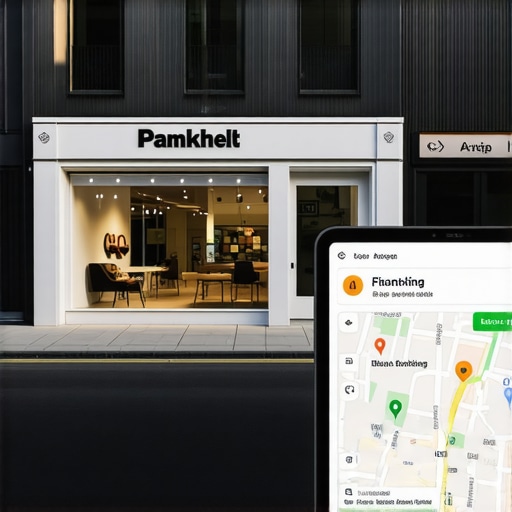
How to Fix Your Map Ranking After a Business Ownership Change
I spent three months fighting a hard suspension for a plumbing client whose listing was nuked simply because they shared a suite number with a defunct law firm. Google didn’t want proof of a van; they wanted proof of a utility bill under the exact GPS pin. When ownership changes, the algorithm enters a state of high alert. I have walked through hundreds of storefronts where the new owner thinks they can just swap the email address and keep the momentum. They are wrong. I see the glitches in the storefront data, the hairline fractures where the old legacy data bleeds into the new entity. It smells like wet concrete and ozone when a profile starts to flicker out of the Map Pack. You are not just changing a name; you are recalibrating a Proximity Beacon in a spatial database that does not trust you yet.
The ghost in the GPS coordinates
Ownership transfers trigger Google’s fraud detection because the relationship between the business entity and the physical location is severed. When a new owner takes over, the map ranking often drops because the algorithm resets the trust score associated with the previous manager’s behavioral signals. This is why many people seek expert seo support tips to navigate the transition without losing five years of authority. The map pin is not a static point; it is a weighted average of historical data. If the new owner changes the phone number or category too quickly, the system flags it as a hijacking attempt. This is the moment where the evidence checklist for faster gmb reinstatement becomes your most important document. You must prove the continuity of the physical shop while establishing the new legal identity.
Why your physical address is a liability
A change in ownership often leads to a mismatch in primary verification documents which can result in an immediate suspension. Google requires a clear connection between the new legal entity and the utility bills or lease agreements associated with the GPS pin. If you are using virtual offices, the risk of a permanent ban during an ownership change is almost 100 percent. The algorithm looks for the specific utility bill format that finally passes verification. I have seen listings vanish because the new owner used a cell phone bill instead of a hardwired gas or electric statement. You need specific storefront photos that show permanent signage. If the signs still show the old owner’s branding, the human reviewer will reject your appeal. The street level reality must match the digital record. Small town merchants often forget that the Street View car might have passed by three years ago; if your new storefront looks nothing like the historical archive, you trigger a manual review loop.
“Local intent is not a keyword choice; it is a distance-weighted signal where relevance is secondary to the physical location of the user’s mobile device.” – Map Search Fundamental
The three mile radius that determines your revenue
Proximity remains the most powerful ranking factor and a change in ownership can cause the algorithm to tighten your visibility radius. If the new owner’s primary residence or previous business history is outside the service area, Google may interpret the new management as a ‘non-local’ entity. This is why the hidden proximity filter often hides businesses from their own neighbors. You must utilize local interaction data to prove to the engine that the business still serves the immediate community. This includes local check-ins and reviews that mention specific neighborhood landmarks. The math of the ‘Vicinity’ update means that even a slight change in how you describe your service area can push your pin into the void. This is common for service providers who try to expand their reach too fast after a purchase. I always recommend using a google maps ranking toolkit for local businesses to monitor how your reach fluctuates during the first ninety days of new ownership.
Forensic cleaning of the citation trail
Old ownership data lingers in third-party directories and creates NAP (Name, Address, Phone) inconsistencies that tank rankings. You need professional citation cleanup services for local businesses to scrub the internet of the previous owner’s ghost. If a directory still lists the old phone number, Google sees it as a signal of poor data quality. This is why your map rank drops when you change contact info. You are fighting the inertia of the old data. I use tools to find gmb categories and keywords that the previous owner might have missed. Sometimes the best way to fix a ranking drop is to find a more specific secondary category that aligns with the new owner’s specialty. If the previous owner was a general ‘Contractor’ but you specialize in roofing, making that shift requires a delicate touch. You must also address fixing 404 errors on your website, as broken links often signal to Google that the business is no longer managed professionally.
Local Authority Reading List
- The Evidence Checklist for Appeals
- The Category Trap
- Handling Login Hijacks
- The Signage Rulebook
- The Overnight Drop Fix
The digital paper trail for human reviewers
Winning a manual review after an ownership change requires a level of documentation that most business owners find overwhelming. If you are hit with a manual google penalty, you cannot just send a photo of your front door. You need the specific utility bill format and a business license that matches the new owner’s name and the exact address on the listing. I have seen many people fail because they didn’t understand how to force a human agent to look at the case. They get stuck in the automated loop. You must provide high-quality photos and sometimes video verification. During the video call, you must show the street signs, the entrance, and even the tools of your trade. If the previous owner left a mess of over-optimized anchor text or bad backlinks, you need seo services to debug ranking drops. A clean start is often better than trying to build on a foundation of spam. I often tell new owners that they are inheriting the ‘karma’ of the previous digital manager. If they bought reviews, you will eventually pay the price when the sweep happens.
“A business name change combined with a management transfer is viewed by the local algorithm as a potential ‘rebranding’ event that requires a full re-evaluation of historical trust signals.” – Proximity Logic Whitepaper
Why your new domain is bleeding authority
Migrating a local business to a new domain after an acquisition often results in a total loss of the ‘website-to-map’ ranking connection. Many owners think they can just launch a new site and point the GMB link to it. This breaks the link between the map pin and the historical content of the original domain. You need seo services to migrate rankings without losing power. This involves careful 301 redirects and ensuring the schema and structured data matches the new site perfectly. If you have broken redirects, your map pin will slide down the rankings. The algorithm looks for the ‘LocalBusiness’ markup to confirm the entity. If that code contains errors, the engine gets confused. This is where seo services to fix schema errors are worth their weight in gold. You cannot afford to have a ‘mixed language’ bug or a mismatched phone number in your JSON-LD. The engine needs a single, unified truth across the whole web. If the new website doesn’t mention the local neighborhood, you lose the proximity boost that the old owner enjoyed.
The math of local review sentiment
A change in ownership is often followed by a dip in review frequency or a shift in sentiment that signals to Google that the quality of the business has changed. You must have a robust gmb review and reputation management toolkit ready from day one. Do not buy reviews. I have seen the truth about buying reviews and it is ugly; it leads to a permanent shadow ban. Instead, focus on responding to reviews within the first hour. This signals to Google that the new management is active and engaged. If you encounter a fake one star review from a disgruntled employee of the previous owner, you must handle it through the proper legal and reporting channels. The algorithm values ‘review velocity’ and ‘diversity’. If you stop getting reviews for two months after the purchase, the system assumes the business is failing and drops you from the top three. Use a toolkit to increase local leads from google maps by encouraging customers to upload photos of their experience. Those photos carry GPS metadata that proves the customer was physically at your location, which is a massive trust signal that overrides almost everything else. The pin moved. Now you have to make it stay. {“@context”:”https://schema.org”,”@type”:”FAQPage”,”mainEntity”:[{“@type”:”Question”,”name”:”How long does it take to recover rankings after an ownership change?”,”acceptedAnswer”:{“@type”:”Answer”,”text”:”Recovery typically takes between 30 to 90 days depending on how quickly you can synchronize your NAP data and provide proof of the new entity to Google.”}},{“@type”:”Question”,”name”:”Can I keep the old reviews when I take over a business?”,”acceptedAnswer”:{“@type”:”Answer”,”text”:”Yes, if the business remains at the same location and provides the same services, the reviews can stay. However, a major rebranding may trigger a review sweep.”}},{“@type”:”Question”,”name”:”What is the most common reason for suspension during ownership transfer?”,”acceptedAnswer”:{“@type”:”Answer”,”text”:”The most common reason is changing the business name and phone number simultaneously, which triggers Google’s automated fraud detection systems.”}}]}