Why Your Auto Repair Shop is Buried Under National Brand Listings in the Valley
For decades, the independent garage was the backbone of the American commute. In “The Valley,” local shop owners built their reputations on a handshake, a fair price, and the ability to diagnose a cooling system failure before the desert heat turned a minor leak into a cracked engine block. However, walk into any local shop today, and you’ll hear a different story. Despite having 20 or 30 years of experience, many of these master mechanics find themselves invisible to the modern consumer. When a driver pulls over to search for auto repair the valley, the local veteran is often buried under pages of corporate logos. This digital displacement isn’t just frustrating; it’s a systematic takeover of the local search landscape that threatens the very existence of independent automotive service providers.
The “Goliath” Effect: How National Franchises Dominate Search Results
The landscape of the automotive aftermarket is shifting beneath our feet. If you’ve noticed that your favorite local spot, like the long-respected Greulich’s, suddenly feels different, there’s a reason for it. A massive wave of consolidation has hit the Valley. Independent staples are increasingly being bought out by corporate giants like Sun Auto. When a national brand takes over, they don’t just change the signage; they deploy an SEO war chest that a local independent shop simply cannot match on its own. These national franchises dominate the search results for the phrase Mechanic Shop Near Me because they treat digital presence as a high-stakes numbers game.
National brands like Midas, Firestone, and Pep Boys benefit from what SEO experts call “Domain Authority.” Because their main website has been around for decades and has millions of backlinks, Google trusts every new page they create more than it trusts a local shop’s entire website. These corporations employ dedicated teams of digital marketers whose sole job is to manage hundreds of Google Business Profiles (GBP) simultaneously. They use standardized data, high-frequency posting, and aggressive backlink campaigns to ensure that whenever someone searches for automotive help, the corporate logo is the first thing they see. They have turned the local search results into a “pay-to-play” arena where the size of the marketing budget often outweighs the quality of the wrench-turning.
The Proximity Paradox: Why “Near Me” Doesn’t Always Mean Local
One of the most confusing aspects for shop owners is why Google’s “proximity filter” seems to work against them. You would think that if a driver is standing 500 feet from your bay doors, you would be the first result for Car repair shops near me. Unfortunately, that isn’t always the case. Google uses a complex blend of relevance, distance, and prominence. If a national brand three miles away has a more “optimized” profile than you do, Google may decide that the corporate shop is a better “answer” to the user’s query than your shop right next door.
This is what we call the Proximity Paradox. It’s a phenomenon where why your competitor with fewer reviews is outranking you in the map pack becomes a painful reality. It isn’t just about how close you are; it’s about how much digital “noise” you are making. National brands understand that Google’s algorithm rewards consistency and data richness. This is also why we see similar patterns in other regions; for instance, why Bossier City auto repair shops fail the proximity test on Google Maps often comes down to the same lack of local optimization that plagues Valley shops. To win the Car repair shops near me battle, a shop must prove to the algorithm that they are the most prominent and relevant choice, not just the closest one.
The Trust Factor: The “Beater Car” Dilemma
Consider the typical consumer in the Valley today. They aren’t all driving brand-new luxury vehicles with prepaid maintenance plans. Many are driving what we affectionately call “beater cars” – perhaps a 2012 Nissan Versa with 150,000 miles and a check engine light that’s been on since the last monsoon. This owner is desperate. They need their car to get to work, but they are terrified of being “ripped off” by a dealership or a high-priced corporate chain. They want a local mechanic they can trust.
However, when they search for help, the “Goliath” brands are the only ones that appear. Even though the consumer *wants* a local independent shop, the search engine funnels them toward the national brands because those brands have mastered the art of “perceived reliability” through SEO. The corporate shops win not because they are better at fixing cars, but because they are better at appearing trustworthy in the search results. They have thousands of reviews, professional photography, and polished websites that make them look like the “safe” choice, even if the actual service is impersonal and overpriced compared to the local alternative.
Specialized Services: The Secret Weapon for Local Shops
If you are an independent shop owner, you cannot outspend Midas. But you can out-maneuver them. National chains are generalists; they want high-volume, easy jobs like oil changes, brake pads, and tires. They often shy away from complex diagnostics or heavy-duty work. This is where the local shop can reclaim its territory. By focusing on niche markets, you can bypass the general corporate competition entirely.
For example, if a driver owns a heavy-duty truck or a specialized fleet, they aren’t looking for a generalist. They are looking for a diesel repair shop or a diesel mechanic near me. National brands often have very poor rankings for these specific, high-intent keywords. By optimizing your website and GMB profile for truck repair near me, you are targeting a customer that the big-box stores aren’t as equipped to handle. Specialization creates a “moat” around your business that corporate SEO budgets have a harder time crossing. When you become the “diesel guy” or the “transmission specialist” in the Valley, Google begins to see you as the authority for those specific queries, regardless of how many oil change coupons the franchise down the street is mailing out.
5 Reasons Your Shop is Currently Invisible (And How to Fix It)
If you feel like your shop is a ghost in the machine, it’s usually due to one of five critical errors. Correcting these can bridge the gap between you and the national brands.
1. Inconsistent NAP Data
NAP stands for Name, Address, and Phone number. If your shop is listed as “Joe’s Auto” on Facebook, “Joe’s Automotive” on Yelp, and “Joe’s Auto Repair & Service” on Google, the algorithm gets confused. National brands have software that ensures their data is identical across thousands of directories. You must do the same. This inconsistency is a major reason why your auto repair shop loses local alignment leads to competitors further away.
2. Lack of Visual Proof
Google’s AI can now “read” photos. If your only GMB photos are of your logo or a blurry shot of the front of your building, you are failing the trust test. You need the specific photo angles that prove to Google your shop is real, including shots of your team in the bays, specialized diagnostic tools, and clear signage. This proves to Google – and your customers – that you are a legitimate, high-functioning business.
3. Low Review Velocity
It’s not just about having a 4.8-star rating. It’s about how recently and how frequently you get new reviews. National brands have automated systems that text customers a review link the moment their car leaves the bay. If your last review was from three months ago, Google assumes your shop is less “active” than the franchise that gets five reviews a day. You need a system to keep your review velocity high.
4. Static GMB Profiles
A Google Business Profile is not a “set it and forget it” tool. You need to be active. One of the best ways to do this is by using the Q&A section. You can actually post your own questions and answer them to help the algorithm. Knowing how to use the Q and A section to boost your local keyword relevance is a game-changer for local shops trying to appear for specialized terms.
5. Signage and Verification Errors
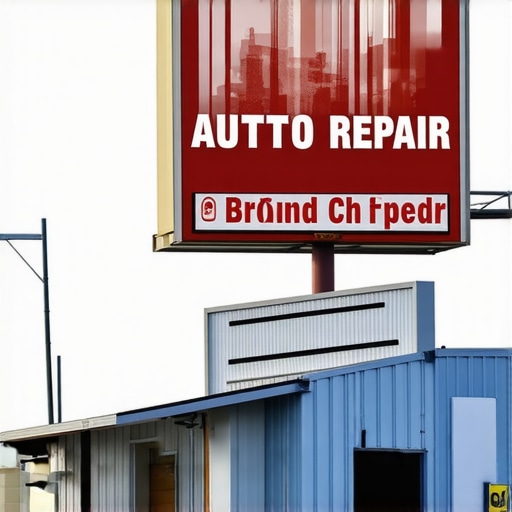
Google is becoming incredibly strict about physical locations. If your GMB name includes keywords like “Best Auto Repair” but your physical storefront signage just says “Joe’s,” you are at risk. In fact, the storefront signage mistake that triggers an automatic profile suspension is one of the most common reasons local shops disappear overnight. Ensure your digital name matches your physical reality exactly.
Reclaiming the Map: A Strategy for Valley Shop Owners
To fight back against the national takeover, Valley shop owners must stop thinking of themselves as “just mechanics” and start thinking of themselves as local authorities. Your strategy should center on dominating the phrase auto repair near me by leveraging your local roots. National brands can’t talk about local Valley landmarks, they don’t sponsor the local Little League teams, and they don’t understand the specific needs of Valley drivers during the 115-degree summer months.
Start by creating content on your website that addresses local issues. Write about how the Valley’s dust impacts air filters or how the heat kills batteries faster here than anywhere else. This local relevance signals to Google that you are the most helpful choice for someone searching for auto repair near me. Additionally, ensure your citations are clean and your GMB profile is updated weekly with photos of the actual work you are doing. Transparency is your greatest asset; showing a customer a photo of their actual worn-out brake pads via a GMB update creates a level of trust that a corporate call center can never replicate.
Conclusion: The Future of Local Auto Repair SEO
The “David vs. Goliath” struggle in the Valley’s auto repair market is real, but it is not a foregone conclusion. National brands have the money, but local shops have the authenticity and the specialized knowledge. By focusing on technical SEO, maintaining a high review velocity, and showcasing your specialized expertise in areas like diesel and truck repair, you can reclaim your spot at the top of the search results. Don’t let your shop be buried by a corporation 2,000 miles away. Audit your GMB profile today, fix your signage, and start proving to Google that you are the heartbeat of the Valley’s automotive community. If you aren’t sure where to start, contacting a specialist to help you outrank the franchises is the first step toward getting your bays full again.