
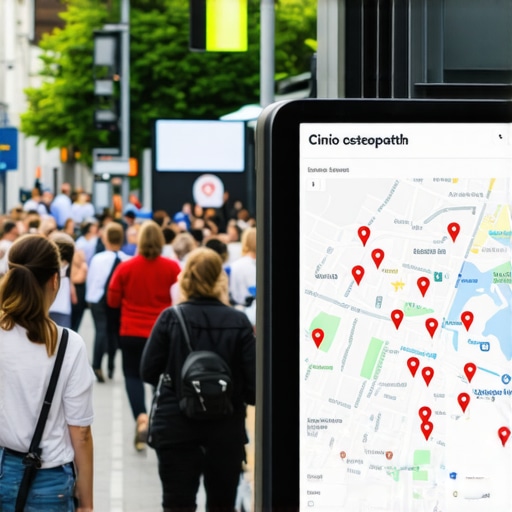
Why Local Reading Osteopaths Lose Map Clicks to Less Qualified Competitors
For a patient suffering from acute lower back pain or a persistent sports injury in Reading, the first port of call is almost inevitably a smartphone. A quick search for “help near me” triggers the Google Maps “Local Pack” – that trio of businesses prominently displayed at the top of the search results. As a clinical lead with decades of experience, I, Dr. Paul Bell (D.Health), have observed a frustrating paradox: the most highly qualified Reading Osteopaths, those with the deepest clinical expertise and the best patient outcomes, are frequently buried beneath less qualified competitors who have simply mastered the art of “Map Hacking.”
The Paradox of Choice on Reading’s High Streets
When you search for osteopaths in Reading, you expect Google to serve you the most competent clinical practitioners. However, the Google Maps algorithm does not possess a medical degree. It doesn’t know the difference between a practitioner who has spent five years in rigorous clinical training and a “wellness center” that opened last week. Instead, it relies on signals like proximity, review velocity, and keyword relevance.
This creates a “Paradox of Choice” for the residents of Reading and Caversham. A patient in pain might choose a clinic simply because it is 200 yards closer to their office or because it has a flurry of recent five-star reviews, even if those reviews are for generic relaxation services rather than clinical rehabilitation. This is part of what researchers call the “Wellness Wars,” where health content and visibility are becoming a battleground for clicks rather than a showcase of clinical merit. Many practitioners find that how the proximity filter hides your business from real customers is the single biggest hurdle to connecting with the patients who need them most.
In the Reading market, the density of practitioners is high. From the town center to the outskirts of Earley and Tilehurst, the competition for the “Map Pack” is fierce. When a highly qualified osteopath loses a click to a less qualified competitor, it isn’t just a loss of business; it is a potential risk to patient safety and recovery timelines. Patients deserve to find the highest standard of care, but the digital landscape often rewards those who prioritize SEO over the stethoscope.
The Qualification Gap: Osteopathy vs. Generic Wellness
To understand why this visibility gap is so problematic, we must first understand the qualification gap. In the United Kingdom, “Osteopath” is a protected title. To practice as an osteopath, an individual must have completed a four- or five-year Masters degree (M.Ost) or a Bachelor’s degree (B.Ost) and be registered with the General Osteopathic Council (GOsC). This training involves at least 1,000 hours of supervised clinical practice and a deep understanding of anatomy, physiology, and pathology.
Contrast this with the “wellness” providers who often dominate the results for sports massage reading. While massage therapy is a valuable tool for recovery, it is often unregulated. A “sports massage therapist” might have a high-level qualification, or they might have completed a short weekend course. They lack the clinical diagnostic skills to identify a sequestered disc or a referral pattern from a visceral organ – skills that a qualified osteopath uses in every consultation.
Many clinics in the Reading area leverage the popularity of generic terms to boost their rankings. They may focus heavily on Reading sports massage as a “hook” to get patients through the door, even if the clinical oversight is minimal. For the osteopath, who is bound by strict ethical and professional standards, competing with these marketing-heavy entities is difficult. This is a classic example of why your business category choice is ruining your map visibility; if an osteopath categorizes themselves too narrowly, they lose out to the “wellness” catch-all centers that cast a wider, albeit shallower, net.
Why “Less Qualified” Competitors Win the Map Pack
If clinical excellence isn’t the primary driver of Google Maps rankings, what is? Google’s local algorithm is built on three pillars: Proximity, Prominence, and Relevance. Unfortunately, these pillars can be easily manipulated by those who know how to “game” the system.
1. Proximity: The Geography Trap
Google prioritizes the business closest to the user’s physical location at the moment of search. If a patient is standing in a coffee shop in the town center, a small massage studio above a retail unit might outrank a world-class osteopathic clinic located just a mile away. This “proximity filter” often prioritizes convenience over quality.
2. Prominence and Review Velocity
Prominence is determined by how well-known a business is. In the digital world, this often translates to the number and frequency of reviews. “Less qualified” competitors often use aggressive review-solicitation tactics. They might offer discounts for reviews (a practice discouraged by professional bodies but common in the wellness industry) or encourage reviews for non-clinical interactions. A clinic with 500 reviews for “great tea and friendly staff” might outrank a clinical practice with 50 reviews that detail life-changing recoveries from chronic sciatica. Understanding why your competitors rank higher with fewer 5-star reviews often comes down to this “velocity” – how many reviews are coming in recently, rather than the total count or the depth of the feedback.
3. Keyword Stuffing and Virtual Offices
Some competitors use “Map Hacks” such as including keywords in their business name (e.g., “Best Sports Massage Reading & Osteopathy Center”) even if that isn’t their legal name. Others may use virtual offices or shared workspaces in the town center to appear closer to the “centroid” of Reading, despite their actual practitioners being located elsewhere.
The tragedy of this algorithm bias is highlighted when we look at the clinical evidence. A landmark study by Licciardone et al. (2013) in The Spine Journal demonstrated that Osteopathic Manipulative Treatment (OMT) provides significant recovery and pain reduction for chronic lower back pain. This is high-level, peer-reviewed evidence. Yet, a clinic providing this evidence-based care might rank lower than a local shop that has simply optimized its Google Business Profile for the caversham massage keyword. The algorithm values the keyword match more than the clinical outcome.
The Role of Multi-Disciplinary Care in Reading
In a sophisticated healthcare market like Reading, the best results often come from a multi-disciplinary approach. At Reflex Spinal Health, we have seen that the integration of different modalities – such as osteopathy, chiropractic, and soft tissue therapy – provides the most robust patient journey. However, the way Google categorizes these services can lead to patient confusion.
A patient searching for a Chiropractor Near Me may actually be better served by an osteopath, or vice versa, depending on their specific condition. A high-quality clinic will have the diagnostic capability to direct the patient to the right specialist. When Reading Osteopaths work alongside chiropractors and massage therapists, the patient benefits from a holistic view of spinal health.
The challenge is that Google often treats these as distinct, unrelated silos. If a clinic is excellent at osteopathy but doesn’t specifically optimize for chiropractic terms, they may never appear to the patient who needs them most. This is why we focus on the hidden interaction signal that actually moves your map ranking – it’s not just about the keywords; it’s about how users interact with the profile, whether they click to call, and whether they stay on the page to read about the clinical qualifications of the staff.
How Patients Can Spot a “Map Hack”
As a patient, how do you navigate this digital minefield? How do you ensure that the person you are trusting with your spinal health is a qualified professional and not just a master of SEO? Here is a checklist to help you separate the clinical experts from the map hackers:
- Check the Clinical Leadership: Does the clinic have a Clinical Director with advanced qualifications? Look for titles like “D.Health” (Doctor of Health) or “M.Ost” (Master of Osteopathy). For example, my role as a clinical lead involves not just treating patients but also educating other practitioners.
- Verify Registration: Every osteopath in the UK must be registered with the GOsC. You can check their name on the official register. If they aren’t on there, they aren’t an osteopath.
- Look for Specificity in Reviews: Ignore the “great vibe” reviews. Look for patients who mention specific conditions like “cervicogenic headaches,” “sciatica,” or “lumbar disc herniation.” This indicates the practitioner is actually performing clinical work.
- Physical Presence: Be wary of businesses that only have a “virtual office” address in the town center. A real osteopathic clinic requires specialized tables, diagnostic equipment, and a clinical environment. If the address looks like a shared P.O. box, proceed with caution.
- Content Depth: Does their website explain the “why” behind your pain, or is it just a list of prices and “book now” buttons? A clinic that invests in patient education is usually one that values clinical excellence.
If you are a practitioner reading this, you may need to learn how to audit your SEO marketing agency for real local map results. If your agency is just buying “backlinks” and not highlighting your clinical expertise, they are doing you – and your patients – a disservice.
The Future of Local Health Search
The landscape of local search is shifting. We are moving away from simple keyword matching toward “Physician-Informed AI” and more sophisticated search models. Tools like ChatGPT and other LLMs are beginning to be used by patients to diagnose their pain. While this has risks, it also offers an opportunity for highly qualified Reading Osteopaths to stand out. AI can synthesize complex information and may eventually be able to distinguish between a peer-reviewed clinical practice and a generic wellness shop.
However, until that day comes, practitioners must be proactive. We must use real-time data to dominate local map search. This doesn’t mean “gaming” the system, but rather ensuring that our real-world clinical excellence is reflected in the digital signals Google understands. This includes updating Google Business Profiles with clinical case studies (anonymized, of course), posting about recent medical research, and ensuring that the “Prominence” of the clinic is built on a foundation of genuine patient success.
In Reading, we are lucky to have a vibrant healthcare community. But as the “Wellness Wars” escalate, it is the responsibility of both the practitioner and the patient to look beyond the first three results on a map. Clinical quality should never be sacrificed for the sake of a shorter walk or a shinier website.
Conclusion: Choosing Excellence Over Proximity
Google Maps is a remarkably powerful tool, but it is an imperfect filter for healthcare. The fact that “less qualified” competitors often win the click is a symptom of an algorithm that values digital signals over clinical outcomes. As we have seen, the rigorous training of osteopaths in Reading – backed by clinical evidence such as the Licciardone et al. (2013) study – is what truly drives long-term recovery.
Whether you are seeking a sports massage near me or a comprehensive spinal assessment, I encourage you to look deeper than the Map Pack. Check the credentials, verify the registration, and choose a clinic that prioritizes your health over its search ranking. At Reflex Spinal Health, we remain committed to clinical excellence, ensuring that when you find us, you find the care you truly deserve.