
The shared suite trap
A shared office address fails in map rankings because Google cannot verify unique physical presence. When multiple businesses share one suite or floor without permanent signage, the algorithm filters them out to prevent map spam. This triggers a proximity filter that hides your pin from local customers.
The air in my office smells like peppermint and old paper. It is the scent of a man who has spent two decades protecting the hardware stores and the family diners of this town from the digital carpetbaggers. I sit here looking at a map of our main street, and I see ghosts. These ghosts are the businesses using a shared suite or a virtual office. They think they can trick the proximity sensors. They are wrong. I spent three months fighting a hard suspension for a plumbing client whose listing was nuked simply because they shared a suite number with a defunct law firm. Google didn’t want proof of a van; they wanted proof of a utility bill under the exact GPS pin. This is the reality of the hyper-local layer. If you cannot prove you have a dedicated door with a permanent sign, you are a ghost in the machine.
The math of shared coordinates
The mathematical weight of a physical location depends on coordinate salience and unique entity identification. Google uses the Opossum algorithm to filter results that share the same latitude and longitude. When two businesses in the same category occupy the same building, only one typically ranks in the Map Pack.
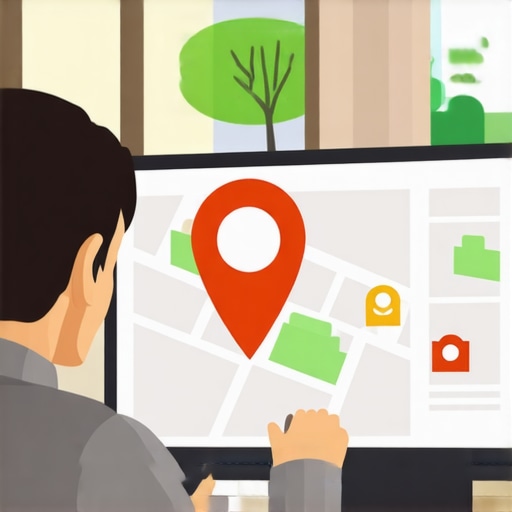
The algorithm is a spatial database engine. It calculates the distance between the user and the business pin. When you use a coworking space, your GPS coordinates are identical to twenty other companies. This causes a conflict in the proximity signals. If you need seo services to recover positions after local algorithm shake up, you must first resolve this data collision. Google wants to see a distinct entrance. They look for the forensic trace of a real operation. This includes the Wi-Fi signal names that match the business, the interaction velocity of mobile devices at that specific spot, and the physical signage captured by street view cars. [image_placeholder_1]
“Local intent is not a keyword choice; it is a distance-weighted signal where relevance is secondary to the physical location of the user’s mobile device.” – Map Search Fundamental
Why a virtual office address is a major ranking risk
A virtual office address is a major ranking risk because it lacks the permanent physical infrastructure required by Google Business Profile guidelines. These locations are often flagged for automated suspension during periodic algorithm updates. Google views them as attempts to manipulate proximity without having a local staff presence.
I have seen hundreds of merchants lose everything because they tried to rent an address in the city. They thought it was a shortcut. Instead, it was a trap. Our why your virtual office address is a major ranking risk guide explains the risk levels associated with shared suites. Google uses secondary verification tiers now. They might ask for a video walk-through. If you cannot show your receptionist and your tools, the verification fails. You need local seo services to fix missing map pack rankings that focus on physical truth rather than digital tricks.
Local Authority Reading List
- The identity document that resets a stuck verification request
- 5 interaction velocity fixes for a google maps ranking boost
- How to fix the proximity filter that hides your business pin
- The physical proof checklist that forces a human review
- Talking to a real person tactics for human gmb help
The three mile radius that determines revenue
Proximity is the strongest ranking signal in local search, often outweighing relevance and prominence combined. A business located more than three miles from the user has a significantly lower chance of appearing in the top three results. This is the proximity filter that hides your pin.
You can have a thousand five-star reviews, but if your pin is in a shared office at the edge of town, you will fail. We use a local seo checklist and toolkit for gmb to evaluate these spatial gaps. Many owners ask how gmb ranking toolkits work for local seo when their calls stop. The answer is usually the Centroid. If you are outside the density center of your category, you are invisible. You need seo services to fix slow website and technical issues to ensure your site is communicating your location correctly through JSON-LD schema. Every character matters. A mismatched phone number in the secondary tier can kill your organic trust score. This is why how to improve google business profile ranking toolkit strategies are so vital for the modern merchant.
Trust signals for local seo recovery
Trust signals for local SEO are restored by aligning physical evidence with digital data points. This process includes correcting NAP consistency across high-authority citations and submitting physical proofs like utility bills. Once the algorithm detects a consistent pattern of physical presence, the ranking positions begin to stabilize.
When a profile is nuked, you need seo consulting services for complex penalty cases. You cannot just click a button. You need seo services to fix keyword stuffing and content issues if you have been aggressive with your business name. Google wants honesty. Use services to restore trust signals for local seo that prioritize the human element. For example, the identity document that resets a stuck verification request is often a state-issued business license that matches your utility bill. If those do not match your GMB data, the bot wins. I hate it when the bots win. I prefer the small business owner who has a real desk and a real sign. That is who belongs on the map.
The physical proofs for manual review
Physical proofs for manual human review must include time-stamped photos of the storefront and permanent building directories. Google agents look for tax documents and utility bills that prove the business operates from the listed address. Providing these files is the only way to bypass the automated rejection loop.
If you are stuck in the loop, use gmb profile reinstatement services that know how to talk to the support team. You need a photo of the suite number on the door. It cannot be a sticker. It must be permanent. You need a photo of your business license hanging on the wall. This is how you prove you are not a lead-gen spammer. The algorithm is watching. Your interaction velocity matters too. If customers are searching for your name and then visiting your store, Google sees that mobile signal. That is the ultimate proof of life. It is more powerful than any backlink. Focus on the reality of your shop. Keep your peppermint handy. The war for the map is won on the ground.