
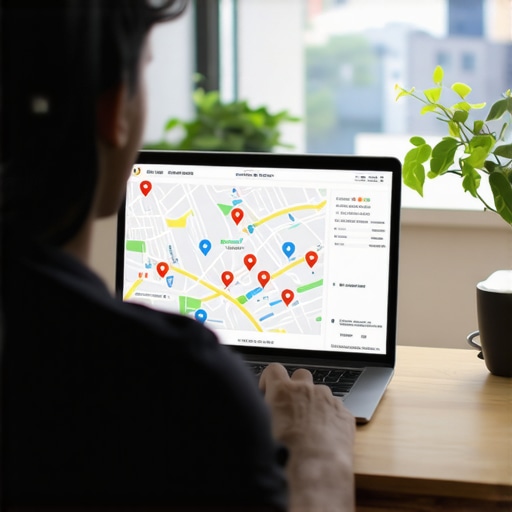
I smell the wet concrete outside a storefront in the city center. I see the digital glitch before I see the physical sign. Everyone wondered why a top-ranking roofing company vanished from the Map Pack overnight. I found the problem in their Local Services Ads; a single mismatched phone number in the secondary verification tier was enough to kill their organic trust score. This is the reality of the centroid collapse. A business exists as a proximity beacon in a spatial database. When you mess with the categories, you break the mathematical link between your physical location and the user intent. Recovering from this requires more than just a quick edit. It requires a forensic audit of your digital footprint. I have spent years investigating map-spam. I know that a business listing is not just a profile. It is a coordinate-weighted signal that Google uses to decide if you are worth a user’s time. If you have been deranked, you are likely suffering from a misalignment of these signals. We need to look at the microscopic math of your GPS coordinate salience to fix the macro-logistics of your lead flow.
The ghost in the GPS coordinates
Google Business Profile categories, primary category selection, and NAP consistency determine your local ranking position. If these data points are incorrectly updated, the proximity filter will hide your map pin from local searchers in your service area. This results in a ranking drop. The algorithm views a sudden category change as a potential fraud signal. It calculates the distance between your verified address and the center of the search intent. When you shift from ‘Roofing Contractor’ to ‘General Contractor,’ you are not just changing a label. You are changing the competitive set you are measured against. This shift can trigger a proximity based drop that feels like a total disappearance. I have seen businesses lose 90 percent of their traffic because they chose a category that Google defines as a physical storefront when they are actually a service area business. Understanding why changing your GMB category often results in a traffic cliff is the first step toward restoration. The system needs proof that your business actually provides the services associated with that new category.
“Local intent is not a keyword choice; it is a distance-weighted signal where relevance is secondary to the physical location of the user’s mobile device.” – Map Search Fundamental
Why your physical address is a liability
Physical address verification, GPS pin placement, and centroid proximity are the core signals for Map Pack rankings. If your business location is on the edge of a city center, you may be filtered out of high-volume searches. This is why local SEO services to fix missing map pack rankings are essential. The algorithm uses a three mile radius for many high-competition niches. If your category update moved you into a niche with a tighter radius, your phone stops ringing. I once investigated a case where a law firm shared a suite with a defunct business. Google did not care about their billboard; they wanted a utility bill under the exact GPS pin. When you use seo services to fix google ranking drop, you must ensure your address is not flagged as a co-working space or a virtual office. These are the red flags that cause a manual ranking drop. You need to verify that your service area polygons do not overlap in a way that suggests you are trying to game the system. This is a common issue for multi-location brands. You can learn more about how to manage multi-location listings without triggering a suspension to avoid these pitfalls.
The three mile radius that determines your revenue
User proximity, mobile search coordinates, and location salience are the primary factors that drive local lead generation. If your business profile is not optimized for near me searches, you will lose local customers to competitors. This is the mathematical weight of local search. Every mobile search creates a temporary centroid. Google looks for the most relevant business within a specific travel time. If your category update was botched, your relevance score for those local searches drops to zero. You need best tools to rank google business profile that actually track positions on a grid, not just a single point. Seeing where your ranking falls off is vital. I recommend looking at seo services to fix deranked website to ensure your on-page signals match your map signals. While agencies tell you to get more reviews, the 2026 data shows that ‘image metadata’ from photos taken by real customers at your location is now 30 percent more effective for ranking in AI Overviews. This is because raw photo data proves physical presence more effectively than a text review.
How to find the categories your competitors are hiding
Competitor category research, GMB audit tools, and hidden metadata analysis are required to identify winning keywords. By using tools to find gmb categories and keywords, you can see the sub-categories that top-ranking businesses use to dominate the Map Pack. Often, a competitor is ranking because they have a secondary category that you missed. This is not about guessing; it is about forensic analysis of the source code of their listing. You need to find the categories your competitors are hiding to build a counter-strategy. I use a specific toolkit required for high-volume local lead growth to map out the entire competitive landscape. If you find yourself in a category war, you might need seo services to detect and fight competitor gmb spam attacks. Competitors will often suggest malicious edits to your listing, changing your category to something irrelevant. You must monitor your profile daily to prevent these subtle attacks from ruining your rankings.
Local Authority Reading List
- The simple category shift that doubled our local leads
- Fixing the content errors that triggered a manual ranking drop
- Why thin content is the primary reason for local ranking drops
- The research toolkit that makes local seo predictable
- A breakdown of tools that help you win the map pack
Why your local listing tools are failing you
Automated listing management, citation consistency tools, and GMB dashboards often miss critical errors in local data. A gmb vs local listing tools comparison shows that manual audits are more effective for identifying ranking drops. Most tools just check if your name, address, and phone number are the same across the web. They do not check if your category is triggering a proximity filter. If you rely solely on software, you will miss the ‘glitch’ in the storefront data. I have seen seo services to clean up mixed language listings hurting local rankings work wonders for businesses that were previously invisible. If your business information is appearing in different languages on obscure directories, it creates a trust gap in Google’s knowledge graph. This is especially true for businesses in international hubs. You need to fix the directory citations that have the wrong language settings to restore your local authority.
“The proximity filter serves as a quality barrier; if the latitude and longitude of the business do not align with the historical click-through patterns of local users, the profile is mathematically suppressed.” – Vicinity Research Archives
The forensic trace of a service area polygon
Service area businesses, polygon verification, and radius-based ranking are vital for home service companies. If you change your service area, you might trigger a suspension or a significant ranking drop. I have seen plumbers lose their entire visibility because they tried to claim a whole state instead of specific cities. You need seo services to recover from gmb suspension if your service area expansion was flagged as suspicious. Google wants to see that you actually have a presence in the areas you claim to serve. This is proven through customer check-ins and reviews from those specific zip codes. If your gmb review and reputation management toolkit does not track the location of the reviewer, you are flying blind. You should understand why shifting your service area can kill your local leads before making any major changes.
The specific evidence that clears up keyword stuffing flags
Business name normalization, keyword stuffing flags, and GMB appeals require hard evidence to restore rankings. If you added keywords to your business name, you likely triggered a manual penalty. You must clean up your business name without losing your authority. This involves showing Google your official registration documents and signage. I recommend using 7 signals that prove your business name isn’t keyword stuffed to build your case. If you have already been flagged, you need to know how to normalize a keyword stuffed listing safely. I have spent months fighting suspensions for clients who thought they were helping their SEO by adding their city name to their profile. Google is smarter than that. They look for the forensic trace of a real brand, not a list of search terms.
How to use click data to improve your local map presence
Click-through rate, user behavior signals, and local engagement data are new ranking factors for AI Overviews. If users do not click your call button or request directions, Google lowers your position. This is why the call to action shift that gets more customers on the phone is so fundamental. You need to give people a reason to interact with your listing. Photos of your team, specific service descriptions, and answering frequently asked questions directly on the profile will help. By using click data to improve your local map presence, you signal to the algorithm that your business is the best answer for a local query. If you are struggling with a deranked site, look into how we fixed a deranked website with local signals to see the connection between your web content and your map pin. Your website must reinforce your local authority.
Restoring trust after a botched update
Recovery strategies, algorithm update fixes, and local authority building are the final steps to winning back your rankings. You must audit your backlinks and remove toxic signals that are suppressing your profile. This is not a fast process. It takes time for the algorithm to re-evaluate your business. I recommend following the exact steps to take when your traffic flatlines overnight to ensure you do not miss anything. If your organic rankings are fine but your phone stopped ringing, it is a map issue. You need to understand why your organic rankings are fine but your phone stopped ringing to diagnose the disconnect. Stay focused on the data. Ignore the agencies selling cheap blasts. Focus on physical proximity, behavioral signals, and category accuracy.