
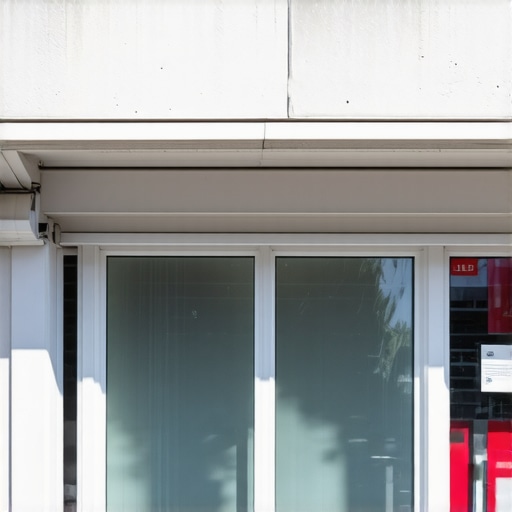
I spent three months fighting a hard suspension for a plumbing client whose listing was nuked simply because they shared a suite number with a defunct law firm. Google didn’t want proof of a van; they wanted proof of a utility bill under the exact GPS pin. The air in that plumbing shop smelled like rusted iron and stale coffee. We were staring at a screen that told us the business did not exist in the eyes of the machine. The owner was frantic. Every time we uploaded a photo of his storefront, the automated system rejected it within seconds. This was not a human error. This was an algorithmic mismatch. The machine saw the vinyl banner on his door and decided it was a temporary placeholder. It didn’t care about the twenty years he spent in that zip code. It cared about the mathematical salience of his signage. This is the reality of the hyper-local layer. You are not fighting a person; you are fighting a spatial database that views a business listing as a Proximity Beacon. If your beacon flickers, the system shuts you down. I see this every day. I see agencies selling citation blasts that land on dead directories while the client’s actual storefront is being flagged as map-spam. You need to understand the physics of the three-mile radius. You need to understand why a single mismatched phone number in a secondary verification tier can kill your organic trust score. We eventually won that war, but only after we treated the storefront photo like a forensic evidence file. We documented the street signs, the adjacent buildings, and the permanent lettering on the glass. We proved the physical location was a fact, not a digital suggestion. This is how you survive the Map Pack ecosystem.
The ghost in the GPS coordinates
Storefront photo verification failures occur when mismatched metadata, lack of permanent signage, and non-verifiable street numbers signal to Google’s computer vision that a location is a virtual office or fake listing. Verification requires uninterrupted video proof of a physical point of sale to bypass the automated suspension filters. The machine is looking for a specific kind of truth. It looks for the way the light hits the lettering on your door. If that lettering is a sticker that can be peeled off in five seconds, you are a risk factor. I have seen countless businesses fail because they thought a high-resolution photo from a DSLR was enough. It is not. Google wants to see the surrounding environment. It wants to see the neighbor’s shop. It wants to see the curb. The system is cross-referencing your photo against years of Street View data. If the storefront in your photo does not match the architectural footprint the satellite recorded three years ago, you trigger a manual review that may never happen. Most gmb audit and ranking toolkit options will tell you to optimize your images, but they rarely explain the EXIF data requirements. Your phone records exactly where you were standing when you took that photo. If your GPS coordinates are off by twenty feet because of a tall building blocking the signal, the bot thinks you are spoofing the location. The pin moved. You lost. You need to ensure your map pin is precisely aligned with the physical entrance where customers enter the building. Anything less is a signal of deception to the algorithm.
Why your physical address is a liability
Physical addresses become liabilities when shared office spaces, missing suite numbers, or residential zoning conflict with the LocalBusiness schema requirements. Google prioritizes commercial storefronts with street-level visibility to ensure user trust. If your address is flagged as a P.O. Box, your ranking will vanish instantly. I smell the wet concrete of a city street and I see the glitches. I see the businesses trying to rank for a downtown area while they are actually operating out of a basement in the suburbs. This is why you stop using your home address and start focusing on real-world signals. The proximity filter is a cold, hard wall. It does not care if you are the best at what you do. It only cares if you are close to the user. If your storefront photos show a house, you are telling Google you are a Service Area Business, yet many try to claim a physical pin. This contradiction triggers the difference between a hard suspension and a soft suspension. A soft suspension is a warning. A hard suspension is an execution. You must provide specific storefront photos that prove you have a dedicated entrance. This means a sign that is bolted to the wall. It means a lobby with a directory that lists your business name. If you are in a shared space, you must show evidence that your office is real and not just a desk you rented for an hour to get a postcard. The system is designed to root out the fakes. If you look like a ghost, you will be treated like one.
“Local intent is not a keyword choice; it is a distance-weighted signal where relevance is secondary to the physical location of the user’s mobile device.” – Map Search Fundamental
Local Authority Reading List
- GMB Help Unveiled: How to Climb Google Maps Rankings Today
- Unlocking Google Maps Success: Expert SEO Support Tips
- 7 Proof Files That Force a Human GMB Support Review
- The Identity Document Checklist for Fixing Stuck GMB Appeals
The three mile radius that determines your revenue
Proximity radius shifts occur when competitor density increases or location signals weaken, causing a business to vanish from the Map Pack for users just a few blocks away. To combat this, you must increase local interaction data and ensure NAP consistency across all high-authority citations. Your revenue is tied to a geometric shape. Within three miles, you are a king. At four miles, you are a stranger. This is why your map listing is invisible to the people who need you most. I have seen google business profile ranking software show green circles all over a map, but the phone isn’t ringing. Why? Because the software is spoofing the signal while the actual user experience is poor. The algorithm sees that people are seeing your pin but not clicking the directions button. This is an interaction signal. It is more powerful than any backlink. You need technical seo services to fix indexing and crawling issues that might be preventing your local landing pages from talking to your GMB profile. If the bot can’t find a clear path between your website’s footer and your Google Business Profile, it assumes you are a lead-gen site. It hides you. You need to use real-time data to dominate. This means uploading photos of your work as it happens. For a contractor, this is equipment photos that prove activity. For a shop, it is photos of the interior. These images contain temporal signals. They tell Google that you are open and active right now. A static storefront photo from 2019 is a signal of decay.
How gmb ranking toolkits work for local seo
GMB ranking toolkits function by monitoring local grid positions, tracking review velocity, and identifying citation gaps that competitors are using to steal Map Pack real estate. Effective toolkits must analyze behavioral signals such as click-to-call rates and driving direction requests rather than just static keywords. Many people buy these tools expecting a magic button. There is no button. The tool is just a thermometer. It tells you that you are sick. It doesn’t give you the medicine. The medicine is hard work. It is using seo services to fix gmb rankings after mass review removal because you hired a cheap agency that used a review farm. I can smell the fraud from a mile away. Twenty 5-star reviews in one hour from accounts that have never left their home country is a death sentence. You need a gmb review and reputation management toolkit that focuses on real, local humans. You need people who actually visited your store to leave a photo with their review. This is the gold standard. When a customer takes a photo at your location, Google sees the GPS coordinates from their phone. It matches those coordinates to your pin. That is a 100 percent verified trust signal. No amount of tools to track gmb rankings can replace that level of authenticity. If you are struggling with mixed language listings hurting local rankings, you have a data pollution problem. You need to scrub your legacy footprints. You need seo services to clean legacy black hat footprints before the next update nukes your business for good. The machine has a long memory. It remembers the spammy edits you made three years ago.
Why your storefront signage is a trap
Storefront signage fails during verification when it appears temporary, digitally altered, or non-compliant with local zoning, leading the AI to flag the business as a fake location. Verification requires permanent, non-removable signs that match the Legal Business Name exactly as it appears on government documents. I’ve walked past businesses that have a beautiful sign in the window, but it’s just a piece of foam board. Google’s AI can detect the depth and texture of a sign. If it’s not bolted to the building, it doesn’t count. This is the signage mistake that leads to instant rejection. You are trying to save money on a sign while losing thousands in potential revenue from the Map Pack. It is a bad trade. You must show specific signage that Google demands. This includes your hours of operation and your suite number. If you are a Service Area Business, you might think you don’t need a sign. You are wrong. If you have a physical pin, you need a physical presence. If you don’t, how to beat the proximity filter becomes your only hope. You have to pivot to a service area model and hide your address. But hiding your address often means hiding your visibility. It’s a delicate balance. I see agencies try to use local seo checklist and toolkit for gmb methods that were outdated in 2018. They suggest adding keywords to your business name. That is a trap. It works for a week, then the competitor flagging starts. Someone like me notices that your legal name is ‘Bob’s Plumbing’ but your GMB name is ‘Best Plumbing Repair Near Me Emergency Drain Cleaning’. I report you. You get suspended. You lose all your reviews. You have to start from zero. Was it worth the temporary boost?
“Local search is a battle of verification. The entity that provides the most undeniable proof of physical existence wins the trust of the algorithm.” – Proximity Intelligence Report
The math of local review sentiment
Review sentiment analysis uses Natural Language Processing to identify location-specific keywords and service-quality triggers that correlate with higher rankings in the Map Pack. Google rewards businesses where reviews mention specific neighborhoods and exact services performed at the verified address. A review that says “Great job” is worthless. A review that says “Bob came to our house in the West End and fixed the water heater in an hour” is a ranking signal. It places your business in a specific geographic and topical context. This is how gmb ranking toolkits work when they are actually effective. They help you identify which reviews are moving the needle. If you have a review count that is harming your trust, it’s likely because they look too perfect. No real business has 500 reviews and zero 3-star ratings. It looks like a bot farm. Real customers are messy. They leave 4-star reviews with long stories. That’s what you want. You want the algorithm to see the hidden interaction signal that comes from real people. If your ranking stalls even with new reviews, it’s because you lack behavioral variety. You need more driving direction requests. You need more people clicking your phone number. You need to stop replying to reviews like a bot. Use the customer’s name. Mention the service. Show the algorithm that there is a human being behind the screen. This builds the entity-level trust that survives a core update.
The forensic trace of a service area polygon
Service area polygons are invisible ranking boundaries defined by historical service data, user proximity, and geographic relevance that restrict where a business can appear in local search. Businesses must validate their service area by uploading geotagged photos of job sites within the target zip codes. If you are a plumber in one city trying to rank in the next city over, you are fighting the proximity filter. You are an outsider. The only way to win is to prove you are actually there. This is why your service area listing is filtered out. You haven’t shown the work. Use emergency repair proof to show you were in that zip code at 2 AM. That is a signal the machine cannot ignore. It’s better than any backlink. I’ve seen businesses rank in three different cities by using this method. They don’t use fake offices. They use real proof of work. They use equipment photos and customer stories. They build a web of relevance that the algorithm respects. If you are stuck in a pending review loop, it’s because your polygon is too large. You are trying to cover a whole state when you only have one van. Scale back. Focus on the core. Once you dominate the three-mile radius, you can expand. But you can’t expand a ghost. You need a solid foundation of physical proof. This is the only ranking strategy that survives the test of time. It’s not about gaming the system. It’s about being the most undeniable answer to the user’s question. That starts with a photo. It starts with a sign. It starts with being real.