
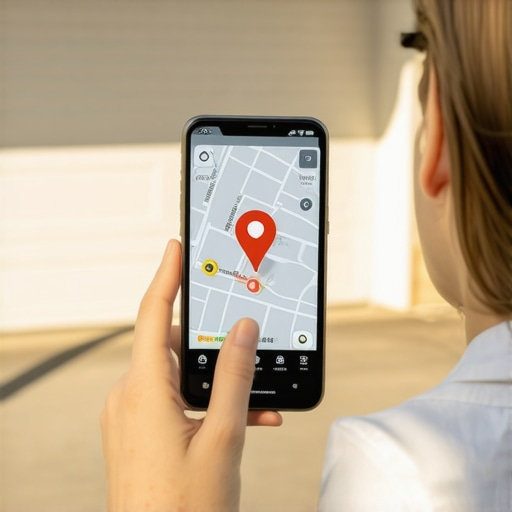
Why Your Local Garage Door Repair Pin Vanishes When Customers Search From Their Driveway
Imagine this: It is 7:00 AM on a Tuesday. A homeowner in your immediate neighborhood is rushing to get to work, but as they hit the button on their wall console, they hear a violent, metallic crack. Their garage door spring snapped, leaving their car trapped inside. Frustrated and in a hurry, they stand in their driveway, pull out their smartphone, and search for “local garage door repair.”
Your business is located less than two miles away. You have a physical office, a fleet of branded trucks, and a team of technicians ready for dispatch. Yet, as the homeowner scrolls through the Google Map Pack, your business is nowhere to be found. Instead, Google displays a competitor from three towns over and two “lead generation” sites that don’t even have a physical presence in the city. Your digital pin has effectively vanished exactly when and where it mattered most.
This is the “Proximity Paradox.” In the world of Local SEO, being geographically close to a customer is no longer a guarantee of visibility. My name is Pooja Sharma, and I specialize in helping garage door companies navigate these exact frustrations. I focus on delivering real results – not just vanity metrics like “impressions,” but actual phone calls and booked jobs. If you’ve ever wondered why your garage door service disappears when local homeowners search for emergency spring repairs, this guide is for you.
Understanding the Google Map Pack Proximity Filter
To fix a disappearing pin, we first have to understand how Google decides who gets the coveted top three spots in the Map Pack. Google’s local algorithm is built on three pillars: Proximity, Prominence, and Relevance. While proximity (how close you are to the searcher) used to be the dominant factor, the “Vicinity Update” and subsequent algorithm shifts in 2024 and 2025 have changed the landscape.
Google now employs a sophisticated proximity filter designed to prevent one company from dominating an entire metropolitan area with “spammy” tactics. However, this filter often catches legitimate businesses in its net. If your garage door service lacks sufficient “Prominence” or “Relevance” signals, Google’s algorithm may decide that a competitor further away is a “better” result for the user, effectively filtering you out of the local results to avoid redundancy.
According to recent industry data, the top Google Business Profile (GBP) ranking factors now include primary category selection, keywords in the business title (though this is a risky game with Google’s terms of service), and the quality of your backlink profile. When a homeowner needs overhead garage door repair, Google wants to provide the most authoritative option. If your digital footprint is shallow, your proximity becomes irrelevant. You become a victim of the proximity filter because Google doesn’t “trust” your business enough to show it over a more prominent competitor located further away.
This is particularly common in the garage door industry, which Google classifies as a “Your Money or Your Life” (YMYL) and “Home Service” category. These categories are under intense scrutiny due to a history of lead-gen spam. To survive, you must prove you are the most relevant garage door repair expert in your specific radius. If you aren’t seeing the leads you expect, you might be suffering from the hidden map filters that keep your garage door installation service invisible.
Why Your Pin Vanishes: The 3 Main Culprits
Through my work at Help Me Rank GMBs, I have identified three recurring reasons why a garage door pin disappears from local searches. Addressing these can often restore your visibility almost overnight.
1. Category Dilution and Overlap
One of the most common mistakes I see is “category stuffing.” Business owners think that by selecting every possible category – Garage Door Supplier, Repair Service, Metal Fabricator, General Contractor – they will show up for more searches. In reality, this dilutes your relevance. If Google can’t figure out if you are primarily a retailer or a service provider, it may skip you entirely when someone searches for garage door opener repair services.
You must choose one primary category that matches the majority of your revenue-generating searches. For most of my clients, “Garage Door Repair Service” is the gold standard. Secondary categories should be used sparingly and only if they truly reflect your service offerings.
2. The Service Area Business (SAB) Trap
Many garage door companies operate as Service Area Businesses, meaning they go to the customer and don’t have a showroom where customers are greeted. While this is a legitimate business model, Google’s algorithm often gives a slight “prominence boost” to businesses with a verified physical storefront that is open to the public. If you hide your address, your “ranking radius” is often smaller than a competitor who has a visible office.
Furthermore, if your service area is set too wide (e.g., covering the entire state), Google may struggle to rank you for hyper-local searches. You are essentially telling Google you are “everywhere,” which the algorithm often interprets as “nowhere in particular.”
3. Lack of Hyper-Local Signals
Does your website actually mention the neighborhoods you serve? If your site only talks about “garage door repair” in general terms, you are missing out on the local relevance pillar. To dominate the Map Pack, your content needs to be anchored in reality. This means creating dedicated pages or sections for specific service areas.
For example, if you are targeting the Coachella Valley, your site should explicitly mention your work as a localgaragedoorpalmdesert.com provider in Palm Springs, or how you handle calls for localgaragedoorpalmdesert.com in La Quinta and localgaragedoorpalmdesert.com in Cathedral City. These geographic keywords, combined with emergency garage door services, signal to Google that you are the local authority. Without these signals, Google has no reason to prioritize your pin over a competitor who has invested in local content.
The “Emergency” Factor: Why Urgency Changes the Map
Search behavior changes drastically when a situation is urgent. When a customer searches for emergency garage door repair, Google’s algorithm shifts its priorities. In a non-emergency search (like “new garage door styles”), Google might favor businesses with long, detailed reviews and high-quality photo galleries. However, for an urgent garage door repair, Google prioritizes “availability” and “responsiveness” signals.
If your Google Business Profile does not explicitly state that you offer 24/7 service or same day garage door repair, you will likely be filtered out of these high-intent searches. Top-performing competitors, such as “Superior Garage Door,” have mastered this by ensuring their meta-descriptions and GBP updates frequently use terms like “Same-day spring, opener, cable, and track installation.”
Google monitors “user behavior” signals closely. If a user clicks on your profile for an emergency search but sees that your “hours” say you are closed, they will immediately bounce back to the search results. Google tracks this “pogo-sticking” behavior. If it happens enough, Google learns that your business is not a good result for emergency queries, and your pin will begin to vanish for those specific keywords. You can learn more about managing these dynamics in my guide on Mastering Google Maps Ranking: Proven GMB Help Strategies for 2025.
Advanced GMB Optimization for Garage Door Companies
As a specialist, I don’t believe in “set it and forget it” SEO. To maintain your pin’s visibility, you need a proactive strategy. Here are the “Pooja Sharma-style” tactics that separate the market leaders from the invisible businesses.
The “Top Google Box” Test
Perform a search for your primary services from different locations in your city. Don’t just search from your office. Use a tool like a local search grid to see where your pin drops off. If you are ranking #1 at your office but #15 two blocks away, you have a proximity filter issue that needs to be addressed through prominence building.
Geo-Tagged Project Photos
When you complete a new garage door installation, take a high-quality photo. Before uploading it to your GBP, ensure the image metadata contains the GPS coordinates of the job site. While Google says they strip EXIF data, there is significant evidence that the initial upload of geo-relevant imagery helps reinforce your service area boundaries. Regularly posting photos of a garage door installation service or a complex garage door replacement project in specific neighborhoods tells Google’s AI exactly where your trucks are active.
Keyword-Rich Review Management
Reviews are the lifeblood of prominence. However, the *content* of the review matters as much as the star rating. Encourage your customers to mention the specific service and location. A review that says, “Great job!” is good. A review that says, “They provided excellent garage door replacement in Palm Desert after our old door failed,” is gold.
When you respond to these reviews, reinforce the keywords. For instance: “Thank you for the kind words! We were happy to help with your garage door installation service and ensure your home is secure.” This creates a virtuous cycle of relevance that helps your pin stay visible even when the proximity filter is tight.
Technical Website Fixes to Support the Map Pin
Your Google Business Profile does not exist in a vacuum; it is tethered to your website. If your website is technically flawed, it will drag your Map Pack rankings down with it. One of the most overlooked issues is NAP (Name, Address, Phone Number) consistency. If your website lists a different phone number or a slightly different address than your GBP, Google’s “trust” in your data drops, and your pin vanishes.
Furthermore, your website must be optimized for the services people are actually searching for. If you want to rank for garage door opener installation, you need a dedicated, high-performance page for that service. This page should load quickly, be mobile-responsive, and contain schema markup that tells Google exactly what the page is about.
I often find that garage door websites are riddled with 404 errors or slow-loading images of heavy steel doors. Fixing these technical hurdles ensures that when Google’s crawler moves from your GBP to your website, it finds a professional, authoritative source of information. This synergy is what allows you to beat competitors who might be geographically closer but technically inferior. If you are a business owner in Southern California, you might be wondering why your Palm Springs garage door repair service loses local leads to competitors further across the desert – often, the answer lies in these technical website disparities.
Conclusion: Claim Your Spot on the Map
The “Proximity Paradox” is a frustrating reality for many garage door business owners, but it is not an unbeatable one. Your pin vanishes not because you aren’t “local,” but because Google needs more proof of your prominence and relevance to override its proximity filters. By cleaning up your categories, emphasizing your emergency capabilities, and building a library of hyper-local signals and reviews, you can ensure that when a neighbor’s garage door spring snapped, your business is the first one they see.
Don’t let your competitors from ten miles away steal the jobs in your own backyard. It’s time to audit your GMB profile, fix your technical SEO, and reclaim your territory. If you’re ready to stop being invisible and start dominating your local market, focus on the strategies that provide long-term authority. For expert assistance in navigating these complex Map Pack waters, you can always reach out to a specialist who understands the unique demands of the local garage door repair industry.