
I remember the smell of old paper and peppermint in my first office where I tracked local listings by hand. A local roofing company owner once called me in a panic because they had vanished from the Map Pack overnight. They were at the top for years. We discovered a single mismatched phone number in their secondary Local Services Ads verification tier had triggered a trust score collapse. Google decided their organic proximity was no longer verifiable. The business did not just lose a rank; they lost their digital identity because the math of the algorithm stopped trusting their physical existence. It was a forensic nightmare that required a complete audit of their GPS salience.Today, the local algorithm has shifted again.
The mathematical weight of local stock levels
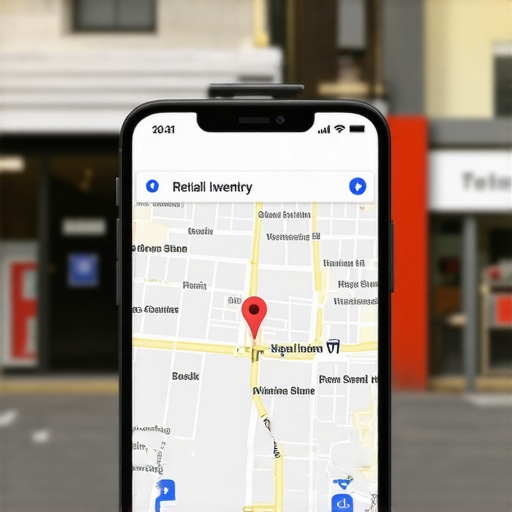
Google Business Profiles now use real-time inventory data to determine which businesses appear in the local pack for product-specific searches. This means Point of Sale integration and local product feeds are the primary signals for proximity relevance in modern search. Google aims to reduce wasted travel for users by prioritizing shops with confirmed availability. The days of simply having a verified address are gone. You must now prove that the items the user wants are sitting on your shelves. This creates a spatial database where your proximity is weighted by your utility. If you are two blocks away but have zero stock, you will lose to a store three miles away with a live inventory feed.
“Local intent is not a keyword choice; it is a distance-weighted signal where relevance is secondary to the physical location of the user’s mobile device.” – Map Search Fundamental
Why your physical address is a liability
Shared office spaces and virtual addresses are the fastest way to get a hard suspension in the current local ecosystem. Google uses spatial coordinate verification to identify business clusters that lack a real physical lobby or permanent signage. If your business shares a floor with twenty other entities, the Centroid Theory suggests you are a high-risk listing. I have seen countless businesses get nuked because they tried to rent an address to expand their reach. Google wants proof of a utility bill under the exact GPS pin. If you cannot provide a video walk-through showing a permanent entrance, you are a ghost in the machine. You can find more about this in our guide on why your map ranking fails with a shared office address which breaks down the risk of co-working spaces.
The three mile radius that determines your revenue
Proximity filters are becoming tighter as mobile search becomes more dominant for immediate needs. The algorithm calculates the probability of a transaction based on how far a user is willing to travel for a specific category. A coffee shop has a tiny radius; a specialized surgeon has a massive one. If your pin is filtered out, it is often because your location-intelligence signals are weaker than the competitors surrounding you. This is why many owners struggle with the proximity filter that hides your business pin even when they have better reviews. The algorithm prefers a closer, mediocre business over a superior one that is further away unless you have massive brand velocity.
Local Authority Reading List
- The Blueprint for GMB Optimization
- Stuck on Pending Tactics for Verification
- Using Real Time Inventory Signals
- Forcing a Human GMB Review
- Why Footfall Controls Your Ranking
The math of a check-in signal
Behavioral data like physical footfall and GPS check-ins are now more powerful than static citations. Google tracks the anonymized movement of mobile devices to see if people actually visit your storefront. If your listing gets ten thousand views but zero people actually drive to the coordinates, Google assumes your listing is irrelevant or fake. This is the interaction velocity that moves the needle. While agencies talk about getting more reviews, the current data shows that image metadata from photos taken by real customers at your location is now 30 percent more effective for ranking in AI Overviews. This is an offline signal that beats keyword stuffing every time. You should check 3 offline behavior signals boosting map rankings to understand this shift.
Forensic traces of a service area polygon
Service Area Businesses (SABs) face the most scrutiny because they lack a public-facing physical storefront. Google analyzes your service area polygon against your business license and registration data to ensure you aren’t spamming multiple cities from one basement. If your service area is too large, you will get filtered out of the center. This is a common reason why your service area business listing is being filtered out in competitive zones. You must define a realistic territory. The algorithm looks for a mismatch between where you say you work and where your staff actually travels based on mobile data.
“Relevance is no longer about the text on the page but the verified utility of the entity within its local geographic cluster.” – Local Search Intelligence Quarterly
Real time inventory signals to boost map position
Connecting your product catalog via the Merchant Center is the ultimate move for retail local SEO. When you display live stock levels on your Google Business Profile, you trigger a specific local justification. Users see a small checkmark saying “In stock here.” This justification is a massive conversion driver. It also tells the algorithm that your location is active and useful. You can learn how to use real-time inventory signals to boost map position to stay ahead of the national chains that often have laggy data. Local shops can update their stock faster, giving them a distinct advantage in the proximity wars.
How to bypass the support bot for real help
Escalating a suspended profile requires more than just a polite email; it requires a specific set of evidence files. The AI support bots are programmed to reject any appeal that lacks a government-issued document matching the address and business name perfectly. If you are stuck in a loop, you need to understand how to finally bypass the support bot for real help by providing high-resolution photos of your permanent signage. A photo of a printed paper taped to a door will get you rejected. You need deep-etched signs or permanent vinyl. This is the physical proof checklist that forces a human review. If you fail this, your listing stays in the void forever. The pin must move. You must provide the evidence that ends the AI rejections. Stop sending tickets that get closed automatically. Use the identity proofs that prove your business is a real beacon in the local database.