
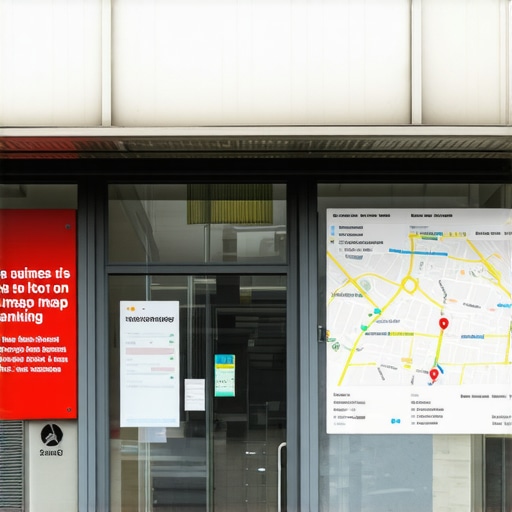
I walk through the city when the light is flat, capturing the mismatch between the physical world and the digital layer. I see the storefronts with peeling gold leaf on the windows and the neon signs that flicker with a hum. I smell wet concrete after a summer storm. The city is a grid of data points, but most business owners are looking at the wrong map. They spend hours sweating over a seventy five word business description, believing that the right keywords will magically pull them into the three pack. They are wrong. The algorithm treats that description like a caption on a photograph; it might tell the viewer what they are seeing, but it does not tell the camera where to point. I have seen the same story play out in every neighborhood. Business owners hire local seo services to fix nap inconsistencies only to realize their foundational data is a mess. The description field is a conversion tool, not a ranking signal. It exists for the human who has already found you, not for the bot that decides if you deserve to be found.
The mathematical ghost in your coordinates
Google Business Profile rankings are determined by proximity, relevance, and prominence. The business description contains unstructured text which Google largely ignores for Map Pack positioning. Instead, local search algorithms prioritize NAP consistency, GPS coordinate salience, and user interaction signals to determine local authority and search visibility.
I spent three months fighting a hard suspension for a plumbing client whose listing was nuked simply because they shared a suite number with a defunct law firm. Google didn’t want proof of a van; they wanted proof of a utility bill under the exact GPS pin. This is the reality of the hyper local layer. The system is looking for a physical anchor. If you are looking for how to stop the ai loop and get a real human gmb specialist, you already know the frustration of being a ghost in the machine. Your description is the least of your worries when your pin is floating in a sea of data conflicts. The algorithm is calculating the distance between the searcher and your front door to the fourth decimal point. It does not care that you wrote a compelling paragraph about your family values. It cares about the interaction data that proves your map pin is working. The math of the map is cold. It is about the density of signals. It is about the frequency of pings from mobile devices that actually cross your threshold.
“Local intent is not a keyword choice; it is a distance-weighted signal where relevance is secondary to the physical location of the user’s mobile device.” – Map Search Fundamental
Why your physical address is a liability
Incorrect business information online causes an immediate seo ranking drop because it creates data friction. Search engines value trust above all else, and conflicting NAP data suggests a fake business listing. Using local seo software to monitor citation consistency is the only way to protect a three pack ranking from competitor spam reports.
The street doesn’t lie. If I take a photo of your building and there is no sign, Google sees that eventually. Many owners try to use the truth about keywords in your business name to cheat the system. They stuff their name with cities and services. This is a high risk game. When the suspension hits, no amount of clever copywriting in your description will save you. You will need the exact evidence files to attach to your gmb appeal form to prove you exist. I have seen listings disappear because a competitor moved their pin across the street. The proximity filter is a brutal gatekeeper. It hides you from customers who are just four blocks away because the cluster is too dense. You need how the proximity filter hides your business knowledge to survive. The description is a secondary thought for the algorithm. It is looking at the metadata of the photos you upload. It is looking for the GPS coordinates embedded in the files from your customers’ phones. That is the real proof of life.
Local Authority Reading List
The three mile radius that determines your revenue
Proximity is the strongest ranking factor in the local algorithm, often overriding review count and organic authority. A business located inside the centroid of a search query will outrank distant competitors even if they have better seo backlinks. Service area businesses must use local interaction data to expand their visibility radius beyond their physical location.
The map is not a flat surface; it is a series of overlapping circles of influence. If you are struggling with a sudden ranking drop, it is likely because the filter has tightened. I see this in high density cities where every block has a competitor. You might need emergency seo services for sudden ranking drop issues when your visibility vanishes overnight. Your description cannot push your signal through the noise. Only behavioral data can do that. Google tracks how many people click for directions and then actually move their phone toward your shop. This is the live drive data that confirms a business is real. If you are wondering why agencies use live drive, it is because it is the only signal that cannot be easily faked by a bot. The algorithm is looking for the heartbeat of the city. It wants to see the flow of traffic. It wants to see the hidden interaction signal that boosts your map ranking. Keywords are ghosts. Interactions are flesh and bone.
“Relevance is calculated through categorized entity associations, not through unstructured text fields within the primary business profile data.” – Vicinity Algorithm Research
The truth about review removal and forensic patterns
Mass review removal occurs when Google detects unnatural review velocity or VPN usage from reviewer profiles. To fix gmb rankings after a penalty, a forensic audit of user engagement is required to prove authenticity. Review sentiment is a relevance signal, but the location data of the reviewer carries more mathematical weight.
I remember a case where a cafe owner lost everything because of a bot attack. They needed why fake 1 star reviews stay up answers. The description they wrote with such care didn’t matter when the trust score hit zero. The algorithm looks for the forensic trace of a real person. Was the person who left the review actually within the proximity of the store? Did they take a photo that Google can verify? If not, that review is a liability. You need seo services to fix gmb rankings after mass review removal to clear the air. The system is designed to catch the glitch. It is designed to find the fake. When you use why most ctr tools are a fast track to a shadowban, you are gambling with the life of your business. The algorithm is smarter than your software. It knows when the traffic isn’t real. It knows when the pins don’t match the feet on the street. The description is just a coat of paint on a building that might be falling down. Focus on the structure. Focus on the how to audit gmb profile with a toolkit steps to ensure your foundation is solid. The map will follow the truth.