
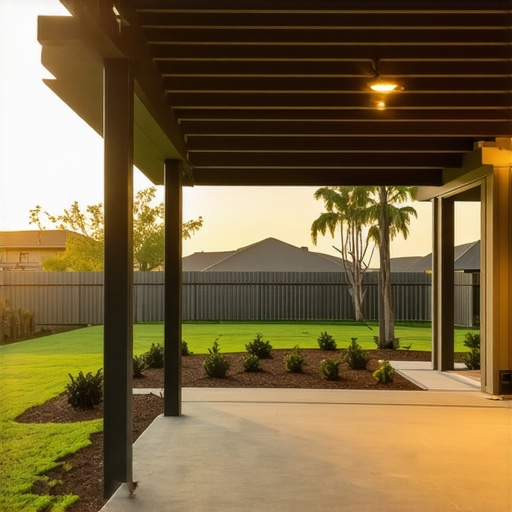
Why Your Alumawood Patio Cover Photos Fail to Move Your Map Ranking
You’ve just finished a stunning project. The Alumawood lattice looks perfect, the stone pillars are seamless, and the client is thrilled. You take twenty high-resolution photos, upload them to your Google Business Profile (GBP), and wait for the phone to ring. But a week later, your ranking in the Google Map Pack hasn’t budged. It’s a common frustration for patio contractors across the country. You are providing the visual proof of your expertise, yet Google seems indifferent. As Michael Messmore, I’ve spent years analyzing how Google’s local algorithm processes visual data. The hard truth is that in 2025, photos are no longer just “eye candy” for potential customers; they are sophisticated data points for Google’s AI. If your patio cover photos aren’t moving the needle, it’s likely because they are failing to communicate the specific technical and contextual signals the algorithm requires.
The “Pretty Photo” Fallacy: Why Aesthetics Don’t Equal Rankings
Many deck and patio builders operate under the “Pretty Photo” Fallacy – the belief that the more beautiful a photo is, the higher it will rank. While human customers are certainly moved by high-end photography, Google’s ranking algorithm doesn’t “see” beauty in the way we do. Instead, it parses images through Google Cloud Vision AI, a tool that identifies objects, labels, and landmarks within a frame. When you upload a photo of a new patio construction project, the AI isn’t looking at the sunset in the background; it’s looking for “aluminum,” “pergola,” “outdoor structure,” and “residential building.”
Research from Sterling Sky has consistently shown that “having a photo that matches what Google is looking for can have a positive impact on ranking.” However, the study also clarifies that relevance is king. If your photo is too stylized, heavily filtered, or shot at an angle that obscures the primary subject, the AI may fail to categorize it correctly. For instance, a close-up shot of a decorative end-cut on an Alumawood beam might look artistic, but if Google’s AI labels it as “wood grain” or “abstract art” instead of “patio cover,” you lose the SEO value of that image. To move your Map ranking, your photos must be “machine-readable” first and “customer-appealing” second.
Furthermore, the context of the image matters. Google Cloud Vision can detect the presence of construction materials and tools. If your gallery is 100% finished projects with no signs of the actual patio renovation process, the algorithm may lack the confidence to verify that you are a legitimate local service provider rather than a gallery of stock images. The AI looks for the “mess” of a real job site as a trust signal.
The Technical Gap: Sizing and Metadata for Patio Construction
Beyond what is inside the frame, the technical specifications of your images play a massive role in how they are indexed and displayed. If your patio roof photos are being compressed or cropped awkwardly, they won’t trigger the engagement signals necessary for a ranking boost. The gold standard for Google Business Profile photos in 2025 is 1024 x 575 pixels, maintaining a 16:9 aspect ratio. This ensures that whether a customer is on a desktop or a mobile device, your patio cover is the focal point, not a cropped-out corner of the house.
We also need to address the “Geotagging Myth.” For years, SEO “gurus” suggested that manually injecting GPS coordinates into the EXIF data of a photo would trick Google into thinking you were more active in a specific suburb. However, the “Evergrow Marketing” study and subsequent industry tests have shown that manual EXIF manipulation has a negligible impact on rankings. Google is smarter than that; they know when metadata has been tampered with. However, native GPS data – the kind captured automatically by a smartphone at the job site – is a powerful trust signal. When you take a photo of an Alumawood installation in a specific neighborhood, the native metadata tells Google, “This business is physically present and working in this exact location.” This is how a patio renovation project in a specific zip code helps you rank for “patio contractors near me” in that exact area.
Finally, file size matters. Large files (over 5MB) can slow down the loading of your profile on mobile devices. If a user clicks your photo and it takes three seconds to load, they will bounce. This negative user experience tells Google your listing isn’t high-quality, which can lead to a drop in the Map Pack. Stick to high-quality JPG or PNG formats that are optimized for the web.
Beyond the Finished Product: The “Proof” Photos Google Craves
Most deck and patio builders make the mistake of only uploading the “hero shot” – the final, cleaned-up photo of the finished patio roof or enclosed patio. While these are great for conversions, they aren’t the only photos Google wants to see. To build local authority, you need to provide “proof” photos that verify the reality of your business operations. Google is currently in a war against “ghost” businesses and lead-generation spam. Showing the “how” and “who” behind the work is the best way to win.
What does this look like for a deck and patio contractor? It means taking photos of:
- The Equipment: Your trucks, trailers, and specialized tools. Just as we discussed in our guide on The Equipment Photos Every Epoxy Floor Installer Needs for Instant GMB Verification, documenting your tangible assets proves you aren’t a middleman.
- The Raw Materials: A stack of Alumawood components or Ipe boards sitting on a client’s driveway is a massive trust signal for the AI.
- The Team: Photos of your crew in branded gear working on a patio and pergola project. This humanizes the brand and satisfies Google’s preference for “real-world” content.
- The Process: Mid-construction shots of framing or footings. These photos are rarely “pretty,” but they are rich in metadata and object labels that Google’s AI loves.
Integrating these into your profile is as essential as understanding How to Use Real Customer Photos to Boost Your Local Visibility. When Google sees a sequence of photos – from the arrival of the truck to the framing of the patio roof to the final Alumawood finish – it builds a “knowledge graph” of that project. This confirms your expertise and proximity, which are the two biggest factors in Map rankings.
The Engagement Loop: How Views Turn Into Local Authority
Ranking isn’t just about what you upload; it’s about how the public interacts with what you upload. Digital marketing expert Dennis Yu has often highlighted that top-performing photos on Google can garner millions of views, even for local businesses. This isn’t just a vanity metric. When a user searches for “patio contractors” and clicks on your photo, zooms in to see the detail on an Ipe deck, or scrolls through your gallery of patio cover designs, they are sending a “relevance signal” to Google.
High engagement tells the algorithm that your listing is providing exactly what the searcher is looking for. This creates an engagement loop: high-quality, relevant photos lead to more clicks, which lead to higher rankings, which lead to even more clicks. To trigger this loop, you should focus on variety. A photo of a unique patio and pergola combination that solves a specific problem (like providing shade for a small yard) is more likely to get a “save” or a “zoom” than a generic photo of a backyard. Use your captions (yes, Google reads the captions and alt-text) to describe the problem you solved, further reinforcing the keywords like patio renovation and patio construction.
Common Mistakes: Why Your Patio Roof Photos Are Getting Filtered
Sometimes, the problem isn’t that your photos aren’t “good enough” – it’s that they are actively being filtered out or shadowbanned by Google. If you’ve uploaded dozens of photos and your “view count” stays at zero, you’ve likely triggered a spam filter. One of the biggest culprits is the use of stock photos. Google’s AI can instantly recognize an image that has been used elsewhere on the web. If you use a stock photo of a patio cover, Google may ignore your entire photo gallery as a penalty.
Another major mistake is over-watermarking. While it’s tempting to put a large logo or phone number over your work to prevent theft, Google’s AI hates text overlays. If more than 10% of the image is covered by text, it may be hidden from the primary gallery. Avoid the pitfalls mentioned in The One Photo Angle That Google Support Always Rejects for Proof, which often includes shots that are too close-up to provide context or photos that look like digital renderings rather than real-life patio construction.
Finally, be careful with pricing text. Including a “Trex decking installation cost” banner or “starting at $5,000” text directly on the image can trigger Google’s “Promotional Content” filters. Google prefers that pricing and promotional details stay in the “Posts” or “Products” section of your profile, not in the primary photo gallery. Keep your photos clean, authentic, and focused on the physical work.
Conclusion: Building a Map-First Photo Strategy
To move your Map ranking, you must stop treating your Google Business Profile like a static portfolio and start treating it like a dynamic data feed. A successful patio construction gallery is a strategic mix of high-resolution “hero” shots, mid-construction “proof” photos, and images of your team and equipment in action. By focusing on the 1024 x 575 technical standard, ensuring your Alumawood projects are clearly identifiable by AI, and leveraging native GPS data, you can turn your photos into a powerful ranking engine.
If you are a deck and patio contractor struggling to break into the top three of the Map Pack, it might be time for a professional audit. Your photos are often the first point of contact between you and a new customer – and between you and Google’s algorithm. If your rankings are stalled despite your best efforts, contact Michael Messmore for advanced GMB support and a tailored visual SEO strategy that gets results. Don’t let your best patio cover projects go unseen; make sure Google knows exactly what you bring to the table.