
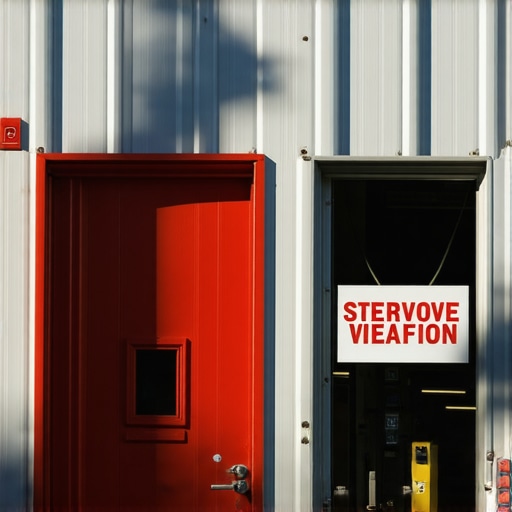
The Signage Requirements Auto Repair Centers Need for Successful Video Verification
My name is Justin Parker, and I am a Freelance Automotive Recruiter. For years, I’ve specialized in placing A and B-level mechanics at premier car repair shops and body shops across New England. In my line of work, I see a recurring, frustrating pattern: a high-end auto repair center struggles to attract top-tier talent not because they lack the equipment or the pay scale, but because their digital presence is invisible. When your Google Business Profile (GBP) is stuck in a suspension loop or fails verification, your shop effectively disappears from the local map. You can’t hire the best if the best can’t find you. Today, Google’s primary tool for vetting auto service and repair facilities is the Video Verification process. This isn’t just a quick walk-through; it is a high-stakes digital audit where your physical signage is the star of the show. If your signage doesn’t meet Google’s rigid standards, you will remain invisible to both customers and potential recruits.
Why Google is Obsessed with Your Shop’s Signage
Google is currently engaged in a massive crackdown on lead-generation scams and “ghost” businesses that clutter the map. For a legitimate auto repair shop, this means you are being held to the same evidentiary standard as a business in a high-fraud industry like locksmithing or garage door repair. Google’s algorithm and its manual review teams are obsessed with signage because it serves as the ultimate “trust signal.” A sign is not just a piece of plastic or metal; to Google, it is proof of a long-term financial and physical commitment to a specific location.
When you undergo video verification, Google requires proof of three distinct pillars: Business Identity, Physical Location, and Proof of Management. Your signage is the bridge that connects these three. In the world of car repair shops, a physical location is non-negotiable. You cannot fix a transmission in a cloud-based office. Therefore, Google expects to see a professional, established facility. If your video shows a nondescript warehouse with no branding, the system assumes you are a “burner” business designed to funnel leads to a third party. They want to see that the name on your auto repair center matches the name on your legal documents and, most importantly, the name on the permanent sign hanging over your service bays.
Data from local SEO experts indicates that Google’s AI can now scan video frames to detect “temporary” vs. “permanent” textures. This is why a high-resolution video is critical. They are looking for the shadows cast by channel letters or the reflection on a professional acrylic sign. They are fighting against “Photoshopped” reality. By ensuring your signage is robust and clearly visible, you are providing the “Location” and “Identity” proof Google demands in a single continuous recording, significantly reducing the likelihood of a manual rejection.
Permanent vs. Temporary: The Mistake That Triggers Instant Denial
The distinction between permanent and temporary signage is where most car repair shops fail. You might have a beautiful $500 vinyl banner hanging from your fence, but in the eyes of a Google verification bot, that banner is worth zero. This is the storefront signage mistake that triggers an automatic profile suspension. To pass video verification, your signage must be “permanent.”
Acceptable Permanent Signage:
- Channel Letters: Individual lit or unlit letters mounted to the building facade.
- Light Boxes: Professional internally illuminated signs with a metal frame.
- Sandblasted Wood or Metal: Heavy-duty signs bolted to the structure.
- Professional Window Vinyl: High-quality, permanent lettering on the glass that includes the shop name, hours, and phone number.
- Monument Signs: Large, ground-level signs at the entrance of a parking lot, typically made of stone, brick, or heavy metal.
Unacceptable Temporary Signage:
- Banners with Grommets: These are seen as “placeholder” signs for businesses that haven’t committed to a lease.
- Handwritten Signs: Anything on cardboard or paper is an instant fail.
- A-Frame/Sidewalk Signs: While great for auto service and repair specials, these are considered supplemental and do not count toward your primary identity.
- Magnetic Vehicle Signs: Parking a truck with a magnet on it in front of a building does not constitute a permanent physical location.
For an auto repair center, the signage must be integrated into the building’s architecture. If you are in a multi-tenant complex, your sign must be on the directory and above your specific unit. Google’s reviewers are trained to look for signs of “permanence” – bolts, wiring for lights, and weathering. If your sign looks like it could be taken down in thirty seconds, your verification will likely be denied. This is especially true for those looking to rank for highly competitive terms like auto ac repair near me; Google wants to ensure that the business they are recommending isn’t going to vanish overnight.
External Signage: Proving Your Place on the Map
The “Street-to-Door” filming requirement is the most vital part of the video. You must anchor your auto repair shop in the real world. This starts with the exterior signage and the physical address. Google needs to see that your shop exists exactly where the GPS coordinates say it does. This helps businesses avoid how to fix the address verification loop for service based businesses, which often occurs when Google cannot reconcile a street address with a physical storefront.
First, your street number must be clearly visible. It is not enough for the number to be on the mailbox; it should ideally be on the building itself, near the entrance. During the video, you should pan from the street sign (if possible) to the building’s exterior. This provides the “contextual landmarks” Google’s team uses to verify the location. If there is a neighboring business, like a well-known franchise or a distinct landmark, capturing it briefly helps anchor your shop’s position.
The main permanent sign must be the focal point of the exterior shot. It must be clear, high-contrast, and exactly match the name on your Google Business Profile. If your GBP name is “Precision Auto Repair” but your sign says “Precision Mechanics,” you are inviting a suspension. Consistency is the hallmark of a legitimate auto service and repair business. Make sure you are using the specific photo angles that prove to Google your shop is real by capturing the sign from both a distance and a close-up during the video walk-through.
Internal Signage & Proof of Management
Once you transition from the exterior to the interior, the branding must remain consistent. For car repair shops, the transition from the “customer area” to the “service area” is a powerful opportunity to prove your business’s legitimacy. Inside the lobby or reception area, Google expects to see branded elements. This could be a logo on the wall behind the service desk, branded pens, or even a framed business license that matches the shop’s name and address.
However, for a mechanic, the real proof is in the service bays. This is where you demonstrate “niche relevance.” As you walk into the shop area, your video should capture the heavy equipment that defines an auto repair center. Show the alignment racks, the two-post lifts, and the diagnostic computers. Seeing a technician performing a car electrical system repair or a specialized auto ac repair near me service adds an undeniable layer of authenticity. Google’s reviewers aren’t just looking for signs; they are looking for the “tools of the trade.”
The “Proof of Management” is the final internal hurdle. You must prove you have the right to be there. This is best achieved by showing yourself unlocking the front door with a key or accessing the “Staff Only” area or the manager’s office. Inside the office, having the specific documents needed to prove your storefront is a real physical location – such as a utility bill or a lease agreement – displayed or held up to the camera can be the “knockout blow” that secures your verification. Furthermore, if you are performing a car electrical system repair, showing the branded diagnostic report on a tablet or computer screen further cements your identity.
The Step-by-Step Video Verification Script for Mechanics
To ensure you don’t miss a single requirement, follow this structured script for your 1-2 minute video. Do not stop the recording at any point; it must be one continuous take.
- The Start (0:00-0:15): Start at the edge of the street. Capture the street sign if possible, then pan to the exterior of your building. Ensure the main permanent sign is clearly visible and legible.
- The Approach (0:15-0:30): Walk toward the front door. Focus on the street number (address) and any professional vinyl lettering on the door (hours of operation, phone number).
- The Access (0:30-0:45): This is the “Proof of Management” moment. Show your hand inserting the key into the lock and opening the door. Walk inside.
- The Lobby (0:45-1:00): Pan around the reception area. Show the branded desk, any wall-mounted logos, and the customer waiting area. This proves you are a retail-facing auto repair shop.
- The Shop Floor (1:00-1:30): Walk through the door into the service bays. Capture the scale of the operation. Show cars on lifts, technicians in branded uniforms, and specialized equipment like an OBD-II scanner or an AC recovery machine.
- The Conclusion (1:30-2:00): Head to the office area. Briefly show a piece of “official” mail or a business license on the wall that matches your GBP details. End the video by showing your computer screen with the Google Business Profile dashboard open if possible.
Following this script ensures that you hit every “trust signal” Google requires for an auto repair center. It eliminates the ambiguity that leads to manual rejections and helps you move past the “pending” status that plagues so many car repair shops.
Troubleshooting Failed Verifications
Even with perfect signage, technical glitches can happen. One of the most common issues is the “Upload Failed” error, which often stems from a poor Wi-Fi connection in the shop or a video file that is too large. If your video fails to upload, try switching to 4G/5G data or shortening the video slightly by walking faster between stations. Ensure your video is under 2 minutes and filmed in 720p or 1080p – 4K files are often too large for the Google upload tool to handle.
If you have followed all the signage requirements and your video is still rejected, you may need to escalate the case. This involves reaching out to Google Support and providing secondary evidence. This is where you would use the document checklist that forces a human review of your GMB case. This checklist includes items like your commercial insurance policy, business registration, and utility bills. When a human reviewer sees these documents alongside a video of a shop with permanent signage and a car electrical system repair bay, they are much more likely to manually override the system and verify your profile.
Remember, Google’s goal is to provide users with accurate information. If your shop looks like a professional, established auto service and repair facility in your video, you have already won 90% of the battle. The signage is simply the visual proof of your professionalism.
Conclusion & Call to Action
In the competitive New England automotive market, your Google Business Profile is your most valuable digital asset. Professional, permanent signage isn’t just a way to attract customers driving by – it is a mandatory requirement for Google’s video verification. By investing in high-quality signs and following a strict filming protocol, you ensure your auto repair center remains visible and reputable. If you are struggling with GMB issues, visit helpmerankgmbs.com for more specialized support. And when your shop is finally verified and the phones start ringing, contact me, Justin Parker, to help you find the A-level mechanics you’ll need to handle the new business.