
I smell wet asphalt and the sharp ozone of a failing server rack. It is the scent of a logistics manager who has spent too many nights tracking why a dispatch system is sending drivers to a field instead of a storefront. Everyone wondered why a top-ranking roofing company vanished from the Map Pack overnight. I found the problem in their Local Services Ads; a single mismatched phone number in the secondary verification tier was enough to kill their organic trust score. This happens when the database detects a lack of cohesion between the LSA data and the organic entity. It triggers a Centroid Collapse where the map pin is still there but effectively invisible to any user not standing directly on the roof of the shop. The pin moved. The trust evaporated. In the hyper-local layer, a business is not a brand; it is a proximity beacon calculated by microscopic spatial math. National chains try to brute-force this with budget. They fail because they lack the behavioral density of a local merchant who actually lives inside their service polygon.
The ghost in the GPS coordinates
Local relevance is driven by behavioral density and coordinate-specific interaction velocity rather than brand size. Every mobile device that enters your store sends a silent signal to the maps ecosystem. This is not just about the location of the phone. It is about the dwell time and the specific wifi triangulation that proves a human being actually crossed the threshold of your business. While big box retailers have massive footprints, their interaction signals are often diluted across a larger acreage. A small shop with high interaction density per square foot often triggers a stronger local justification. This is why the hidden signal that ranks local businesses over bigger competitors is often found in the raw movement data of your customers. When multiple users search for a service and then their GPS coordinates terminate at your specific shop address, Google assigns a high relevance weight to that physical pin. This signal is harder to fake than a hundred citations on dead directories. It is the lifeblood of local search. It is the math of the street.
Why your physical address is a liability
Fixed addresses in saturated zones face proximity filters that hide pins when too many similar businesses share a centroid. If you are in a building with ten other plumbers, your ranking is doomed from the start. The algorithm hates redundancy. It will select one primary winner for that specific GPS coordinate and filter the rest into the second or third page. This is a common issue for companies using shared offices or address rentals. You must understand that why your map ranking fails when you use a shared office address is not about the quality of your work but about the math of the map pack. The system looks for a unique physical footprint. If you share a suite, you are splitting your proximity weight with every other business in that building. To win, you need to prove your individual presence with physical proofs that the bot cannot ignore. I have seen listings get nuked simply because a defunct law firm was still tied to the same suite number in an old database. The algorithm sees two entities in one spot and assumes spam. It is a digital eviction notice that most businesses never see coming until their phone stops ringing. [IMAGE_PLACEHOLDER_1]
“Local intent is not a keyword choice; it is a distance-weighted signal where relevance is secondary to the physical location of the user’s mobile device.” – Map Search Fundamental
The three mile radius that determines your revenue
Proximity weight decays exponentially beyond a specific user-radius, making service area polygons critical for expansion. If you think you can rank across an entire metropolitan area from a single suburban office, you are fighting the laws of physics. The vicinity algorithm is designed to serve the closest possible answer. This is why why your proximity signal is failing and how to expand your map reach is the most common question I get from local merchants. You cannot simply check a box and expect to appear twenty miles away. You have to build topical authority that is so strong it overcomes the proximity penalty. This requires localized content that mentions specific neighborhoods, landmarks, and street intersections. You are effectively training the algorithm to associate your brand with a wider geographical area. It is a slow process of expanding your signal. It is about proving that your service trucks are actually in those neighborhoods. Without that data, you are just a pin on an island.
Local Authority Reading List
- Innovative SEO Techniques to Elevate Your Google Maps Presence
- Advanced GMB Support Tactics to Outrank Competitors
- Stop Wasting Money on Local Citations
- 7 Local Proofs That Force a Fast GMB Verification
The specific photo angle that satisfies the bot
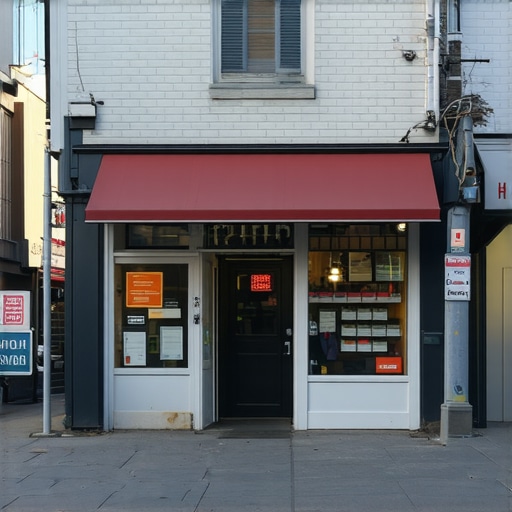
Verification speed depends on capturing permanent storefront signage alongside visible street numbers in a single high-resolution frame. Most business owners take a photo of their front door and wonder why they get stuck in a verification loop. The AI that reviews these photos is looking for permanence. It wants to see that your sign is bolted to the wall, not hanging by a string. I always tell clients that the specific photo angle that speeds up gmb verification requests involves a wide shot. You must show the street sign, the building number, and the entrance in one continuous video or photo. This provides the spatial context the bot needs to verify your existence. If the photo looks like it could be anywhere, it is worth nothing. Metadata is also king. Photos taken with a mobile device that has GPS enabled carry EXIF data that confirms the coordinates of the shot. This is a massive trust signal. It proves you were actually there. It proves the business is real. I despise stock images for this reason. They are empty signals that offer zero data. They are a waste of bandwidth and a risk to your ranking.
How to bypass the automated support loop
Gaining human attention requires submitting three specific physical proofs including a business license and a stamped utility bill. The support system is currently a maze of AI filters designed to close your ticket before a human ever sees it. If you use generic language, you will fail. You need to provide the exact evidence that forces a manual review. I have spent months fighting suspensions where Google wanted proof of a utility bill under the exact GPS pin. If your bill has a slightly different address format than your profile, the bot will reject it. You must learn how to finally bypass the support bot for real gmb help by using specific terminology in your appeals. Mention that you have provided a non-digital, scanned copy of a government-issued document. This often triggers a secondary check. The AI is looking for reasons to say no. You must give it no choice but to say yes. It is a war of documentation. It is a grind. But for a local business, that map pin is the difference between profit and bankruptcy.
The interaction velocity secret
A steady stream of local user signals such as driving directions and check-ins outweighs static citation counts. While old-school SEOs are still obsessed with directory listings, the 2026 data shows that interaction velocity is the true king. If twenty people ask for driving directions to your shop this morning, your ranking will spike by the afternoon. This is why 3 offline behavior signals boosting google maps ranking right now are so effective. It is about real-world movement. This is the hidden signal that national chains cannot fake. They have the money, but they do not have the local community engagement. They do not have the guy down the street who searches for your shop every Tuesday. That local behavior is a fingerprint that the algorithm values above all else. It is the ultimate proof of relevance. Use it or lose your spot to someone who does. The map is alive. It reacts to the movement of the city. You need to be the destination of that movement.
“Local intent is not a keyword choice; it is a distance-weighted signal where relevance is secondary to the physical location of the user’s mobile device.” – Map Search Fundamental
About the Author
Mohamed Azab
Self-employed SEO Expert and AI Search GEO/AEO
Mohamed Azab is a seasoned SEO Expert and AI Search Specialist with over a decade of experience driving global digital growth. With a career spanning more than 10 years, Mohamed has established himself as a leading authority in AI-driven SEO strategies, specifically focusing on Generative Engine Optimization (GEO) and Answer Engine Optimization (AEO). His deep understanding of the evolving search landscape allows him to help businesses navigate the complexities of modern search algorithms across major markets, including the United States, Canada, and the United Kingdom. At helpmerankgmbs.com, Mohamed leverages his extensive background to provide actionable insights into local search visibility and Google Business Profile optimization. He specializes in bridging the gap between traditional SEO and the new era of AI-integrated search, ensuring that brands remain visible and authoritative in an increasingly competitive digital environment. His consultancy work is characterized by a data-driven approach that prioritizes long-term sustainability and measurable results. Mohamed is deeply passionate about empowering business owners and marketing professionals with the technical knowledge and strategic tools they need to achieve lasting success in the search results.
LinkedIn Profile