
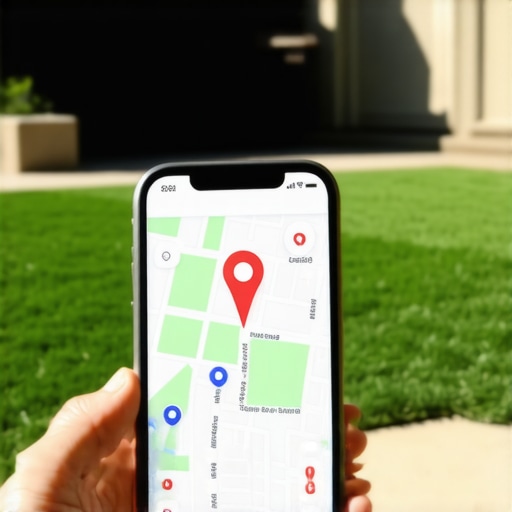
The Map Filter Error Hiding Your Alpha Turf Installers from Local Homeowners
Imagine this: You’ve spent years perfecting your craft, specializing in the installation of premium alpha turf and high-end oasis lawn solutions. You have a Google Business Profile (GBP) filled with five-star reviews and stunning photos of your latest artificial lawn grass turf projects. Yet, when a homeowner standing in their own backyard – just three miles from your office – searches for “turf for backyard” or “backyard putting green installation,” your business is nowhere to be found. Instead, Google shows a competitor from three towns over or a general landscaper who doesn’t even specialize in turf and grass.
As a consultant who has helped dozens of turf companies navigate the murky waters of digital visibility, I see this daily. This isn’t just bad luck; it is a technical phenomenon known as the “proximity glitch” or the “map filter error.” In the artificial turf industry, where high-ticket projects like a backyard putting green installation are the lifeblood of the business, being filtered out of the local map pack is more than an annoyance – it’s a drain on your lead pipeline. In this guide, we will dive deep into why this happens and how you can reclaim your rightful spot at the top of the search results.
Understanding the Proximity Glitch in the Artificial Turf Industry
The “proximity glitch” is a component of Google’s local search algorithm designed to prevent a single business or a cluster of similar businesses from monopolizing the “Map Pack” (the top three local results). While the intention is to provide users with variety, the execution often fails specialized contractors. For an installer of alpha turf, the filter often triggers because Google’s algorithm struggles to differentiate between a dedicated synthetic grass specialist and a general “Landscaper” or “Landscape Designer.”
When multiple businesses in the same category are located near each other, Google “filters” the results, showing only the one it deems most relevant or authoritative, while hiding the others behind a “Show more” button. If your primary category is set to a broad term like “Landscaper” rather than a more specific niche, you might be filtered out in favor of a competitor who has optimized for “artificial lawn grass turf” more effectively. This “category conflict” is a primary reason why your oasis turf solutions remain invisible to local leads. To fix this, you must understand The Blueprint for GMB Optimization: Boost Google Maps Visibility, which outlines how to align your digital categories with your physical service reality.
Furthermore, Google’s “Possum” update intensified this filtering. If your business address is physically close to another turf company, Google may view you as redundant. This is particularly frustrating for companies located in industrial parks or “contractor rows.” To bypass this, you need to prove to Google that your brand offers a unique, high-quality service – such as specialized pet friendly artificial grass – that justifies your inclusion in the results despite your proximity to others.
Why Your “Oasis Turf” Solutions Aren’t Showing Up for “Turf for Backyard” Searches
Homeowner intent is the North Star of Google’s algorithm. When a resident in a suburban neighborhood searches for “turf for backyard,” they aren’t just looking for a product; they are looking for a transformation. They want oasis lawn quality that can withstand kids, dogs, and summer heat. However, if your Google Business Profile lacks “geo-relevance,” Google won’t trust that you are the best local match.
Geo-relevance is established through more than just your office address. It is built through the metadata of your photos, the content of your reviews, and the specific service areas you define. Many installers make the mistake of setting a massive service area (e.g., a 100-mile radius). While this seems like a good way to get more leads, it actually dilutes your local authority. Google sees a company claiming to serve an entire state and compares it to a hyper-local specialist; often, the local specialist wins the “turf and grass” search because their proximity signal is stronger.
If you are struggling to show up for pet friendly artificial grass searches, look at your visual content. Are you uploading high-resolution images of your oasis turf installations? Are those images tagged with the specific neighborhoods where the work was performed? Without these local signals, the map filter assumes you are just another distant provider. You may also be suffering from a “botched category update,” which can happen if you’ve recently changed your business name or primary service. If this sounds familiar, you should look into Winning back your local search presence after a botched category update to rectify the situation.
Technical Excellence: The Link Between Installation Quality and Map Ranking
One of the most overlooked aspects of Local SEO is how your physical work in the field translates into digital signals. Google’s AI is increasingly capable of “reading” images to understand what is happening in them. When you upload photos of laying artificial turf, the algorithm isn’t just looking for green; it’s looking for the technical markers of a professional job. This is where the quality of your installation of alpha turf directly impacts your ranking.
A professional backyard putting green installation is a complex engineering feat. It involves multi-layered base preparation, precise grading for drainage, and the expert use of putting green synthetic grass. When you document this process – showing the “start to finish” build – you are providing Google with proof of your expertise. For example, capturing a photo of your crew “marking nice round edges before cutting” shows a level of detail that a generalist lacks. These specific visual cues help Google categorize you as a high-tier specialist, making it less likely to filter you out in favor of a cheaper, less-qualified competitor.
The “Start to Finish” Documentation Strategy
To maximize your visibility for “laying artificial turf,” your GBP should reflect the following technical stages:
- Excavation and Base Prep: Show the removal of old sod and the installation of a Class II permeable base. Mentioning the depth and compaction levels in your photo captions helps with “turf for backyard” relevance.
- Seam Integration: High-quality seams are the hallmark of a great installer. Photos of S-seams or the use of industrial-grade adhesive for oasis greens projects demonstrate longevity.
- Infill Application: Whether you are using zeolite for pet friendly artificial grass to control odors or silica sand for putting green synthetic grass to control ball roll, document it.
- The Final Grooming: A power-brushed finish on a new artificial lawn grass turf project is the “money shot” that drives clicks and tells Google your job is complete and high-quality.
By showcasing these technical steps, you aren’t just selling to a customer; you are feeding the algorithm the data it needs to distinguish you from the “proximity glitch” crowd. High-quality work leads to better reviews, and better reviews lead to higher authority, which is the ultimate filter-breaker.
Solving the Filter: How to Reclaim Your Local Map Position
If you’ve identified that you are being filtered out, you need a proactive strategy to reclaim your position. This isn’t about “gaming” the system; it’s about providing Google with the clarity it needs to rank your oasis lawn services correctly. The first step is a comprehensive audit of your primary and secondary categories. If “Artificial Grass Landscaper” is available in your region, it should be your primary category, with “Landscaper” or “Landscape Designer” as secondary options.
Next, focus on your “customer-centric” responses. When a client leaves a review mentioning how much their dog loves the synthetic grass for dogs you installed, don’t just say “Thanks!” Respond with technical detail: “We are so glad to hear the pet friendly artificial grass is working out for your pup! We made sure to use a high-flow drainage base and antimicrobial infill to keep things clean.” This response uses your keywords naturally and reinforces your expertise to both the customer and the search engine.
Another powerful tactic is the use of localized landing pages. If you want to rank for backyard putting green installation in a specific suburb, you need a page on your site dedicated to that suburb, linked directly from your GBP. This creates a “local loop” that strengthens your proximity signals. For more advanced techniques, I highly recommend studying Mastering Google Maps Ranking: Proven GMB Help Strategies for 2025. This resource covers the evolution of the algorithm and how to stay ahead of the filter.
Actionable Checklist to Break the Map Filter:
- Audit Your Categories: Ensure “Artificial Grass Landscaper” or the most specific turf-related category is primary.
- Geo-Tag Your Images: Use tools to ensure your alpha turf project photos contain GPS metadata from the job site.
- Keyword-Rich Reviews: Encourage clients to mention specific products like oasis turf or putting green synthetic grass in their reviews.
- Local Service Ads (LSAs): Sometimes, running LSAs for “turf and grass” can help “warm up” your organic map presence by driving more clicks to your profile.
- Internal Linking: Ensure your website’s internal structure supports your local goals. See Transform Your Business with Effective Google Maps SEO Strategies for a deep dive into this.
Long-Term Visibility: Artificial Turf Maintenance and Proximity Signals
One of the biggest mistakes turf companies make is “one and done” thinking. They install a beautiful oasis greens putting green and never return. From a business perspective, this misses out on recurring revenue. From an SEO perspective, it misses out on vital proximity signals. Offering artificial turf maintenance – such as power brushing, infill top-offs, and deep cleaning – allows your crew to “check in” at various local addresses regularly.
Every time you perform artificial turf maintenance, you have an opportunity to update your GBP with a new photo and a “Post” from that specific location. This tells Google: “We aren’t just located at our office; we are active throughout the community.” This constant stream of local activity is one of the most effective ways to combat the proximity glitch. It proves that you are the dominant provider of artificial lawn grass turf in the area.
Furthermore, maintenance services for synthetic grass for dogs are in high demand. Pet owners often realize after a year that they need professional help to maintain the hygiene of their lawn. By positioning yourself as the expert in both installation and long-term care of pet friendly artificial grass, you build a brand that Google views as indispensable to the local community. This authority makes the algorithm much less likely to “filter” you out, even if a competitor is physically closer to the searcher.
Conclusion: Don’t Let a Map Error Drain Your Lead Pipeline
The artificial turf industry is becoming increasingly competitive. As more homeowners realize the benefits of alpha turf and the luxury of a backyard putting green installation, the fight for the top of Google Maps will only intensify. You cannot afford to let a technical “map filter error” or a “proximity glitch” hide your hard work from the people who need it most.
By focusing on technical excellence – both in how you are laying artificial turf and how you manage your digital presence – you can break through the filter. Remember, Google wants to show the best result, not just the closest one. Show them that your oasis lawn installations are the gold standard. Document your process, optimize your categories, and engage with your local community through maintenance and reviews.
If you’re tired of seeing inferior competitors take the leads that should be yours, it’s time for a professional intervention. I specialize in helping turf companies refine their installation techniques and fix their map visibility issues. Don’t let your business stay invisible. Contact Ken Poole today to audit your Google Business Profile and ensure your oasis turf solutions are seen by every homeowner in your service area.