
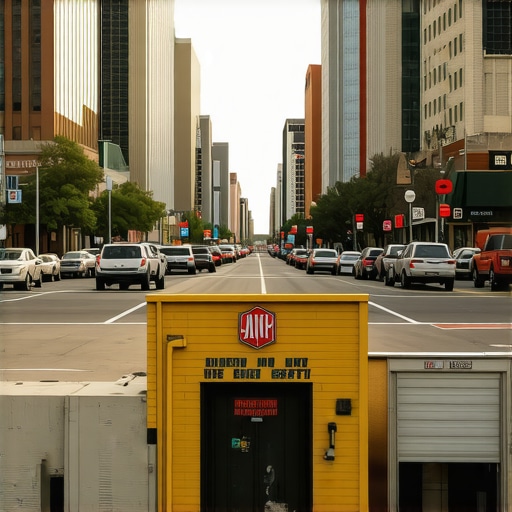
Why Your Albuquerque Auto Repair Shop Stays Hidden During Peak Downtown Commutes
As a master mechanic with over 25 years under the hood and a decade spent running The Garage Inc. here in Albuquerque, I’ve seen every kind of engine failure imaginable. But lately, the most frustrating “breakdown” I see isn’t happening in the bay – it’s happening on the smartphone screens of thousands of drivers stuck in gridlock on I-25. There is a profound irony in our local industry: an Auto Repair Shop Albuquerque can be located less than a mile from a major traffic corridor, yet remain completely invisible to the very drivers who need them most during the morning and evening rush.
If you own a shop near the Big I or along the Lomas corridor, you know the feeling. You hear the roar of the commute, you see the reports of the I-25 Montgomery bridge demolition causing miles of tailbacks, and you know that among those thousands of idling cars, dozens have “Check Engine” lights glowing or brakes squeaking. Yet, your phone stays silent. According to reports from KOAT, the ongoing construction milestones in our city have fundamentally shifted how traffic flows, yet many shop owners haven’t adjusted their digital presence to match these new physical realities. The “commuter ghost effect” is real, and it’s costing local independent shops thousands in potential revenue every single month. In this deep dive, I’m going to pull back the curtain on why Google Maps seems to “hide” your business exactly when your potential customers are closest to your front door.
The Proximity Paradox: Why “Near Me” Doesn’t Always Mean You
The average driver stuck in Albuquerque traffic performs a very specific type of search: they look for an auto repair near me. Logic dictates that if they are sitting in a lane on I-25, and your shop is 500 feet away on the frontage road, you should be the #1 result. However, Google’s “Proximity Filter” often works against you in high-density traffic situations. This is what I call the Proximity Paradox. Google doesn’t just look at the raw distance; it looks at the density of competing businesses and the perceived “variety” of the search results.
In a high-traffic environment like Downtown ABQ, Google often filters out several similar businesses to provide the user with what it considers a “diverse” set of options. If there are five mechanic shops in a three-block radius, Google might only show two of them to avoid cluttering the map. This is one of the primary reasons why your map ranking shrinks the moment you leave your office. When you are sitting at your desk, you are the closest point of interest. But for a driver moving through a congested corridor, Google is constantly recalculating which “pin” offers the best combination of distance, authority, and “Brand Velocity.” If your shop hasn’t optimized for these specific filters, you become a victim of the algorithm’s desire for variety, effectively being “filtered out” in favor of a competitor who might actually be further away but has stronger local signals.
Furthermore, the physical barriers of Albuquerque – like the railroad tracks or the gated communities – can confuse the proximity algorithm. Google’s AI is trying to predict “drive time,” not just “as the crow flies” distance. During peak commutes, if the algorithm detects that reaching your shop from the highway involves a 15-minute detour due to traffic patterns, it may de-prioritize you in the “near me” results, even if you are physically the closest option.
Albuquerque Traffic Dynamics: The I-25 and Downtown Gridlock
To understand why your Auto Repair Shop Albuquerque is struggling, we have to look at the data behind our city’s unique traffic patterns. While larger metros like Houston or Los Angeles are famous for doubling commute times, Albuquerque has seen a significant surge in localized congestion. The demolition and reconstruction of the Montgomery bridge over I-25, as reported by KOAT, has created a “bottleneck effect” that ripples through the entire city’s artery system. When I-25 slows down, drivers spill over onto 4th Street, 2nd Street, and Edith Blvd, changing the search geography of the city in real-time.
Data from Governing suggests that while Monday is statistically the “best” day to drive in many major metros, the mid-week congestion – Tuesday through Thursday – is where local businesses lose the most visibility. In Albuquerque, our peak hours are becoming more compressed and more intense. During these windows, the search behavior of a driver changes. They aren’t looking for a “long-term partner” for their car; they are looking for immediate relief or a convenient stop-off to avoid the worst of the jam. If your Google Business Profile (GBP) doesn’t explicitly signal that you are “on the way” or “easy access” from these major routes, you are missing out on the “commuter capture” market. We are seeing a shift where “convenience” is being redefined by the algorithm as “minimal deviation from the current traffic path.” If the I-25 delays are severe, Google may prioritize shops located near the exits that are currently flowing better, regardless of your shop’s reputation.
Why Your Map Pin Disappears When the Streets Are Full
When the streets of Albuquerque are full, the competition for the “Local Pack” (the top three map results) becomes a digital war zone. This is where the concept of “Brand Velocity” comes into play. If you are searching for a Mechanic Shop Near Me, Google looks at real-time engagement. Are people clicking on your “Call” button right now? Are they asking for directions? During rush hour, Google favors businesses that show “real-time authority.”
There is a technical phenomenon known as “Proximity-Based Drops.” This occurs when a business ranks well during off-peak hours but falls off the map during high-traffic periods. You need to understand why proximity based drops happen and how to bounce back. Often, it’s because your competitors are running hyper-local ads or have a higher volume of mobile interactions during those specific hours. Google’s algorithm is sensitive to “Searcher Intent.” A person searching at 8:30 AM on I-25 has a different intent than someone searching at 8:30 PM from their couch in Rio Rancho. If your profile is optimized for general “auto repair” but lacks the specific signals that scream “immediate service” or “easy commuter access,” the algorithm will pass you over for a shop that has higher engagement from mobile users in that specific moment.
Additionally, “Searcher Velocity” – the rate at which people are searching for and interacting with your business – matters. If your shop has a lull in digital activity during the day, Google may perceive you as “less relevant” during the high-stakes commute windows. This creates a vicious cycle: you don’t show up because you don’t have clicks, and you don’t have clicks because you don’t show up. Breaking this cycle requires a focused effort on increasing your “real-time” signals.
The “Downtown” Problem: Competing in the Central Ave & Lomas Blvd Corridor
For those of us operating an auto repair downtown, the challenges are even more specific. The corridor encompassing Central Ave SW, Lomas Blvd NW, and 2nd Street is one of the most competitive “map zones” in New Mexico. You aren’t just competing with the shop down the street; you are competing with established giants like Downtown Tire & Auto or Leonard Tire, who have decades of “local authority” built into their digital DNA.
In the Downtown and Old Town areas, the proximity filter is extremely aggressive. Because there are so many points of interest in such a small geographic area, Google’s “zoom level” for the map is much tighter. If a driver is at the intersection of Lomas and 6th, and you are at Lomas and 12th, you might already be “out of bounds” for a high-intensity mobile search. To win in this corridor, you have to prove to Google that your shop is a “destination,” not just a “location.” This involves more than just having a correct address. It requires localized content that mentions specific downtown landmarks, neighborhoods like Huning Castle or the Wells Park area, and even specific traffic pain points like the Rail Runner crossings. When you align your digital presence with the actual physical movement of downtown residents and workers, you start to bypass the standard proximity filters that favor the “closest” shop over the “best” shop.
5 Steps to Reclaim Your Visibility During Rush Hour
If you want to stop being a ghost on Google Maps, you need a proactive strategy. Based on my experience and the data we see at Help Me Rank GMBs, here are five actionable steps to improve your visibility when it matters most:
- Audit Your GMB Categories: Most shops just list “Auto Repair Shop.” To win during commutes, you need to be specific. Are you a “Brake Shop”? A “Transmission Shop”? Using specific secondary categories helps you appear in more nuanced searches when the general “auto repair” category is too crowded.
- Build Local Backlinks: Google looks at who is talking about you. Getting a link from a local Albuquerque neighborhood association, a local car club, or even a mention in a local news story about I-25 traffic can boost your local authority. Remember, why your website deranking is hurting your map pin – your website’s health directly impacts your map performance.
- Optimize for Mobile “Micro-Moments”: Ensure your website loads in under 2 seconds on a 4G connection. A driver in traffic won’t wait for a heavy site to load. Use “Click-to-Call” buttons prominently.
- Focus on “Brand Velocity”: Encourage customers to check in or leave reviews specifically during your “hidden” hours. This real-time data tells Google your business is active and relevant right now. You need to understand the specific signals that force your map pin to rank higher, such as user dwell time on your profile.
- Use Localized “Geo-Posts”: Use the “Updates” feature on your Google Business Profile to post about local traffic. “Stuck on I-25 near Montgomery? We’re just 2 minutes off the exit – come in for a quick AC check while the traffic clears!” This tells Google you are hyper-relevant to the current local situation.
Conclusion: Don’t Let the Algorithm Stall Your Growth
As we navigate the ever-changing landscape of Albuquerque – from the I-25 construction projects to the evolving Google algorithm – one thing remains constant: people need mechanics they can trust. But trust starts with visibility. If a driver can’t find you when they are sitting in traffic just a few hundred yards away, your 25 years of experience or your state-of-the-art equipment doesn’t matter.
Local SEO for auto repair shops isn’t just about being “near” the customer; it’s about having the digital authority to be “seen” by the customer. Don’t let the proximity filter or downtown gridlock stall your business growth. By understanding the dynamics of “Brand Velocity” and the specific traffic patterns of our city, you can reclaim your spot on the map. It’s time to stop being the best-kept secret in Albuquerque and start being the first choice for every commuter on the road. If you’re ready to see where your shop actually stands, perform a local map audit today or reach out for expert GMB support to ensure your pin stays dropped exactly where it belongs: at the top of the search results.