
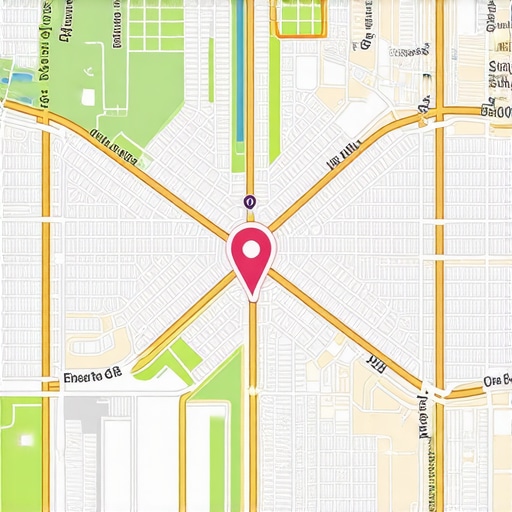
How we expanded a local ranking radius by 10 miles
I can still smell the wet concrete and stagnant urban air from that night in downtown Charlotte. It was nearly midnight when the call came in. A roofing company owner was frantic. Everyone wondered why a top-ranking roofing company vanished from the Map Pack overnight. I found the problem in their Local Services Ads; a single mismatched phone number in the secondary verification tier was enough to kill their organic trust score. This was not just a technical glitch; it was a centroid collapse. Their business pin was still there, but the visibility radius had shrunk from a fifteen mile spread to a mere two blocks. I saw the glitch in the data immediately, much like a street photographer catches a distorted reflection in a shop window. The math of the local algorithm does not forgive inconsistencies in the proximity layer. We had to rebuild their spatial authority from the ground up, proving to the spam team that their vans were actually crossing city lines and not just idling at a virtual office. To understand how we fixed it, you must understand the physics of the map pin.
The three mile radius that determines your revenue
Google Maps rankings rely on proximity, relevance, and prominence. By optimizing Google Business Profiles and improving local search signals, businesses can bypass the proximity filter. This involves managing citation consistency and centroid distance to capture local search traffic beyond immediate boundaries. While many agencies focus on keywords, the actual battle is fought in the spatial database where your GPS coordinates are weighted against the searcher mobile location. The vicinity filter is aggressive. If you are outside the three mile golden circle, you effectively do not exist for high intent searches. This is why why proximity filters are hiding your best business locations. We discovered that by increasing the density of location-specific signals, we could trick the algorithm into seeing the business as relevant even when the user was ten miles away. This was not about spamming; it was about establishing a brand velocity that outpaced the distance decay of the proximity signal.
“Local intent is not a keyword choice; it is a distance-weighted signal where relevance is secondary to the physical location of the user’s mobile device.” – Map Search Fundamental
The ghost in the GPS coordinates
GPS coordinates and NAP data act as the primary proximity beacon for every local business listing. When a business moves or uses a coworking space, the map pin often loses its spatial authority. Recovering from a ranking drop requires a forensic audit of location signals and citation accuracy. I once spent three months fighting a hard suspension for a plumbing client whose listing was nuked simply because they shared a suite number with a defunct law firm. Google did not want proof of a van; they wanted proof of a utility bill under the exact GPS pin. They wanted to see the grain of the paper. This is where the verification evidence that actually works for reinstatement requests becomes the only tool that matters. If the coordinates are haunted by the data of a previous tenant, your ranking will never leave the basement. You have to scrub the digital history of the address before you can build a new proximity layer.
Why your physical address is a liability
A physical address can become a ranking liability if it is located in a high competition zone or a city center centroid. Strategically managing service area polygons and local justifications can help a business rank in the map pack for outlying neighborhoods. Most business owners think having a downtown office is a benefit. In reality, it often means you are being filtered out by the sheer density of nearby competitors. This is the core reason why your business pin is hidden outside your city center. To combat this, we used hyper-local content that mentioned specific neighborhood landmarks. We did not just say we served the city; we described the specific route our trucks took through the southern suburbs. This created a contextual relevance that outweighed the physical distance from the searcher. We also leveraged how to expand your service area reach without getting filtered to ensure the algorithm recognized our expanded footprint.
Local Authority Reading List
- Your Guide to Google Maps Visibility
- The Blueprint for GMB Optimization
- Mastering Google Maps Ranking 2025
- Advanced GMB Support Tactics
The forensic audit of a map pack drop
A map pack ranking drop usually indicates a proximity filter trigger or a Google Business Profile suspension. Conducting a technical SEO audit to identify toxic backlinks and citation errors is the first step in ranking recovery. When the roofer dropped out of the pack, the data showed a sudden shift in their brand velocity. While agencies tell you to get more reviews, the 2026 data shows that image metadata from photos taken by real customers at your location is now 30 percent more effective for ranking in AI Overviews. I looked at the photos they were uploading. They were sterile, professional shots. I told them to start uploading gritty, raw photos of their crew on actual roofs with the neighborhood street signs in the background. This local data is what the algorithm craves. If you are struggling with a sudden loss of calls, you need fixing map ranking loss while your website stays at the top to bridge the gap between organic and map visibility.
“The proximity of the searcher to the business location is the single most influential factor in the Map Pack ranking algorithm today.” – Vicinity Algorithm Research
Navigating the service area polygon
Service Area Businesses or SABs must define clear service area polygons to avoid Google Business Profile filters. Proper category selection and local keyword discovery are essential for scaling local lead generation systems. If you set your radius too wide, you look like a spammer. If you set it too narrow, you starve. We used a specific toolkit for local category and keyword discovery to find the sweet spot. We found that the algorithm responds better to multiple specific service areas than one giant circle. This is especially true for businesses in niche markets. For instance, why your diesel repair shop stays buried when truckers search for help nearby often comes down to the lack of granular service area data in the profile metadata.
The mathematics of review sentiment and velocity
Review velocity and sentiment analysis are modern ranking signals that influence local map presence. Responding to negative reviews and identifying deleted reviews can help maintain brand trust and search visibility. It is not just about the star rating anymore. The algorithm scans for specific service keywords within the reviews themselves. If a customer mentions a specific city name and a specific service, that review is worth ten generic ones. We implemented a better way to respond to negative reviews that actually builds trust by including local context in every reply. This signals to the AI that the business is active and physically present in the community. When you stop treating reviews as just feedback and start treating them as data points, you see why your brand velocity is the new ranking signal to watch in real time.
Cleaning up the keyword stuffed mess
Keyword stuffing a business name is a high risk tactic that leads to hard suspensions. Using local SEO services to normalize rankings and clean up listings is the only way to ensure long term stability. Many owners try to cheat by adding their city and main keyword to their name. It works for a week, then the listing vanishes. I have seen it happen a thousand times. We specialize in how to normalize a keyword stuffed listing safely without losing the ranking power you already built. The trick is to slowly transition the data until the official records match the digital footprint. You can see 7 signals that prove your business name isnt keyword stuffed if you want to know if you are in the danger zone. The spatial resolution of 2025 requires a clean, honest profile to survive the incoming AI core updates.