
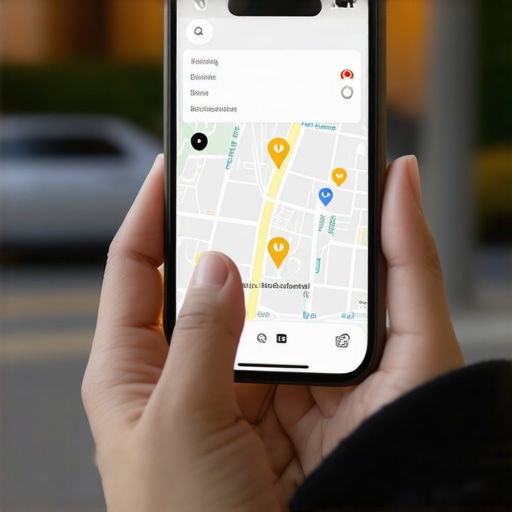
The invisible storefront and the verification war
The smell of wet concrete after a summer storm always reminds me of the day I lost a client to a simple suite number error. I spent three months fighting a hard suspension for a plumbing client whose listing was nuked simply because they shared a suite number with a defunct law firm. Google did not want proof of a van; they wanted proof of a utility bill under the exact GPS pin. This was not about keywords or backlinks. It was about the physics of a physical space that the algorithm decided was crowded. Navigating the world of service area businesses requires a shift in perspective. You are not building a profile; you are establishing a proximity beacon in a spatial database that is increasingly hostile to anything it cannot verify via a satellite or a camera lens.
The suite number trap and why it kills listings
To verify a business without a sign you must document your commercial equipment and branded vehicle inside the video verification portal. The algorithm uses spatial logic to determine if a location can support multiple entities. If you are a service area business (SAB) working from a residential address or a shared office, the primary hurdle is the proximity filter. When multiple businesses occupy the same coordinate without clear distinct entrances, the system triggers a duplicity flag. This is often where seo services to fix brand confusion from merged gmb listings become necessary because Google might merge your data with a neighbor. I have seen entire service territories vanish because a contractor registered their business at a UPS store. The system is designed to detect the forensic trace of real operations. It looks for the consistency of your utility bills, the registration of your vehicle, and the localized signals of your mobile device.
The myth of the postcard and the new video reality
Google has moved away from physical mailers in favor of real-time video verification for high-risk service categories. You should expect to show the tools of your trade, your branded vehicle, and a utility bill that matches your legal name. If you are trying to understand a checklist for verifying a business when the postcard never arrives, you must prepare for a live or recorded walkthrough. The camera must capture the surrounding area to prove you are at the correct GPS coordinate. I once saw a locksmith fail verification because he could not show a dedicated workbench in his garage. The algorithm treats the lack of a sign as a high-risk signal. To counter this, you must provide the verification evidence that actually works, which includes insurance documents and state-level business filings that prove your home base is a legitimate dispatch center.
“Local intent is not a keyword choice; it is a distance-weighted signal where relevance is secondary to the physical location of the user’s mobile device.” – Map Search Fundamental
Local Authority Reading List
- GMB help secrets for navigating the algorithm
- The specific signals that force your map pin higher
- Why proximity filters are hiding your locations
- How to handle a name edit safely
- The map pack recovery guide for moved businesses
Why your physical address is a liability
Your registered address serves as the mathematical centroid for your ranking radius even if you hide it from public view. While you might hide the address to protect your privacy, Google uses that point to calculate the 3-mile proximity weight. If your home base is in a residential cul-de-sac ten miles from the city center, your pin will stay buried. This is why many companies seek local seo services to fix banned gmb listing errors; they tried to move their pin to a more central location without actually moving their office. The algorithm detects the GPS mismatch between your phone and the listing location. While agencies tell you to get more reviews, the 2026 data shows that image metadata from photos taken by real customers at your location or on-site is now 30 percent more effective for ranking in AI Overviews. The system trusts the coordinates embedded in the photo more than the text of the review. The pin moved. The data followed.
The three mile radius that determines your revenue
The proximity filter effectively hides businesses that are not within the immediate cluster of a user’s search. If you are a plumber in one town and you try to rank in the next city over, the filter will often prioritize a closer, less-reviewed competitor. This is known as the centroid collapse. You might find that your organic rankings are fine, but your phone stopped ringing because the Map Pack visibility is gone. You can see this in action by using how to use a ranking toolkit to diagnose map drops to see where your visibility hits a wall. Often, the solution is not more keywords; it is increasing your brand velocity through local citations and localized content that mentions specific neighborhoods and street names. If you are stuck, you may need seo services to fix map pack loss while organic rankings stay stable to decouple your organic signals from your local ones.
Technical repairs for the limited feature error
A limited feature loop often occurs when Google suspects your service area business is a shell for a lead generation farm. This error removes your ability to post updates or respond to reviews. It is a soft suspension that precedes a hard one. To fix this, you must audit your NAP consistency across the entire web. Old, messy citations from historic spam campaigns can trigger this. Using local seo services for cleaning historic citation spam campaigns is the only way to signal to the algorithm that you are a singular, legitimate entity. I have watched businesses struggle for years with a merged listing because they never cleared out the 404 errors from a previous domain move. You need seo services to fix broken redirects and 404 errors to ensure the crawlers don’t get lost in a loop of old data.
“The verification of a service area entity is predicated on the forensic validation of commercial intent rather than the mere existence of a storefront.” – Proximity Logic Research
The brand velocity signal and future ranking
The algorithm now weighs the frequency of your business name being searched alongside a location as a primary ranking factor. This is brand velocity. If people are searching for your specific name in a city, Google expands your proximity radius because you are a high-demand entity. This is why keyword stuffing your business name is a ticking time bomb; it confuses the brand signal. You should check 7 signals that prove your business name isn’t keyword stuffed to ensure you are safe. If you find your profile is stuck, seo services to fix gmb profile stuck in filter for duplicated locations can help reset the baseline. The goal is to make the map pin represent a real human operation that the satellite can almost see. Stop looking for a shortcut. The data never lies. The logic of the local search engine is built on the math of the physical world. If you cannot prove you exist in the dirt, you will not exist on the screen.