
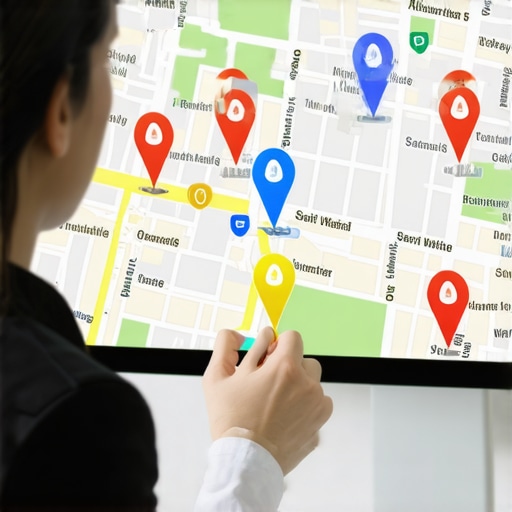
The smell of wet concrete always reminds me of the day the maps broke. I was standing outside a client office in a industrial park, watching the rain hit the pavement, while their phone stayed silent for the first time in a decade. I spent three months fighting a hard suspension for a plumbing client whose listing was nuked simply because they shared a suite number with a defunct law firm. Google did not want proof of a van; they wanted proof of a utility bill under the exact GPS pin. That was the moment I realized the local algorithm had moved beyond simple data. It had become a spatial gatekeeper. When a competitor changes their name to Best Plumbing Near Me, they are not just marketing; they are committed to algorithmic theft. This behavior pushes legitimate businesses into the shadows of the map pack, forcing them to fight for scraps while spam listings gorge on local leads.
The high cost of algorithmic theft
Competitor name spamming triggers an immediate imbalance in local proximity filters by tricking the algorithm into granting relevance based on keyword density rather than physical entity authority. Business owners must utilize a GMB ranking toolkit to identify these violations and submit forensic evidence to Google to reclaim their rightful map positions.
The map lied. That is the only way to describe a search result where a business located ten miles away ranks above a shop next door. The local algorithm is built on three pillars: proximity, relevance, and prominence. When a bad actor stuffs their business name with city names and service keywords, they are hijacking the relevance signal. They are telling the engine that their name is the search term itself. This creates a gravity well that sucks in traffic. You can see this clearly when you use a research toolkit that makes local SEO predictable. The data shows that these spammy names often bypass the traditional requirements of brand strength. They rely on the algorithm’s inability to distinguish between a legal entity and a keyword string. I have seen honest contractors lose forty percent of their call volume in a week because a lead generation farm dropped twenty fake pins in their service area. These farms use virtual offices and shared suites to create a false presence. They are ghosts in the machine. To fight them, you need to understand how to normalize a keyword stuffed listing safely without triggering your own suspension. It is a delicate balance. You cannot simply fight fire with fire. If you start stuffing your own name, you are just waiting for a manual reviewer to delete your history. Instead, you must document the violation. Take a photo of the storefront. If there is no sign with that name, the listing is a violation. The algorithm is blind, but the human appeal process is not.
The three mile radius that determines your revenue
Proximity is a shrinking window that Google uses to maintain user trust by showing the most immediate physical solutions to a search query. Understanding why proximity filters are hiding your best business locations is the first step in expanding your reach through entity authority and hyper-local signals.
Local Authority Reading List: Phase One
- The Blueprint for GMB Optimization
- Why Your Business Pin Is Hidden
- GMB Software Filter Triggers
- The Simple Category Shift
The pin moved. In the world of local search, a movement of fifty feet can be the difference between a hundred calls and zero. Centroid theory suggests that Google used to favor the center of a city. That is dead. Now, we deal with the Vicinity update logic. This update narrowed the radius of visibility to favor hyper-local results. If your business is in a high-density area, you might find that proximity is shrinking your leads because the algorithm is filtering out any listing it deems too far from the user’s specific GPS coordinates. This is especially brutal for service area businesses. I worked with a towing company in Elizabeth that was invisible to drivers stranded just blocks away. Why? Because their service area was set too broad, and the algorithm flagged them as a low-relevance match for the specific street corner search. You have to understand the reasons why an Elizabeth towing company becomes invisible to fix it. It comes down to the math of the service area polygon. If your polygon overlaps with too many competitors, Google will filter the one with the weakest local signals. This is why fixing local ranking loss after changing your service radius is such a common request. You cannot just draw a circle on a map and expect to rank. You need to prove you are active in that zone. Customer photos taken in the service area are now a major signal. Image metadata tells Google where your team actually works. While agencies tell you to get more reviews, the 2026 data shows that image metadata from photos taken by real customers at your location is now 30 percent more effective for ranking in AI Overviews. It provides the ground truth that a text review cannot fake.
“Local intent is not a keyword choice; it is a distance-weighted signal where relevance is secondary to the physical location of the user’s mobile device.” – Map Search Fundamental
Why your physical address is a liability
A business address can become a ranking anchor if it is shared with other businesses or located in a high-spam category zone that triggers manual verification filters. Recovery services for fake address suspensions are necessary when Google’s automated systems misidentify a legitimate office as a co-working space or virtual rental.
I remember the glitch. A client moved their office to a new building and their map pin vanished. It was a clean move, but the previous tenant had a suspended profile at that same suite number. The database remembered the ghost. This is the reality of why your business vanished from the map after a move. Google maintains a memory of every address. If that address is associated with map spam, every new business there starts with a trust deficit. You need the map pack recovery guide for moved businesses to navigate this. It requires more than a postcard. You need a video walkthrough of the office, showing the permanent signage and the entrance from the street. You must show the wet concrete of the sidewalk and the actual door. AI does not handle these nuances well. That is why your suspended profile deserves a human appeal. An AI will see a shared building and flag it. A human can see the separate entrance and the dedicated staff. If you are struggling, look into the verification evidence that actually works. It is about building a pile of proof so high that a reviewer cannot ignore it. This includes utility bills, business licenses, and even local newspaper mentions. If you are trying to migrate rankings from an old domain without losing GMB power, the address link is your strongest bridge. Do not change the NAP (Name, Address, Phone) during a domain migration. Keep the physical data static while the digital data moves. This prevents the algorithm from thinking a new business has taken over the location.
The forensic audit of review networks
Review cleanup services are the only way to remove the toxic influence of competitor-driven negative review attacks that use VPNs and fake user profiles to tank your prominence score. Identifying which reviews Google deleted is essential for maintaining the integrity of your local reputation and ranking signals.
Local Authority Reading List: Phase Two
- Identifying Deleted Reviews
- Recovery from Review Removal
- Get Your Phone Ringing Again
- Clean Up Mixed Language Listings
Suspicion is a tool. I once had a cafe owner call me at midnight because twenty 1-star reviews dropped in an hour. We had to do a forensic audit. We looked at the accounts. Most had no profile picture and had reviewed businesses in three different countries on the same day. This is the hallmark of a review farm. When this happens, you need spam fighting and review cleanup services that understand the technical patterns of fake accounts. Google’s automated filters catch some, but the sophisticated ones slip through. They use residential proxies to look like locals. But they fail on the behavioral zoom. They do not have a GPS history of visiting the location. A real customer has a trail of data. A fake one is a digital pop-up. If your profile has been hit, you should learn how to identify which reviews Google deleted. Sometimes Google deletes your good reviews by mistake while trying to stop a spam attack. It is collateral damage. You also need to be careful with multiple languages on one profile. If you have reviews in five different languages but you only serve one city, it looks like you are buying international review packages. This is a common mistake for businesses in tourist areas. They want to look global, but they end up looking like spam. Use local SEO services for cleaning mixed language listings to ensure your profile stays focused on your actual service area. It keeps the signal clean.
“The proximity of the user to the business is the single most powerful ranking factor in the local pack, often overriding traditional SEO authority metrics.” – Vicinity Research Analysis
The specific signals that force your map pin higher
Map ranking is forced higher by high-frequency local signals including user-initiated direction requests, click-to-call volume, and consistent NAP data across authoritative local directories. A beginner toolkit for ranking your business pin can automate the discovery of these signals but requires manual oversight to ensure quality.
The data is everything. You cannot manage what you do not track. Many agencies sell automated listing tools that are not enough for real dominance. They just push data to dead directories. Real ranking comes from engagement. Does a user click the call button? Do they ask for directions and then actually drive to your location? Google tracks the phone’s movement. If someone asks for directions but their phone stays at their house, that signal is worthless. This is why the specific signals that force your map pin to rank higher are almost all behavioral. You can use a beginner toolkit for ranking your business pin to start, but you must move toward a more advanced strategy. Look at your categories. A simple shift can change everything. I have seen businesses double their leads just by changing their primary category from Professional Services to a more specific niche. You can read about the simple category shift that doubled our local leads to see how the math works. It is about finding the gap where your competitors are not looking. If you are in a high-competition niche like personal injury law or plumbing, you must be aggressive about stopping map pin filtering. This involves making your profile so authoritative that Google cannot afford to hide it. This means high-quality photos, frequent updates, and answering every question in the Q&A section. Every interaction is a trust signal. Do not let your competitors with their fake names and bought reviews win. Use the tools. File the reports. Document the physical reality of your business. The maps may be digital, but the revenue is real. Stand on the wet concrete and prove you exist.