
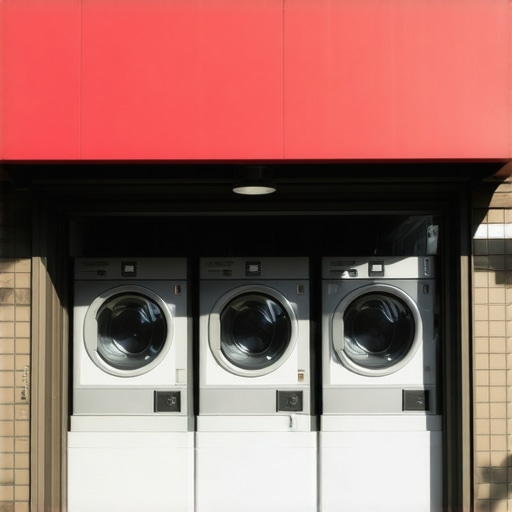
Why Your Professional Laundry Service Remains Invisible to Customers Blocks Away
In the landscape of 2026, the traditional brick-and-mortar dry cleaning business faces a challenge that would have been unthinkable twenty years ago. Back then, a prime location on a high-traffic corner was a guarantee of success. Today, you can operate the most technologically advanced plant in the city, utilizing state-of-the-art wet cleaning systems and eco-friendly solvents, yet remain completely invisible to a customer standing just 500 feet away. When that customer pulls out their smartphone and searches for dry cleaning near me, they aren’t looking for a sign on the street; they are looking at the Google Map Pack. If you aren’t in those top three spots, you effectively do not exist.
As someone who has spent years in the “CoutureCare” sector – balancing the delicate chemistry of stain removal with the heavy-duty demands of equipment maintenance – I have seen firsthand how the digital side of the business mirrors the physical side. Just as a boiler with a faulty pressure valve will fail to deliver steam to your presses, a Google Business Profile (GBP) with technical “leaks” will fail to deliver customers to your counter. The shift from traditional SEO to Local SEO is no longer a luxury; it is the steady, ready-to-buy customer pipeline that determines which shops thrive and which ones shutter their doors.
The frustration is palpable among owners. You’ve invested in the best dry cleaning near me, you offer superior professional laundry service, and your shirt laundering is crisp and consistent. Yet, the laundry shop near me that appears at the top of the search results is often a competitor two miles away with fewer reviews and a less impressive facility. This is the Proximity Paradox, and understanding it is the first step toward reclaiming your local market share.
The Proximity Paradox: Why “Close” Isn’t “Visible”
The most common misconception in local marketing is that Google always shows the closest business to the user. While proximity is a major ranking factor, it is often overridden by what we call the “Proximity Filter.” Google’s primary goal is to provide the most relevant and trusted result. If Google’s algorithm lacks confidence in your business data, or if your competitors have stronger “authority signals,” Google will bypass your shop – even if you are the closest option geographically.
Think of the hidden proximity filter that is making your business invisible to locals as a digital barrier. This filter is designed to weed out businesses that Google deems “untrustworthy” or “inactive.” From my perspective as a equipment specialist, a poorly maintained GBP is exactly like a broken boiler. It doesn’t matter how high-quality your solvent is or how skilled your pressers are if the heat never reaches the clothes. In the digital world, if your profile isn’t optimized, the “heat” of customer intent never reaches your storefront.
Google evaluates three core pillars: Relevance, Distance, and Prominence. If your prominence (authority) and relevance (content/categories) are weak, the distance factor is neutralized. This is why a shop on the other side of town can “poach” customers from your own backyard. They have convinced the algorithm that they are a more reliable choice for the user’s specific query.
The Technical Fabric of a GMB Profile
To win in the Map Pack, your Google Business Profile must be treated with the same precision you apply to a delicate silk gown. You wouldn’t throw a high-end designer piece into a rough wash cycle; similarly, you cannot take a “set it and forget it” approach to your digital presence. You must how to align your GMB optimization with actual foot traffic to ensure that your digital signals match the reality of your daily operations.
Primary and Secondary Categories
One of the most frequent mistakes I see in the field is improper categorization. Are you a “Dry Cleaner,” a “Laundromat,” or a “Laundry Service”? Choosing the wrong primary category can bifurcate your traffic. If your main revenue driver is shirt laundering and high-end garment care, but you are listed primarily as a self-service laundromat, you are confusing both Google and your potential clients. Your primary category should reflect your most profitable service, while secondary categories should capture the breadth of your expertise, such as “Tailor,” “Leather Cleaning,” or “Wedding Chapel” (if you specialize in gown preservation).
High-Resolution Visual Authority
In the laundry business, cleanliness is our product. Your GBP should feature high-resolution photos of your plant. Don’t just show the front counter; show the Miele wet cleaning machines, the tensioning equipment, and the specialized spotting boards. This technical transparency builds trust. When a customer sees a clean, well-maintained facility, their confidence in your professional laundry service skyrockets. It proves you are a legitimate operator and not a “ghost” drop-off point.
Accurate Hours and Attributes
In 2026, “Near Me” searches are often “Open Now” searches. If your hours are inconsistent or unverified, Google will hesitate to recommend you. Furthermore, leverage “Attributes.” Do you offer “Same-day service”? Is there “Drive-through” access? These micro-data points are the buttons and zippers that hold your profile together.
Case Study: The “Lovers Lane” Challenge
Let’s look at a specific geographic example. In many affluent areas, there is a “main drag” where service businesses cluster. For instance, a search for dry cleaning lovers lane should ideally return the shops located on that specific street. However, we often see results for shops located blocks away on side streets or even in adjacent neighborhoods.
Why does this happen? It’s often because the “off-strip” competitor has done a better job of anchoring their location through local landmarks and neighborhood-specific content. If you are struggling with why your Lovers Lane dry cleaner fails to rank for local near me searches, the answer usually lies in a lack of “Geographic Relevance.”
To combat this, your website and GBP updates should mention local landmarks. Don’t just say you are on Lovers Lane; mention that you are “three blocks east of the historic theater” or “across from the community park.” This creates a “Geo-Fence” in the mind of the algorithm, tying your business to the specific terminology residents use when they think about their neighborhood. This is how you win the laundry shop near me search – by being the most “local” local option.
Beyond Reviews: Interaction Signals That Matter
Most owners are obsessed with their star rating. While a 4.8-star rating is great, it is no longer the “silver bullet” for ranking. In fact, many owners are baffled by why your high review rating isn’t helping you rank in the top three. The reality is that Google has moved toward “Interaction Signals.”
Google wants to see that people are actually *using* your business, not just praising it. There are 3 map interaction signals that matter more than your total review count:
- Click-Through Rate (CTR): When your business appears in the search results, do people click on it? If 100 people see your listing but only 2 click, Google assumes you aren’t relevant.
- Direction Requests: This is the strongest signal of “intent.” If someone searches for a laundry shop near me and then clicks “Directions” to your store, Google receives a massive confirmation that your business is a high-value destination.
- Check-ins and Location History: Google knows (via anonymized mobile data) when people actually enter your store. High foot traffic density, as tracked by mobile pings, is a powerful ranking signal that you cannot fake with “bought” reviews.
To boost these signals, you need automated customer retention systems. Send a text to your regular shirt laundering clients with a link to your Google Maps listing for easy directions or to check your current “busy times.” This keeps the interaction loop active and signals to Google that your shop is a local hub of activity.
The CoutureCare Standard: Trust Signals and Authority
As a CoutureCare specialist, I advocate for a “technical-first” approach to marketing. The dry cleaning industry has been plagued by “lead gen” sites – entities that look like local cleaners but are actually just middle-men who outsource the work to the lowest bidder, often with disastrous results for the garments. This is the mistake that makes your silk rug cleaner business look like a lead gen scam: failing to show the “how” and “where” of your process.
To establish true authority, your digital presence should reflect your technical expertise. Share videos of your tensioning equipment in action. Post photos of the specific detergents you use for wet cleaning. Discuss the science of solvent filtration. When you demonstrate that you are a master of the craft, you aren’t just another dry cleaning near me option; you are a professional consultant for your customers’ wardrobes.
This technical authority feeds directly into Google’s E-E-A-T (Experience, Expertise, Authoritativeness, and Trustworthiness) guidelines. By proving you have the physical equipment and the chemical knowledge to handle high-end garments, you distinguish yourself from the “drop stores” and “ghost kitchens” of the laundry world. This is especially vital for high-ticket items like silk rugs, wedding gowns, and couture pieces where the customer’s fear of damage is the primary barrier to a sale.
Conclusion: The Path to Visibility
Visibility in the 2026 market is a choice, not a geographic accident. You can have the best location on the street, but if you are invisible on the screen, your foot traffic will continue to dwindle. The “Proximity Paradox” proves that being “close” is only half the battle; you must also be “trusted” and “active” in the eyes of the Google algorithm.
To reclaim your position as the premier professional laundry service in your area, you must audit your digital “machinery” with the same rigor you apply to your physical plant. Ensure your categories are precise, your photos are high-resolution and technical, and your interaction signals are firing on all cylinders. Don’t let a competitor two miles away steal a customer who is standing in their kitchen, five minutes from your front door.
If you are ready to stop being the “best-kept secret” in your neighborhood and start dominating the Map Pack, it’s time for a deep dive. At Help Me Rank GMBs, we specialize in the technical nuances of the dry cleaning and laundry industry. We understand the difference between a perc machine and a hydrocarbon system, and we know how to translate that expertise into a Google Business Profile that ranks. Perform a GMB audit today, or contact us to see how we can turn your invisible storefront into a local landmark.