
The ghost in the GPS coordinates
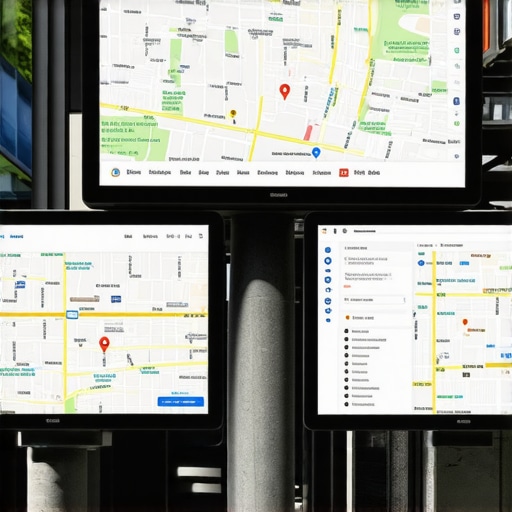
The sidewalk outside the target storefront smells like wet concrete and exhaust. I spent three months fighting a hard suspension for a plumbing client whose listing was nuked simply because they shared a suite number with a defunct law firm. Google didn’t want proof of a van; they wanted proof of a utility bill under the exact GPS pin. This is the reality of the hyper-local layer. Most ranking tools are lying to you. They sit in a climate controlled server room pinging a desktop IP address. They do not walk the street. They do not feel the shift in the proximity beacon as you move ten feet to the left. Ranking tools give you the wrong local SEO data because they use static coordinates that ignore the distance-weighted signals of a mobile device in motion. This creates a data gap where a business owner thinks they are winning while their actual customers see a different Map Pack entirely.
The three mile radius that determines your revenue
Proximity is the single most dominant factor in the local algorithm, often overriding relevance and prominence. Ranking tools that report a single average position fail to account for the hidden proximity filter that shifts results based on the specific centroid of a searcher’s physical location at that moment. The math of the Map Pack is unforgiving. If your tool says you are in the top three, it might only be true for the person standing in your lobby. When a customer searches from their home, the algorithm recalibrates. You might find that online landscape design companies lose map visibility exactly when they need it most. The software you pay for is likely masking this decay. It averages out the wins and ignores the dead zones. This is why most gmb ranking software fails to account for real world proximity in a way that helps a business grow. Real world data is messy. It is jagged. A ranking tool provides a smooth graph that does not exist on the pavement.
“Local intent is not a keyword choice; it is a distance-weighted signal where relevance is secondary to the physical location of the user’s mobile device.” – Map Search Fundamental
Why your physical address is a liability
A physical address becomes a liability when Google perceives it as a shared workspace, a virtual office, or a location with duplicate business entities. These signals trigger automatic suspensions because the algorithm requires unique, verifiable utility bills and physical signage to maintain trust in the Map Pack. I have seen pins move for no reason. I have seen the hidden reason your business pin keeps moving to the wrong street and it usually leads back to a data conflict in the underlying map layer. If your ranking tool shows you are stable while your pin is drifting, the tool is broken. You need a local seo toolkit for google maps ranking that understands the forensic trace of a service area polygon. Static reports cannot catch the moment your business pin vanished after you made a small change to your hours. The system is reactive. It is volatile. If you rely on a weekly PDF report, you are already behind the ghost in the machine.
Local Authority Reading List
- Transform Your Business With Effective Google Maps SEO Strategies
- Innovative SEO Techniques To Elevate Your Google Maps Presence
- Advanced GMB Support Tactics To Outrank Competitors
- Mastering Google Maps Ranking Proven GMB Help Strategies For 2025
- GMB Help Unveiled How To Climb Google Maps Rankings Today
The interaction signal that software cannot simulate
Behavioral zooming is the process where Google evaluates the micro-interactions of a user, such as zooming in on a map pin or checking a business profile multiple times, to determine local authority. Ranking tools cannot simulate these human signals, meaning they miss the core reason why certain listings outrank others despite having fewer reviews. Most agencies will tell you to get more reviews. They are wrong. While you chase stars, a competitor is winning because their customers are providing real customer photos to boost your local visibility. The algorithm sees the metadata in those photos. It sees the GPS tag. It sees the authenticity that a staged stock image lacks. If your tools to track and improve gmb rankings do not account for these interaction triggers, you are looking at a hollow metric. You might even find that your map interactions do not lead to real phone calls because the tool is counting bot pings as human interest. You must look deeper. You must see the glitch.
“The proximity of the searcher to the business is the primary filter in the Vicinity update, reducing the influence of keyword-stuffed business names.” – Local Search Intelligence Report
Recovering from the algorithm update fallout
Recovery from a local algorithm update requires a forensic audit of NAP consistency and a total removal of keyword-stuffed business names that violate Google Terms of Service. Most tools fail to identify the specific trigger of a penalty, leaving business owners guessing which service area or category change caused the ranking collapse. If you are looking for seo services to recover traffic after google update, do not settle for a basic audit. You need to know why your map ranking dropped overnight and how to fix it. Sometimes the answer is as simple as how to merge duplicate listings without losing your existing reviews. Other times, it requires seo services to recover from google penalty by scrubbing fake review patterns. We had to do a forensic audit of user profiles once to prove a competitor was using a VPN to drop 1-star reviews. The tools did not catch it. The human eye did. Your data is only as good as the context behind it.