
Why your Moema real estate agency is losing local leads for high-end Lindenberg developments
Moema is more than just a neighborhood; it is the epicenter of the luxury real estate market in the Zona Sul de São Paulo. For decades, it has represented the pinnacle of urban living, blending high-end residential towers with a sophisticated service infrastructure. However, a troubling trend has emerged for local professionals. Despite being physically situated in the heart of the district, many traditional agencies are watching their most valuable leads – those seeking ultra-luxury projects – slip away to large national portals and “outsider” digital platforms.
As an economist and real estate consultant who has navigated the São Paulo high-end market since 2004, I have seen the evolution of this landscape firsthand. The digital era has changed the rules of engagement. It is no longer enough to have a storefront on Avenida Lavandisca or Alameda dos Jurupis. Today, the battle for the high-net-worth investor is fought on the search engine results page (SERP). If your imobiliária em Moema is not appearing when a client searches for the latest flagship development, you are effectively invisible, regardless of your physical proximity to the site.
In this analysis, we will explore the structural and strategic reasons why local agencies are losing ground, specifically regarding Tier-1 developments like those from Lindenberg and Eztec, and how you can reclaim your local authority.
The Shift Toward Ultra-Luxury: Understanding the Lindenberg Moema Standard
The luxury market in Moema has undergone a radical transformation. We have moved past the era of standard “upscale” apartments into the realm of ultra-luxury. The benchmark for these projects, such as Lindenberg Moema, has set a new ceiling for valuation. Currently, we are seeing high-end units in this niche reaching valuations of approximately R$ 37,680 per square meter. This is not just a price point; it is a statement of exclusivity and a reflection of the “Legacy of Greatness” associated with Adolpho Lindenberg.
When a client searches for an apartamento na planta in this category, they are not looking for a salesperson; they are looking for a strategic consultant. They need someone who understands the economic implications of such an investment, the scarcity of land in Moema, and the long-term appreciation potential of a brand like Lindenberg. Traditional agencies often fail because they treat these developments as just another listing. They provide the number of bedrooms and the square footage, but they fail to sell the “investment logic.”
Furthermore, the complexity of an apartamento em construção in the ultra-luxury segment requires a deep dive into the developer’s track record. Whether it is the classic aesthetics of Lindenberg or the modern engineering of Nortis, the lead expects an expert who can compare these offerings with surgical precision. If your digital presence doesn’t reflect this level of expertise, the lead will gravitate toward larger platforms that provide comprehensive data, even if those platforms lack the local soul of Moema.
The “Proximity Paradox”: Why Being in Moema Isn’t Enough
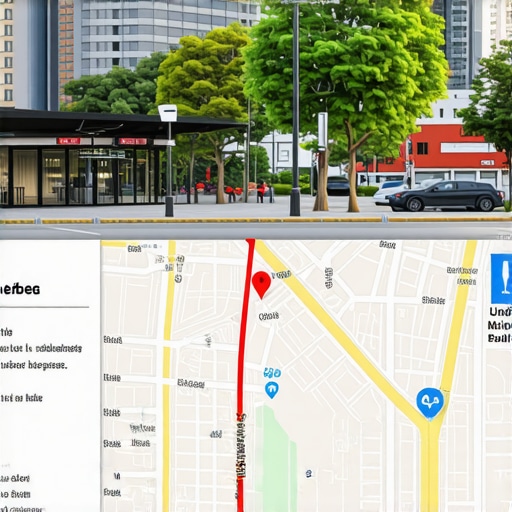
One of the most common frustrations for local brokers is the “Proximity Paradox.” You might be located three blocks away from a new construction site, yet when a potential buyer stands on that very corner and searches for a “real estate agency near me,” your business doesn’t appear in the top three results of the Google Map Pack. This is a critical failure in local SEO strategy.
In a dense urban environment like the Zona Sul de São Paulo, Google’s algorithms are incredibly sensitive to “relevance” and “prominence” over simple physical distance. This is why your proximity advantage disappears in busy city centers. If your Google Business Profile (GBP) is not optimized with the correct categories, local citations, and high-quality “real-world” signals, the algorithm will favor a larger portal or a more digitally-active agency located further away.
The high-intent buyer searching for an apartamento na planta is often performing “discovery” searches. They aren’t just looking for a name; they are looking for the best entry point into a specific lifestyle. If your agency’s website doesn’t have dedicated, high-authority pages for these specific developments, you are essentially yielding your territory to the competition. You must bridge the gap between being a “local shop” and a “digital authority.”
Case Study: Park Avenue Ibirapuera and the Eztec Influence
To understand the competition, we must look at the giants. Consider the Park Avenue Ibirapuera, a monumental partnership between Fraiha and Eztec. This project is a masterclass in exclusivity: 38 floors of architectural brilliance, yet featuring only 44 total units. This level of scarcity creates a “feeding frenzy” among high-net-worth individuals.
When a developer like Eztec or Nortis launches a project of this magnitude, they flood the market with advertising. Their SEO and SEM budgets are massive. For a local imobiliária em Moema to compete, it cannot rely on brute force spending. Instead, it must leverage “Local Authority” SEO. This means creating content that the big portals can’t – or won’t – produce.
For example, while a portal might list the basic specs of Park Avenue Ibirapuera, a local expert can write about how the shadow of the building affects the afternoon sun on specific neighboring streets, or the exact walking time to the most exclusive gates of Ibirapuera Park. This hyper-local intelligence is what converts a lead. However, if your technical SEO is lacking, this valuable content will never reach the prospect’s screen.
Technical SEO Failures Costing You High-Net-Worth Leads
Why do local listings disappear? Often, it comes down to technical negligence. Many agencies in Moema have websites that are essentially digital brochures – static, slow, and not optimized for mobile “on-the-go” searches. When a lead is driving through the Zona Sul de São Paulo and sees a billboard for an apartamento em construção, their first instinct is a quick mobile search. If your site takes more than three seconds to load, that lead is gone.
Another major issue is how business categories are actually preventing you from ranking higher. Many agencies misclassify themselves or fail to use the “Real Estate Developer” or “Real Estate Consultant” tags effectively in their GBP. Furthermore, a lack of “offline signals” – such as local check-ins, reviews that mention specific neighborhood landmarks, and localized backlink profiles – tells Google that you aren’t a dominant player in the Moema niche.
To fix this, you must learn how to optimize your local website to push your map pin higher. This involves more than just keywords; it requires a structural overhaul of how your site communicates with search engines. As an economist, I view SEO as a high-yield asset. If you invest in the infrastructure of your digital presence today, the “dividends” come in the form of organic, high-intent leads that don’t require a cost-per-click (CPC) budget. Carlos Botelho’s methodology emphasizes using economic data – such as neighborhood appreciation rates and square-meter trends – to build the kind of “E-E-A-T” (Experience, Expertise, Authoritativeness, and Trustworthiness) that Google rewards.
How to Reclaim Your Territory in Moema’s High-End Market
Reclaiming your local dominance requires a pivot from “sales” to “curation.” High-end buyers in Moema are exhausted by generic listings. They want a curated experience. Here is how you can pivot:
- Curate a Specialized Portfolio: Your website should prominently feature flagship projects like Lindenberg Ibirapuera. Don’t just list them; analyze them. Why is this project superior to others in the same price bracket? Use your local knowledge to provide a “Consultant’s View.”
- Leverage Hyper-Local Content: Portals like povoaimoveis.com.br succeed because they provide a comprehensive look at the neighborhood. Create content about the specific street traffic patterns, the proximity to elite schools like Mobile or Consa, and the nuances of the “Moema Pássaros” vs. “Moema Índios” sectors.
- Focus on Strategic Consultancy: Position yourself as the economist of Moema real estate. When discussing an apartamento na planta, talk about the inflation-hedging properties of luxury real estate in Brazil. This appeals to the intellect of the high-net-worth individual.
- Optimize for Offline Signals: Encourage your clients to leave reviews that mention the specific developments they discussed with you. This creates a strong link in Google’s mind between your agency and projects like povoaimoveis.com.br or povoaimoveis.com.br.
By implementing these strategies, you move beyond the “Proximity Paradox” and begin to rank based on authority. You stop being just another imobiliária em Moema and start being the definitive source for luxury acquisitions in the region.
Conclusion: The Future of Real Estate in the Zona Sul
The real estate market in the Zona Sul de São Paulo is not getting any less competitive. As developers like Eztec and Lindenberg continue to push the boundaries of luxury, the digital divide between local agencies and large portals will only grow – unless the local players adapt.
Winning in Moema requires a blend of old-school neighborhood expertise and new-school technical SEO. You must be visible where the leads are searching and authoritative when they arrive at your site. If you are ready to elevate your agency’s digital strategy and master the art of high-end portfolio management, it is time to look at how the leaders do it. Visit povoaimoveis.com.br for a masterclass in how to present luxury real estate in the modern era. The leads are there; it’s time to bring them home.