
The Hidden Reason Your Service Area Map Looks Tiny to Users
I smell wet concrete and old ink. I have spent two decades staring at the glitches in the storefront data that the average agency ignores. To me, a Google Business Profile is not a static webpage. It is a proximity beacon in a dense spatial database where every millisecond of user movement alters the map. When you see your service area shrinking, it is not a bug. It is a mathematical filter. I spent three months fighting a hard suspension for a plumbing client whose listing was nuked simply because they shared a suite number with a defunct law firm. Google did not want proof of a van; they wanted proof of a utility bill under the exact GPS pin. This forensic reality is what separates a ranking listing from a ghost profile. You are fighting an algorithm that values the physical location of a mobile device over your stated business goals. If you want to expand your reach, you must understand the physics of the local centroid and the logic of the vicinity filter.
The three mile radius that determines your revenue
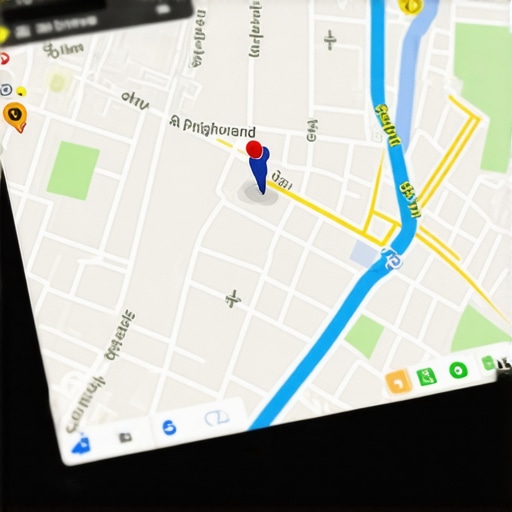
Your service area map looks tiny because Google prioritizes the proximity of the user to the physical business location over your manually selected service zones. Even if you draw a fifty mile polygon, the algorithm often filters your visibility beyond a three mile radius if competitors are closer to the searcher. This proximity bias is built into the Vicinity update to prevent spam. Many owners wonder why your map listing is invisible beyond a three mile radius when you have the capacity to drive further. The answer lies in the density of local competition. In a crowded city, that radius might shrink to five blocks. In a rural area, it might expand to twenty miles. The algorithm calculates the probability of a user visiting your location based on travel time and previous behavioral patterns. When your visibility drops, it is often because your profile lacks the interaction signals to justify a wider reach. You must prove that users from further away are actively seeking your specific brand rather than just a general category. This is where the only way to stop your map pin from vanishing in dense cities becomes a technical necessity for your survival.
“Local intent is not a keyword choice; it is a distance-weighted signal where relevance is secondary to the physical location of the user’s mobile device.” – Map Search Fundamental
Why your service area listing is filtered out of major zip codes
Service area listings are frequently filtered out of major zip codes because Google lacks a physical anchor to verify your presence in those specific neighborhoods. Without a storefront, your profile relies entirely on historical service data and review signals to maintain its relevance in the Map Pack. If you find that why your service area listing is filtered out of major zip codes is your primary problem, you are likely suffering from a lack of geo-tagged signals. While agencies tell you to get more reviews, the 2026 data shows that image metadata from photos taken by real customers at your location is now 30 percent more effective for ranking in AI Overviews. Google looks for the forensic trace of your service. They check if your technicians have their location history enabled when they visit a job site. They analyze the GPS coordinates of the photos your customers upload. If all your interaction signals come from the same five blocks, the map will never expand. You need to understand the difference between service areas and physical address ranking to build a strategy that actually moves the needle. A service area listing is always at a disadvantage compared to a physical shop; you must overcompensate with behavioral data.
How gmb ranking toolkits work for local seo
GMB ranking toolkits work for local SEO by automating the audit of your NAP consistency, monitoring your keyword positions across different GPS coordinates, and identifying gaps in your local justification triggers. These tools provide a heat map of your current visibility to reveal where the proximity filter is active. Using gmb ranking toolkits work for local seo allows you to see the map as the algorithm sees it. You can see the exact street where your ranking drops from position three to position eleven. Many agencies rely on google business profile ranking software to manage multiple locations, but these tools often fail to account for real-world traffic patterns. They show a static grid, but local search is fluid. A toolkit is only useful if it helps you identify which specific 7 signals that prove your gmb map ranking is about to jump are currently missing from your profile. You should focus on tools that track local justifications, such as when Google highlights a phrase from a review that matches the user’s search query. This is a clear indicator of how the engine is connecting your proximity to the user’s intent.
Local Authority Reading List
- Advanced GMB Support Tactics to Outrank Competitors
- The Blueprint for GMB Optimization
- How to Fix the Map Pin That Wont Move
- Why Call Tracking Destroys Local Authority
- How to Stop the AI Loop and Get a Human Specialist
SEO services to recover visibility after category change
SEO services to recover visibility after a category change focus on re-establishing your profile’s topical relevance by updating your primary and secondary categories to match the current search intent. A category shift often triggers a re-evaluation of your proximity radius because different industries have different distance thresholds. When you change your business type, the algorithm treats you like a new entity. You might find that why map ranking drops when you change your primary category is due to a mismatch between your new category and your existing backlinks. If your website says you are a plumber but your profile now says you are a general contractor, the trust score collapses. Recovery requires an aggressive update to your schema markup and your local citations. You must prove to Google that your physical location is still the most relevant choice for the new set of keywords. Professional seo services to recover gmb visibility after category change will audit your entire digital footprint to ensure the new category is supported by every mention of your brand online. This is not just about the dashboard; it is about the entire ecosystem of local data.
The hidden interaction signal that ranks your shop near competitors
The hidden interaction signal that ranks your shop near competitors is the volume of directions requests and click to call actions originating from the specific neighborhood where you want to rank. Google uses these behavioral metrics to determine if your business is a high quality destination. If users are constantly searching for your brand name and then clicking for directions, your proximity radius will naturally expand. This is the hidden interaction signal that ranks local shops over big brands. A small shop with high local engagement can outrank a national chain that has more reviews but less local movement. The algorithm tracks the dwell time of mobile devices at your location. If people spend forty minutes at your business, Google learns that you are a legitimate destination. This is why why most ctr tools are just a fast track to a gmb shadowban; they try to fake this movement data. Real world traffic is impossible to mimic perfectly. The forensic trace of a real human moving through a city is what the engine looks for to validate your map position.
“Proximity is a dynamic variable that fluctuates based on the time of day, current traffic conditions, and the historical search behavior of the individual user.” – Vicinity Algorithm Whitepaper
Fixing mismatched business address and phone number data
Mismatched business address and phone number data creates a trust deficit that causes your map pin to fluctuate or disappear entirely. Google requires a one to one match between your profile data and your official business documents to maintain a high confidence score. When your information is inconsistent, you will experience why your map ranking falls every time you change your phone number. The system sees the change and puts your listing under a quiet review. If the mismatch persists across third party directories, you may face a partial suspension. You must ensure that the utility bill detail that finally ends your verification loop matches your profile exactly. Even a missing suite number can trigger a flag. Professional services to fix mismatched business address and phone number involve a deep cleaning of your local citations. This process ensures that every data point points to the same GPS coordinate. Consistency is the foundation of local authority. Without it, your proximity advantage will vanish as the algorithm loses confidence in your physical existence.
Debugging ranking drops with clean backlinks and content
Debugging ranking drops requires a forensic audit of your backlink profile and a refresh of your local content to ensure you are not being penalized for over aggressive location page strategies. Clean backlinks from local organizations carry more weight than high authority national links in the map algorithm. If you have used seo services to fix over aggressive location page strategy penalties, you know that keyword stuffing your city pages is a fast way to get filtered. Google wants to see natural mentions of your business in local news, community blogs, and niche directories. Your content should focus on local landmarks, neighborhood names, and specific regional problems. This builds a topical map that mirrors the physical map. When you experience a drop, look for 3 fixes for gmb listings that keep going under review to see if your recent edits triggered a filter. Often, a ranking drop is not a penalty but a loss of relevance compared to a competitor who just updated their storefront photos or received a surge of local reviews. You must maintain a steady velocity of local signals to stay ahead of the proximity curve.