
The Real Reason Your Arizona Screen Printing Listing Doesn’t Rank in Neighboring Cities
If you own a shop offering scottsdale screen printing, you know the frustration of the “invisible wall.” You have a beautiful facility in Scottsdale, dozens of five-star reviews, and a website that looks professional. Yet, when a potential customer in Tempe, Mesa, or Phoenix searches for a Scottsdale screen printer or even a general “screen printing near me,” your business is nowhere to be found. You might rank #1 for someone standing in your parking lot, but as soon as they cross the city line, you vanish from the Google Maps “Local Pack.”
This isn’t a glitch, and it isn’t necessarily because your competitors have better equipment. It is the result of a sophisticated algorithmic mechanism known as the Proximity Filter. In the Greater Phoenix area – where cities like Scottsdale, Paradise Valley, and Phoenix bleed into one another – this filter is particularly aggressive. Google’s primary goal is to provide the most geographically relevant result to the user. Unfortunately, for business owners, Google weights proximity more heavily than almost any other ranking factor, often at the expense of quality and expertise. Understanding why this happens is the first step toward breaking through the digital borders of the Valley.
The Proximity Filter: Why City Borders Are Your Biggest Competitor
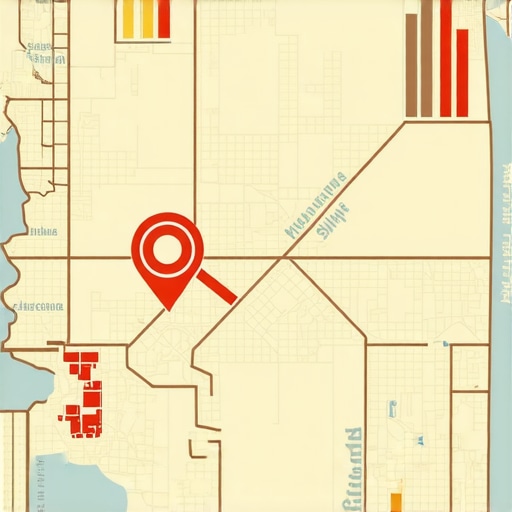
The “Proximity Filter” is a component of Google’s local search algorithm that prioritizes businesses closest to the searcher’s physical GPS coordinates. When someone searches for screen printing scottsdale, Google doesn’t just look for businesses with those keywords; it looks at where the user is standing. If the searcher is in South Scottsdale, Google will favor shops in that specific neighborhood over a superior shop in North Scottsdale. This is a core reason How the Proximity Filter Hides Your Business from Real Customers who are just a few miles away.
In Arizona, city borders are often arbitrary to a consumer. A person living on the edge of Scottsdale and Phoenix likely doesn’t care which city the shop is technically in, as long as it’s a short drive. However, Google views these borders as significant markers of relevance. The algorithm uses “centroids” – the mathematical center of a city or a search area – to determine which listings to display. If your business is located on the periphery of Scottsdale, you may find it nearly impossible to show up for searches originating in the heart of Phoenix because the distance from the user to your shop exceeds the threshold Google has set for that specific search query.
Furthermore, Google recalculates results in real-time. As a user drives down Camelback Road, their search results for a Screen printer Scottsdale will shift block by block. This hyper-locality means that your competition isn’t just every other shop in the state; it’s every shop that happens to be closer to the user at the exact moment they hit “search.” To combat this, you must build enough “authority” to override the proximity penalty, a task that requires more than just basic SEO.
The 20-Mile Radius Myth in Local SEO
Many business owners are told by “experts” that they should simply set their service area in Google Business Profile (GBP) to a 20-mile or even 50-mile radius to capture more customers. This is one of the most persistent myths in the industry. The reality is that simply claiming a service area does not grant you ranking authority in those areas. You can tell Google you serve all of Maricopa County, but Google will still prioritize a physical storefront located in the searcher’s immediate vicinity. This is why many find Why Your Service Area Listing Is Filtered Out of Major Zip Codes despite their best efforts to “expand” their reach in the dashboard.
In fact, setting a radius farther than 20 miles can often backfire. When you claim an overly broad service area without the data to back it up, Google may view your listing as less relevant to any specific “hyper-local” area. For an Arizona Screen Printer, the most effective strategy is focusing on the city you are physically located in plus a tight, realistic radius. Google’s algorithm is designed to prevent “spam” listings from dominating entire regions. If you don’t have a physical presence or significant brand authority in a neighboring city, Google will filter you out to make room for a local competitor – even if that competitor has fewer reviews or a worse website.
The “distance decay” effect is real. As the distance from your physical address increases, your ranking strength drops exponentially. By the time you reach 10 or 15 miles away, your “relevance” score is often so low that no amount of keyword stuffing can save you. To rank in those outlying areas, you need to prove to Google that people in those areas actually want to do business with you, which leads us to the concept of interaction signals.
Interaction Signals: The “Secret Sauce” Beyond Keywords
If proximity is the “where,” interaction signals are the “who” and “why.” Google doesn’t just look at your address; it looks at how users interact with your listing. These “Real-World Traffic Signals” are often more important than having the perfect keywords in your description. If a user in Mesa searches for a Screen printer Arizona and chooses to click on your Scottsdale listing, call your shop, or request driving directions, that is a massive signal to Google that your business is relevant to Mesa residents.
This is The Hidden Interaction Signal That Actually Moves Your Map Ranking. Google tracks “pogosticking” (when a user clicks a result and immediately hits the back button) and successful conversions. If your listing is shown to people in neighboring cities but no one clicks on it, Google learns that you aren’t a good fit for that area and will stop showing you there. Conversely, if you can drive traffic from specific zip codes to your listing, you can begin to expand your “ranking bubble.”
Neighborhoods and nearby landmarks often matter more than city names. For example, if your shop is near the Scottsdale Fashion Square, you should be generating content and interaction signals related to that landmark. When Google sees that users who are frequently near certain landmarks are also searching for and visiting your shop, it strengthens your local entity. This is why local brand search is so critical. If people are searching for your specific business name while they are in Tempe, Google starts to realize that your Scottsdale screen printing shop has a regional draw, not just a neighborhood one.
Why Your Scottsdale Screen Printer Listing Fails the “Storefront Test”
Google has become incredibly skeptical of “ghost” businesses – companies that claim a location but don’t actually have a physical, customer-facing presence there. This is especially common in the custom apparel industry, where many people run businesses out of their garages or co-working spaces. However, if you want to rank as a top Scottsdale screen printer, you must pass the “Storefront Test.”
Google uses its Street View cars and user-submitted photos to verify that a business has permanent, high-quality signage. If your GMB photos only show the interior of a warehouse or, worse, a residential home, Google will limit your “reach” to prevent what it perceives as potential spam. This is The Storefront Signage Mistake That Leads to Instant GMB Rejection or at the very least, a ranking ceiling. A permanent sign tells Google – and the customer – that you are a legitimate, vested member of the local economy.
For those looking for Scottsdale custom screen printing, the physical evidence of your shop serves as a trust signal. When your listing includes photos of a clearly branded storefront, customers are more likely to click “Request Directions.” These directions requests are high-weight interaction signals that tell Google your location is a destination. Without a clear storefront, you are often relegated to a tiny radius, explaining Why Your Map Listing Is Invisible Beyond a Three Mile Radius. Google simply doesn’t trust that you are a “real” enough business to warrant sending a customer on a 20-minute drive across the Valley.
Strategies to Expand Your Reach into Phoenix, Tempe, and Beyond
To break the proximity filter and rank for searches like Screen printer Scottsdale or AZ Screen Printer in neighboring cities, you need a proactive strategy that goes beyond the Google Business Profile dashboard. Here are three high-impact methods:
- Drive Local Brand Search: The single most powerful ranking factor today is brand search. You want people in Phoenix to search for “[Your Business Name] screen printing” rather than just a generic keyword. When Google sees thousands of people searching for you by name from different geographic locations, it realizes your business is an “Authority Entity.” This is Why Local Brand Search Is the Most Important Ranking Factor for modern SEO.
- Create Location-Specific Landing Pages: Your website should have dedicated pages for the cities you want to target. A page titled “Screen Printing Services for Phoenix Businesses” that mentions specific Phoenix neighborhoods, local events you’ve printed shirts for, and local partnerships helps Google associate your website with those areas.
- Generate Geo-Targeted Reviews: Encourage your customers from Tempe or Mesa to mention their city in their review. When a review says, “Best shop for screen printing near me, I drove from Mesa and it was worth it,” Google’s AI processes that geographic data and associates your shop with Mesa.
By implementing these tactics, you can learn How Local Service Area Businesses Can Beat the Proximity Filter. It is about building a digital footprint that is larger than your physical one. You must provide Google with “proof” of your relevance in neighboring cities through content, reviews, and user behavior data.
Conclusion: Reclaiming Your Local Authority
Ranking a Scottsdale screen printer in a crowded market like the Greater Phoenix area is no longer as simple as picking the right category in your GMB settings. The algorithm is designed to keep you in your “neighborhood box.” To break out, you must understand that proximity, while a dominant factor, can be overcome by high interaction signals, physical storefront authority, and strategic brand building.
If you are tired of being invisible to customers just five miles away, it’s time to stop guessing. The “Proximity Filter” is a technical hurdle that requires a technical solution. Whether it’s fixing your signage strategy, driving local brand searches, or optimizing your interaction data, there is a path to regional dominance. For a custom GMB audit and a strategy designed to break through the proximity filter, contact Kevin F. Yeaman today. Let’s make sure your business is the one customers find when they search for the best screen printing in Arizona.