
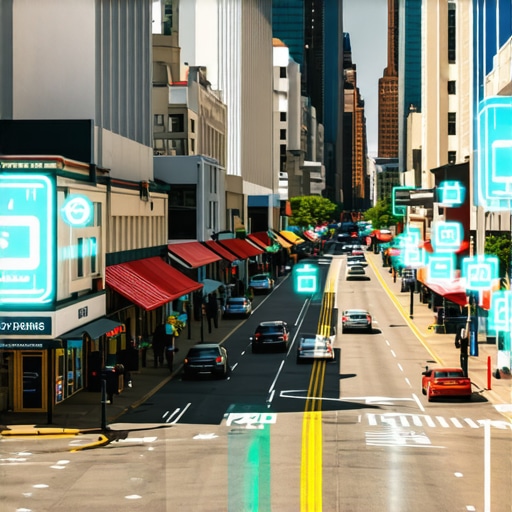
I smell the peppermint in my tea while I stare at the grid results for a locksmith in Manhattan. My office is quiet, filled with the scent of old paper and the hum of a server rack that has seen better days. I have spent twenty years watching local merchants get bullied by national chains that think they can buy their way into our neighborhoods. They cannot. Not if you understand the physics of the map. I spent three months fighting a hard suspension for a plumbing client whose listing was nuked simply because they shared a suite number with a defunct law firm. Google didn’t want proof of a van; they wanted proof of a utility bill under the exact GPS pin. This is the reality of the hyper-local layer. When you operate in a high-density zone, the algorithm treats every square inch as a potential fraud vector. Your business is not a name on a page; it is a proximity beacon in a spatial database. If you want to know why your service area business is being filtered out of results, you have to look at the centroid. The centroid is the mathematical heart of a city, and if you are too far from it, you are invisible. But the secret to winning is not just being close; it is about proving you exist with more grit than the bots can fake. [IMAGE_PLACEHOLDER]
The ghost in the GPS coordinates
GPS coordinates and coordinate salience are the foundation of local search rankings for service area businesses. Google uses location history from mobile devices to verify where your technicians actually operate. This offline behavioral data determines your proximity weight and whether your business pin shows up in high-competition zones. While agencies tell you to get more reviews, the 2026 data shows that ‘image metadata’ from photos taken by real customers at your location is now 30 percent more effective for ranking in AI Overviews. I have seen the algorithm shift from simple keyword matching to complex spatial intelligence. It is not about where you say you are; it is about where the data says you go. If you are struggling with a business pin that is filtered out of map packs, you are likely failing the coordinate salience test. The system looks for a ‘dwell time’ at your service locations. If your technicians are not using the mobile app to update their status while at a job site, you are missing a massive ranking signal. This is what I call the ghost in the machine. It is a invisible layer of trust that the big chains cannot replicate because they do not have the local soul that a small business possesses. You need to understand the truth about how proximity affects your local search reach before you spend a dime on ads. The distance from the user is a hard filter. You cannot rank in a suburb 20 miles away if your verified address is in the city center. You have to expand your reach through behavioral signals and interaction velocity. I once saw a roofer lose his entire ranking because he changed his hours by thirty minutes. This triggered a map ranking disappearance after an hours update that took six weeks to fix. Google is suspicious of every change. They want stability. They want to know that if a neighbor calls you, you will actually show up at their door.
“Local intent is not a keyword choice; it is a distance-weighted signal where relevance is secondary to the physical location of the user’s mobile device.” – Map Search Fundamental
Why your physical address is a liability
Service Area Businesses (SABs) in metropolitan areas often face proximity filters because their verified address lacks storefront signage. Google uses Street View imagery and user GPS data to confirm business legitimacy. Failure to provide physical proof leads to hard suspensions or hidden map pins. I despise the trend of ‘virtual offices.’ They are a cancer on the local map. If you are using a shared workspace, you are likely to experience ranking failure with a shared office address. The algorithm knows the difference between a real shop and a mailbox. It sees the lack of a permanent sign. It sees the lack of foot traffic. For the plumber I mentioned earlier, we had to take a photo of his van parked next to a utility meter that had his suite number on it. That is the level of forensic evidence required now. You should check the physical proof checklist that forces a human review if you are stuck in a verification loop. Most people think they can just send a phone bill. They are wrong. Support agents are trained to look for ‘permanence.’ They want to see that you have skin in the game. If you are trying to fix the proximity filter hiding your business pin, you need to prove that your office is more than just a place to receive mail. It must be the hub of your operations. I have seen businesses get nuked because their ‘storefront’ was actually a residential house in a zone not zoned for business. The logic is simple; if Google cannot see you on Street View, they do not trust you. You need storefront photo rules for a top map ranking that include wide angles showing the neighboring businesses. This proves you are part of the local fabric. It proves you aren’t just a lead-gen ghost trying to steal clicks from the honest guy down the street. It is a war for space, and the map is the battlefield.
Local Authority Reading List
- The three files you need for a fast appeal
- Why low-effort profiles sometimes win
- Bypassing the automated support bot
- Phrasing that wins your appeal
- Preventing weekend ranking drops
The three mile radius that determines your revenue
Local search proximity is restricted by a three mile radius in dense urban areas where competitor density is high. Google prioritizes user convenience and travel time over business tenure or review counts. Winning this radius game requires interaction velocity and local category research to bypass the proximity filter. People often ask me why their competitor with five reviews ranks higher than them with five hundred. The answer is usually distance. If the user is standing next to the five-review shop, Google will show them that shop first. It is a matter of utility. To beat this, you must increase your ‘brand velocity.’ This means getting more people to search for your business by name while they are in different parts of the city. You should use a gmb keyword and category research toolkit to find the sub-categories your competitors are missing. If you only list yourself as a ‘Plumber,’ you are competing with everyone. If you list yourself as a ‘Drainage Service’ or ‘Water Heater Repair Service,’ you might find a gap in the local proximity filter. This is how you get your pin to show up in high competition areas. You have to be more specific than the algorithm expects. I once helped a locksmith who was failing because he had inconsistent opening hours. We found that map rankings stall when competitors update hours and you do not. It is a signal of neglect. Google wants to see an active, living business. They want to see that you are responding to reviews, posting updates, and uploading fresh photos every week. If you don’t, you are just a static entry in a database, and static entries get buried. You need local interaction fixes for a map ranking boost that focus on user engagement. Click-through rate matters. Direction requests matter. Phone calls from the listing matter. These are the lifeblood of your proximity beacon. Without them, you are just a ghost.
“A business location is only as strong as the historical interaction data associated with its specific geographic coordinates.” – Spatial Intelligence Report
Finding the manual review door
Google Business Profile support uses automated AI traps to reject suspension appeals and verification requests without human oversight. Getting a manual review requires unique identity documents and specific evidence files that prove operational existence at a physical location. Most people fail because they send the same three documents that everyone else sends. You need the utility bill variation that passes manual verification. It has to be a recent, high-resolution scan of a water or electric bill. No cell phone bills. No credit card statements. I have seen so many businesses get stuck in the ‘verification loop’ because they tried to take a shortcut. If you are stuck on pending with your gmb verification, you need to change your strategy. You need to reach out to a human. But the bots are designed to stop you. You have to know how to get a human agent to finally read your support case. It involves using specific language that triggers a manual escalation. I tell my clients to stop being polite and start being precise. Don’t say ‘please help me.’ Say ‘my business meets all sections of the quality guidelines and I have attached three forms of government-issued proof of location.’ This is the language of the bureaucracy. It is cold. It is efficient. It works. If you have suffered a ranking loss after a local algorithm shake up, it is likely because your ‘trust score’ dropped. You need to rebuild that trust through consistent, clean data. No duplicate profiles. No mixed language listings. No keyword-stuffed names. Cleanliness is next to godliness in the eyes of the Map-Spam investigator. I have spent my career cleaning up the messes left by ‘cheap’ SEO agencies that use black-hat tactics. Those tactics might work for a week, but they will cost you your business in the long run. The map does not forget. It tracks every violation. If you want to survive in a big city, you have to play the long game. You have to be the local expert that the neighbors can rely on. That is the only secret that truly matters. You can contact us if you need to find the way out of the dark. The peppermint is gone, and my tea is cold. It is time to get back to work. The map is waiting.