
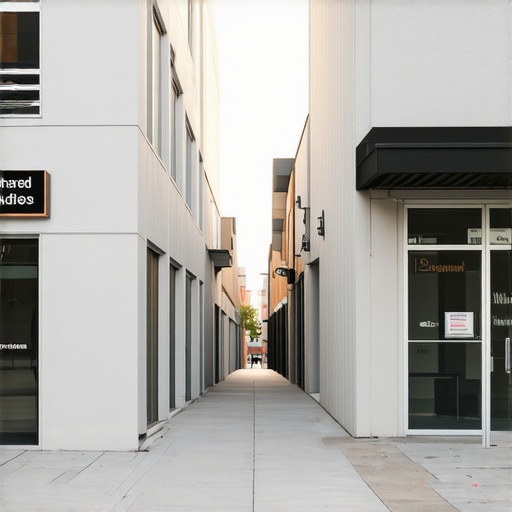
Shared offices create address overlap that triggers Google Business Profile suspensions. Because multiple businesses use the same suite or building without distinct physical divisions, the algorithm identifies the location as a virtual office or spam hub, leading to a complete loss of visibility in local search results. This proximity filter effectively erases your business pin from the Map Pack to prevent user confusion.
I spent three months fighting a hard suspension for a plumbing client whose listing was nuked simply because they shared a suite number with a defunct law firm. Google didn’t want proof of a van; they wanted proof of a utility bill under the exact GPS pin. The smell of wet concrete outside that office did not matter. The paper trail did. The algorithm does not care about your convenient lease. It cares about the forensic proof of a permanent, exclusive physical footprint. When you share an address, you share a reputation. If another tenant in that building was caught spamming, your listing becomes collateral damage. This is the microscopic reality of the local algorithm where a single coordinate overlap can end a decade of growth.
The ghost in the GPS coordinates
Local search is a game of coordinates. Google views a business listing as a proximity beacon in a complex spatial database. When you register your business at a WeWork or a Regus, you are not just renting a desk; you are entering a high-risk pool of data signals. The algorithm uses a process called centroid deduplication. If five law firms are in the same building, Google often filters out four of them to provide variety to the user. This is why using a shared office address fails so spectacularly. You are fighting for the same physical point on the map. The math of the proximity filter is ruthless. It calculates the distance between the user and the business pin, but it also calculates the density of similar business types at that same latitude and longitude. If the density is too high, the system assumes a lead-gen farm. The pin disappears. You lose the Map Pack. You lose the phone calls.
“Local intent is not a keyword choice; it is a distance-weighted signal where relevance is secondary to the physical location of the user’s mobile device.” – Map Search Fundamental
The system is designed to reward unique physical locations. When you use a shared space, your NAP data (Name, Address, Phone) starts to blur. Other businesses might have used that same suite number in the past. This creates a legacy of data conflicts. If a previous tenant was suspended for quality issues, your new listing inherits that toxic history. You might need GMB help tactics to bypass the AI support filter just to prove you are a different entity. The algorithm sees the shared address and automatically categorizes it as a low-trust signal. It is a digital red flag that stays with your profile until you move to a dedicated storefront with its own utility meter.
Why your physical address is a liability
Shared offices are the primary target for the Map-Spam Investigation teams. They look for specific patterns like suite numbers that do not exist or desks that are only rented for mail. If your business does not have permanent signage that a street photographer can see, you are at risk. The algorithm now uses computer vision to analyze storefront photos. If it sees a directory of fifty businesses on one small plaque, it knows you are in a shared space. This triggers a manual verification request that most businesses fail. You will need specific evidence to prove your storefront is real, such as a video walk-through from the street into your private office. Without a door that has your brand on it, the bot will reject your appeal every time. The risk of the utility bill mistake is also high here. Most shared offices include utilities in the rent. This means you do not have a bill from a power company in your business name. Without that paper, Google will never believe you are a real local merchant.
Local Authority Reading List
- How to fix the proximity filter hiding your business
- Identity proofs for manual reviews
- The physical proof checklist for humans
- Fast fixes for a ranking drop
The three mile radius that determines your revenue
Proximity is the strongest ranking factor in the Vicinity update. If you are in a shared office in a crowded downtown core, you are surrounded by competitors. This creates a high-proximity zone where the algorithm is extra sensitive. If your neighbor is closer to the user by fifty feet, they get the click. When you are in your own building, you have a cleaner proximity signal. You can dominate your immediate three-mile radius without the noise of forty other businesses at the same address. If your ranking is stuck, it might be the hidden proximity filter at work. The algorithm is trying to de-clutter the map. It treats the shared office building as one entity rather than a hub of distinct services. Moving just two blocks away to a private garage or storefront can often double your visibility overnight. You stop being a ghost in a shared suite and start being a landmark in the local database.
“Relevance is the foundation of search, but in the local pack, physical isolation from competitors is the most under-valued asset for a business profile.” – Local Search Intelligence Report
We must also discuss behavioral signals. Google tracks the movement of mobile devices. If the system never sees customers staying at your shared office address for more than ten minutes, it assumes you are not really there. It sees the lack of foot traffic and lowers your ranking score. Real businesses have people coming and going. Shared offices often have ghost tenants. The algorithm knows the difference. It analyzes the GPS dwell time of people who search for you. If you are just a mail drop, your SEO support package will not move the pin because the behavioral data is missing. You need the physical interaction to prove the address is valid.
The evidence that breaks the support loop
If you are already trapped in a shared office and your ranking has vanished, you must change your strategy. You need to gather documentation that proves your exclusive use of the space. This means a signed lease that specifies your suite number and a phone bill that matches the address exactly. You might need evidence files that force a human to read your ticket. The AI bot will see the shared address and auto-close your case. You have to provide the specific photo angle of your office door showing your official business name. No temporary signs. No paper taped to a window. It must be permanent. This is the only way to fix the quality issues loop. If you cannot provide this, the listing is effectively dead. You are better off switching to a Service Area Business (SAB) model and hiding your address entirely. While this reduces your proximity radius, it protects you from the shared-office ban hammer. It is better to have a small, safe ranking than a large, suspended one. Use service area strategies to stop pin filtering and regain control of your local lead flow. The algorithm is a machine of logic. Feed it the proof it needs or move your business to a place where it can actually breathe.