
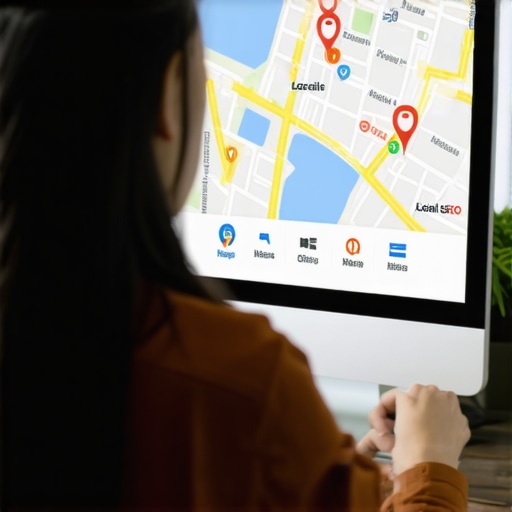
Ever spent hours trying to fix your GMB profile, only to see your competitors leap ahead in local searches? I’ve been there, pounding my head against the wall, wondering why my efforts weren’t paying off. That frustrating moment when your phone rings less and your competitors dominate the map pack—yeah, I know that feeling all too well. But here’s the truth: with the right approach, you can turn things around and start climbing the local rankings more effectively than ever.
Why Local SEO and Google Maps Matter More Than Ever
In 2024, local SEO isn’t just a nice-to-have; it’s the lifeblood of small businesses trying to survive and thrive. According to recent studies, over 78% of local mobile searches lead to an offline purchase within a day. That means if your business isn’t showing up prominently on Google Maps, you’re essentially invisible to a huge chunk of potential customers.
But here’s the tricky part—Google’s algorithms are constantly changing. What worked last year might not cut it today. I made the mistake early on of focusing only on keyword stuffing and neglecting the importance of Google My Business (GMB) profile optimization. That’s a rookie error that can sink your efforts fast. Instead, I learned that a strategic, holistic approach is the key to sustainable growth.
Is GMB Optimization Still Worth the Hype?
It’s natural to be skeptical. You might wonder if investing time into your GMB profile is really worth it, especially with so many other marketing channels. Let me tell you, the fundamentals are still powerful—if you do them right. I’ve seen businesses go from obscurity to top local spots just by honing their profiles and employing proven techniques. Want to avoid my early mistakes? You can check out this guide for detailed strategies.
So, if you’re tired of watching your competitors overshadow you on Google Maps, stay tuned. I’ll walk you through the essential steps that can help you dominate local search results and bring in more customers.
Start with a Solid GMB Profile Foundation
First, claim and verify your Google My Business (GMB) listing if you haven’t already. Think of this as staking your claim on a new plot of land—without it, nothing else matters. Once verified, fill out every section meticulously—business name, address, phone number, website, hours, and categories. Use this guide to ensure you’re covering all bases for maximum impact.
Optimize Your Business Details for Search Engines
Next, focus on keyword-rich descriptions and service lists. Instead of vague language, be specific. For example, instead of “best plumber,” use “emergency plumbing services in Downtown LA.” Incorporate relevant keywords naturally, like you’re telling a story. This helps Google understand exactly what your business offers and matches your profile to local searches.
Build a Strong, Consistent NAP Profile
Consistency is king. Make sure your Name, Address, and Phone number (NAP) are identical across your website, GMB, and all local directories. Discrepancies confuse Google and hurt your rankings. I once spent a day fixing inconsistent NAP info across dozens of listings—once corrected, I saw a noticeable boost in local visibility within a week.
Engage with Reviews and Manage Your Reputation
Reviews are social proof and a ranking factor. Encourage happy customers to leave detailed reviews, and respond to each one promptly—thanking for positive feedback, addressing negatives professionally. Think of reviews as signals to Google that your business is active and trustworthy. I once turned around a poor review by responding publicly and offering a solution, which not only improved my reputation but also boosted my rankings.
Leverage Local Content and Citations
Create localized content—blog posts about local events or news—that naturally attract local backlinks and citations. Citations are mentions of your NAP across the web. The more high-quality citations you have, the more authoritative your listing appears. I used local directories and industry-specific sites to boost my citations, significantly improving my local pack presence.
Use High-Quality Photos and Videos
Visual content is crucial. Upload high-resolution photos of your storefront, products, staff, and services. Use these techniques to optimize image file names and descriptions. Videos showcasing your services can also increase engagement. I added a 30-second video tour of my shop, which increased clicks and inquiries.
Monitor Performance and Adjust Strategies
Finally, track your rankings, traffic, and reviews regularly. Use tools like Google Insights or third-party rank trackers. If you notice a dip, revisit your profile—maybe a review was removed or your NAP info changed. Continuous optimization is key. I learned this the hard way when a competitor’s listing outperformed mine after I neglected my profile updates for a few months.
Many business owners believe they understand what it takes to rank highly on Google Maps, but some widespread myths can actually sabotage your efforts. Let’s dig deeper into these misconceptions and uncover the nuances that matter most for true local SEO success.
Why More Reviews Don’t Always Mean Better Rankings
It’s a common belief that accumulating as many reviews as possible will automatically boost your visibility. While reviews are indeed a ranking factor, quality and relevance matter more than sheer quantity. Google’s algorithms prioritize recent, detailed reviews that reflect genuine customer experiences. Flooding your profile with superficial reviews or incentivizing reviews can backfire, leading to penalties or diminished trust signals. Focus on encouraging honest feedback from satisfied clients and respond professionally to foster engagement and authenticity. For a comprehensive approach, check out this guide.
The Hidden Power of Consistent NAP Data
Many overlook the importance of nurturing consistent Name, Address, and Phone Number (NAP) data across all platforms. A common mistake is updating your details on Google My Business but neglecting to correct discrepancies elsewhere—your website, local directories, or social media. These inconsistencies confuse Google’s algorithms, diluting your authority and reducing your chances of ranking higher. The real nuance? Even minor variations in formatting or punctuation can impact your local SEO. Regular audits of your NAP across all listings are vital. For more insights, explore this resource.
What Advanced Strategies Are Most Effective for Local SEO?
For those who’ve mastered the basics, the next question is: how can you push your rankings further? Advanced tactics include leveraging hyper-local content, building high-quality citations, and optimizing for voice search. Incorporating local keywords naturally into your content helps Google associate your business with specific neighborhoods or communities. Citations from authoritative local sources increase your trustworthiness, while voice search optimization aligns with changing user behaviors. According to Moz’s 2023 Local Search Ranking Factors, these nuanced strategies can provide a significant edge over competitors relying solely on basic profile optimization. To stay ahead, consider consulting this support guide.
Remember, avoiding the trap of superficial tactics and focusing on authentic, strategic improvements can lead to sustained success. Have you ever fallen into this trap? Let me know in the comments.
Keeping your local SEO efforts alive and thriving requires the right tools and consistent strategies. Over time, even the most optimized Google My Business (GMB) profiles can drift from peak performance without proper maintenance. To stay ahead, I rely on a combination of specialized software and disciplined routines that ensure your presence remains robust and competitive.
How do I keep my GMB profile performing over time?
First, I recommend using advanced tools like BrightLocal. This platform provides comprehensive local SEO tracking, citation management, and review monitoring. It helps me identify when my NAP consistency is slipping or when new citations are needed to boost authority. Regularly auditing your citations using BrightLocal or Moz Local prevents discrepancies that could harm your rankings.
Next, I use Google Insights to monitor profile views, searches, and engagement metrics. This data guides me on whether my optimization efforts are paying off or if I need to adjust my keywords or content focus. Keeping an eye on these analytics is crucial for long-term success.
For review management, I leverage Google Review Link Generators and reputation management tools like Podium. These help streamline the process of requesting reviews and responding promptly. Consistent review engagement signals activity to Google and builds trust with potential customers.
Visual content remains a key element. I use Canva or Adobe Spark to create high-quality photos and videos that showcase my business. Regularly updating this media keeps the profile fresh and engaging, which Google favors in ranking algorithms.
What about automation and future trends?
Automation tools like Hootsuite or Buffer can schedule posts about local events, promotions, or new blog content, maintaining your profile’s activity level without constant manual effort. As AI advances, I predict that future tools will incorporate more predictive analytics and personalized engagement, making maintenance smarter and more efficient.
To ensure your efforts are sustainable, I recommend establishing a routine—weekly checks of your NAP consistency, monthly review of analytics, and quarterly citation audits. These disciplined practices, combined with the right tools, will keep your Google Maps presence strong and growing.
Start experimenting with one of these tools today, like BrightLocal or Canva, and see how they can streamline your ongoing maintenance. Remember, long-term success in local SEO isn’t a set-it-and-forget-it deal—it’s about consistent, strategic updates that keep you visible and relevant.
If you’re serious about scaling your local SEO, consider exploring these advanced strategies and tools to elevate your Google Maps rankings even further.
After years of navigating the complex world of local SEO, I’ve uncovered some hidden truths that can significantly boost your Google Maps rankings. These insights aren’t found in generic guides—they come from real experience and a willingness to experiment beyond the standard advice. If you’re serious about standing out locally, these lessons could be your game-changer.
The Hardest Lesson I Learned About Google Maps Optimization
Early on, I believed more reviews meant better rankings. Turns out, quality over quantity is the real rule. I wasted time chasing superficial reviews, only to realize Google favors recent, detailed feedback from genuine customers. Authentic engagement and responding thoughtfully transformed my reviews from mere numbers into powerful trust signals that boosted my local pack presence.
3 Myths About Local SEO That Held Me Back
Myth one: NAP consistency is optional. Wrong. Even slight discrepancies in your business name, address, or phone number across platforms dilute your authority. Regular audits and updates kept my profile strong and rankings high. Myth two: Keywords alone will rank you. Nope. Context, relevance, and user intent matter more—keyword stuffing can harm your visibility. Myth three: More photos automatically improve rankings. Not quite. Strategic, high-quality visuals that tell your story do more to increase engagement and trust.
What Experts Won’t Tell You About Staying Ahead
Most focus on the basics, but the real edge lies in advanced tactics like hyper-local content and voice search optimization. I started creating blog posts about local events, which attracted backlinks and citations from trusted sources. These subtle moves elevated my profile in ways simple profile tweaks never could. Combining these strategies with consistent review management and NAP accuracy created a sustainable growth cycle that keeps me ahead of competitors.
Curated Recommendations for Local SEO Success
My Essential Toolkit for Google Maps Domination includes BrightLocal, which I trust for citation audits and review tracking because it’s comprehensive and reliable. I also rely on Canva for creating engaging visuals—high-quality images and videos make a difference. Lastly, Moz Local is my go-to for NAP consistency checks, ensuring my business info remains uniform across all listings. These tools have been pivotal in my journey toward local SEO mastery.
Your Turn to Try
Mastering local SEO and Google Maps rankings isn’t about quick hacks; it’s about consistent, strategic effort. The insights I shared can help you avoid common pitfalls and build a resilient local presence. Remember, every detail counts—from reviews to citations, photos to content. Keep experimenting and refining your approach, and watch your visibility soar.
What’s the one local SEO tactic you’re excited to implement first? Let me know below and share your journey!
,
Reading this post really resonated with me, especially the emphasis on holistic GMB optimization rather than focusing solely on reviews or keywords. I recall early on in my local SEO journey, I was tempted to chase volume in reviews but quickly realized that quality and recency matter much more for ranking and trust-building. What I’ve found effective is engaging with reviews authentically—responding individually and thanking customers—which not only boosts my profile’s activity but also builds loyalty. The part about NAP consistency also hit home; I once overlooked small discrepancies across directories and saw a dip in rankings. Regular audits have become my routine now. I’m curious, how are others balancing creating local content with optimizing existing profiles? Do you find one more impactful than the other? For me, blending both has helped diversify my approach and stay ahead of competitors.